



Solutions · Areas · Sample gas analysis
Sample gas analysis: measuring what happens in the process
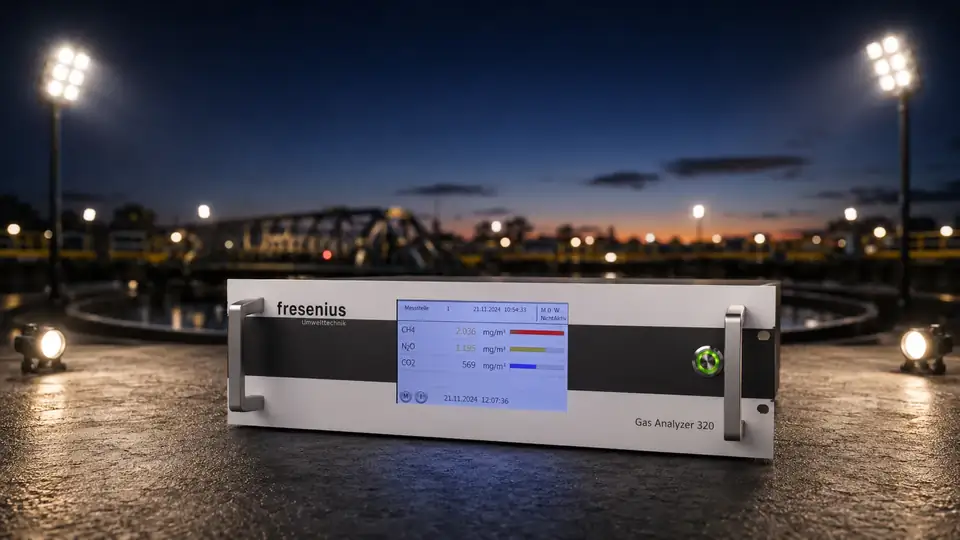
From one component to six IR components in one device: our process measurement technology measures your sample gas by infrared, paramagnetically, with zirconia or electrochemically – in a 19-inch device, a wall housing or portable.
In extractive sample gas analysis, a pump draws the gas from the process through a sampling line to the measuring device. The device stands protected in a cabinet or technical room, only the sampling point stays on site – and it can measure several sampling points one after another.
- 6IR components in one GA 320
- 8sampling points on one GA 210 or GA 220
- 1 sto the next reading in continuous measurement
Measuring principles
Six ways to measure a gas
Which measuring principle fits depends on your gas, the measuring range and the rest of the sample gas. Our process measurement technology combines the principles – even in one device.
-
Infrared (NDIR)
Infrared light passes through the heated measuring cell. Every IR-active gas absorbs at its own wavelength – so the device measures gases selectively and with long-term stability.
Typical for CH₄, CO₂, N₂O, solvents, refrigerants
GA 320 GA 220 GA 210 GA 150 Smart Control 300 GAP 100 BioBasic
How NDIR works -
Infrared hot and wet
The measuring cell is heated to 85 °C, the sample gas arrives uncooled through a heated hose. Water-soluble gases stay in the gas instead of being lost with the condensate.
Typical for formaldehyde in the exhaust of gas engines
-
Paramagnetic
Oxygen is attracted by a magnetic field – unlike almost all other gases. This makes the measurement selective and needs no consumable sensor. The sample gas has to be dried for it.
Typical for O₂, for example during inerting
-
Zirconia
A heated ceramic conducts oxygen ions, the resulting voltage shows the O₂ content. Fast and compact – for gas without silicones, fluorinated hydrocarbons, sulphur oxides and hydrogen.
Typical for O₂ up to 100 vol.%
-
Electrochemical
The gas reacts at an electrode, the current is proportional to the concentration. Compact and accurate for individual gases – also as a complement to NDIR in the same device.
Typical for O₂, H₂S, H₂
-
Thermal conductivity
A heated element releases heat into the gas – hydrogen conducts it much better than air. As a module in the GA 210 or GA 220, it measures H₂ even at high concentrations.
Typical for H₂
Measuring hydrogen
Configurator
Which measurement technology fits your measuring task?
Choose your measuring tasks – on the right you see the matching measurement technology. One click takes your selection straight into your enquiry.
Overview
Devices, measuring principles and sampling points
| Device | Design | Measuring principle | Components | Sampling points |
|---|---|---|---|---|
| GA 320 | 19-inch | NDIR | up to 6 IR components | 1–6 |
| GA 220 | 19-inch | NDIR, electrochemical, zirconia | up to 6, of which up to 3 NDIR | 1–8 |
| GA 210 | 19-inch | NDIR, electrochemical or zirconia | 1 | 1–8 |
| GA 210 O₂ paramagnetic | 19-inch | paramagnetic | O₂ | 1–6 |
| GA 150 | 19-inch | NDIR | 1 solvent | 1–8 |
| GA 315 Hot Gas | 19-inch | NDIR, cell at 85 °C | formaldehyde | 1 |
| GA 220 Biomethane | 19-inch | NDIR | CH₄, CO₂ | 1 |
| Smart Control 300 | Compact unit for mounting | NDIR | 1–3 IR components | 1–2 |
| BioBasic | Wall housing IP54 | NDIR, electrochemical | CH₄, H₂S; opt. CO₂, O₂, H₂ | 1–5 |
| BioBasic Biomethane | Wall housing IP54 | NDIR, electrochemical, NDUV | CH₄, CO₂, O₂, H₂S | 1 |
| GAP 100 | portable, battery | NDIR, electrochemical | CH₄, CO₂, O₂, H₂S | 1 |
Extract, as of 22.10.2026. The datasheets of each product are authoritative.
Products
Process measurement technology for sample gas analysis
-
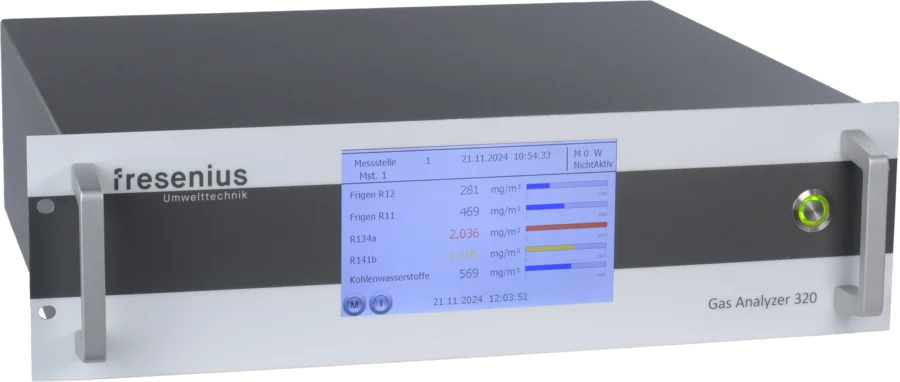 GA 320 Up to six IR components in one device, up to six sampling points.
-
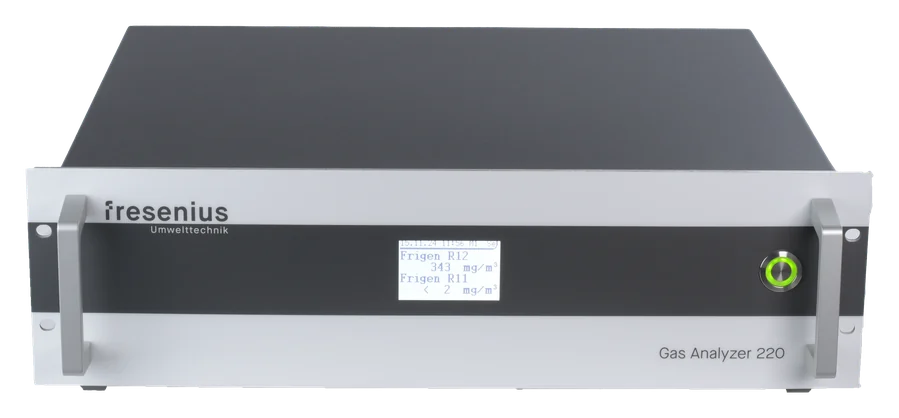 GA 220 Several gases in one device: NDIR, electrochemical and zirconia combined.
-
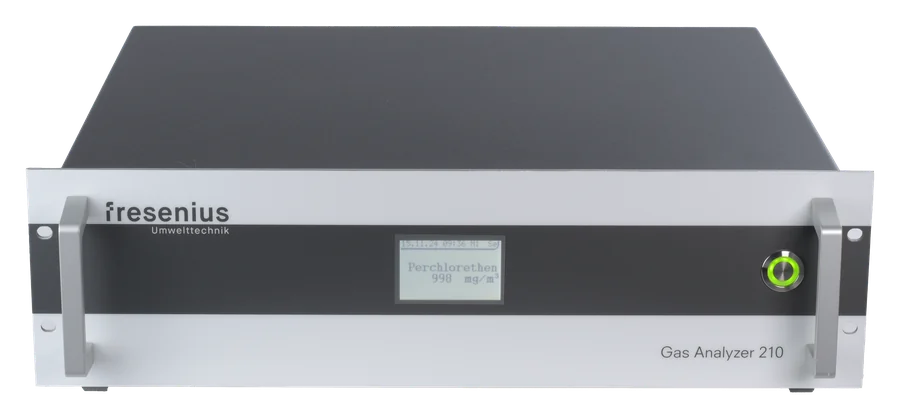 GA 210 One component, by NDIR, electrochemically or with zirconia.
-
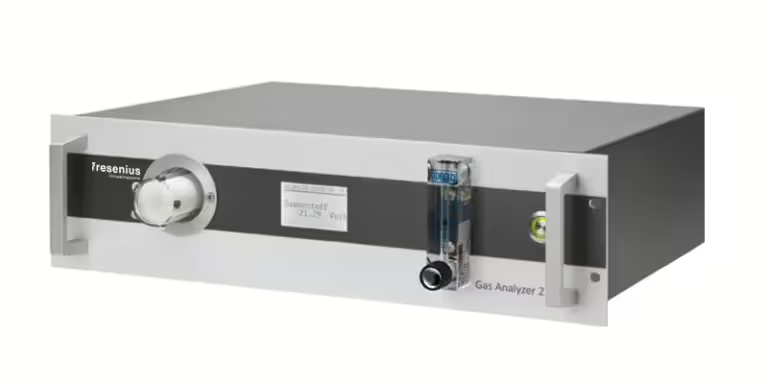 GA 210 O₂ paramagnetic Oxygen selectively, without a consumable sensor – for example during inerting.
-
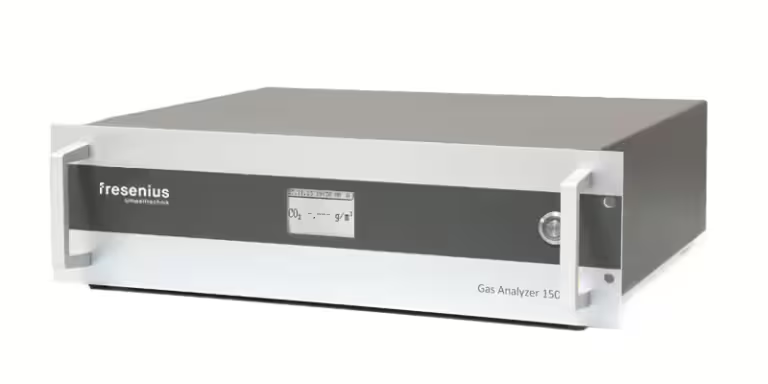 GA 150 One solvent such as perchloroethylene or hydrocarbon solvents, at up to eight sampling points.
-
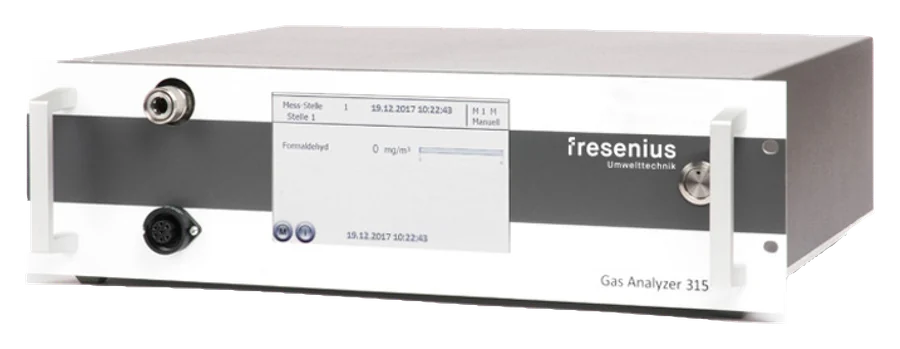 GA 315 Hot Gas Formaldehyde hot and wet, detection limit 2 mg/m³.
-
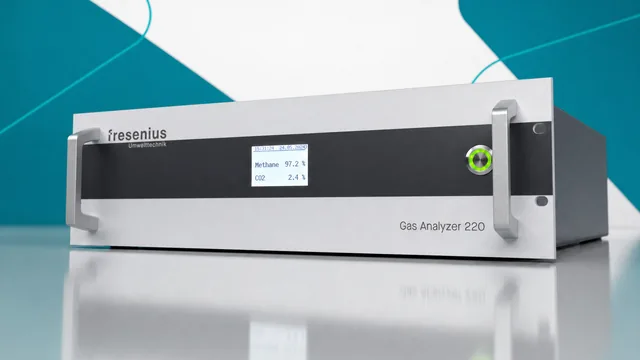 GA 220 Biomethane CH₄ and CO₂ in biomethane, a reading every second.
-
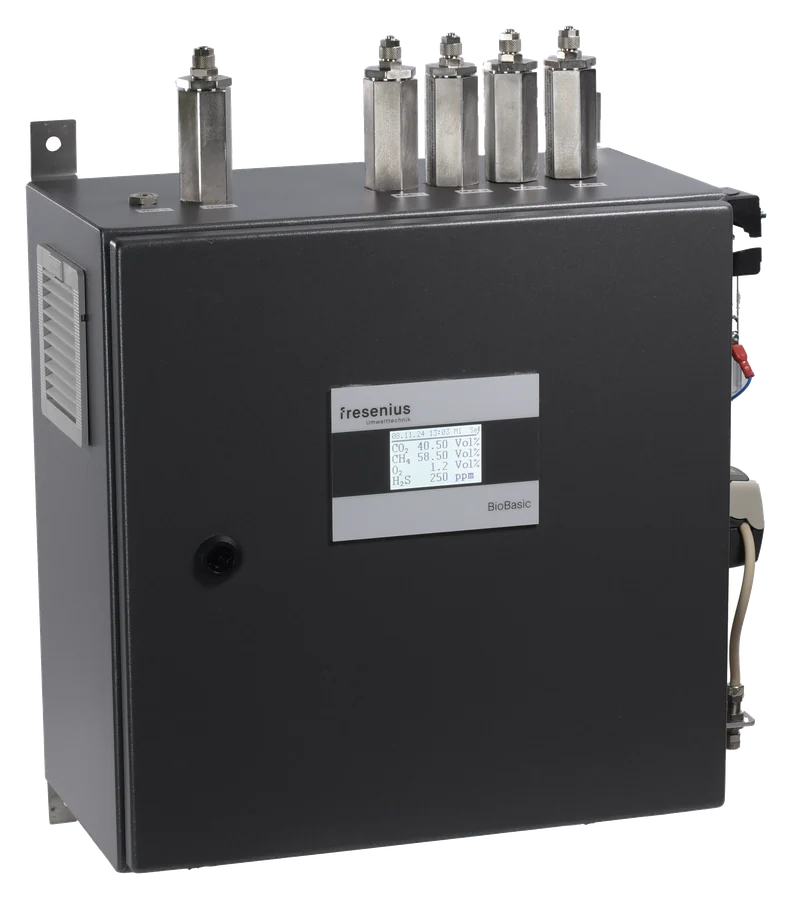 BioBasic Biogas in a wall housing: CH₄ and H₂S, optionally CO₂, O₂ and H₂, up to five sampling points.
-
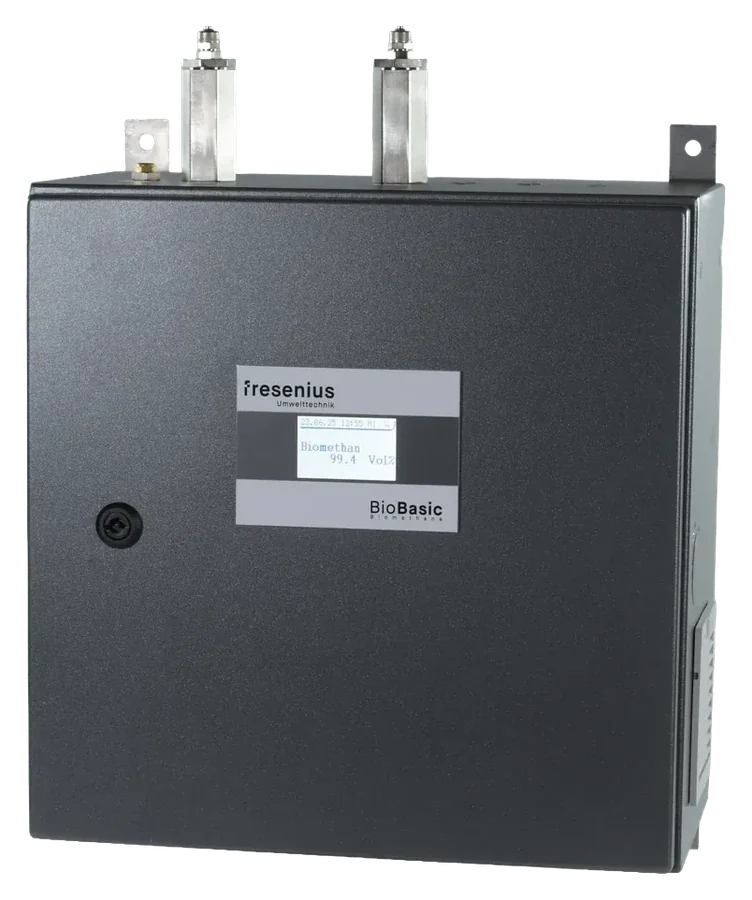 BioBasic Biomethane Biomethane in a wall housing: CH₄, CO₂, O₂ and H₂S every second.
-
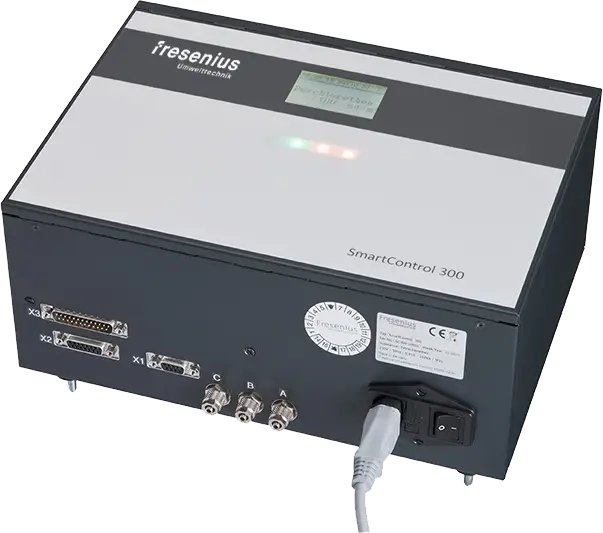 Smart Control 300 Compact for mounting: up to three IR components, one or two sampling points.
-
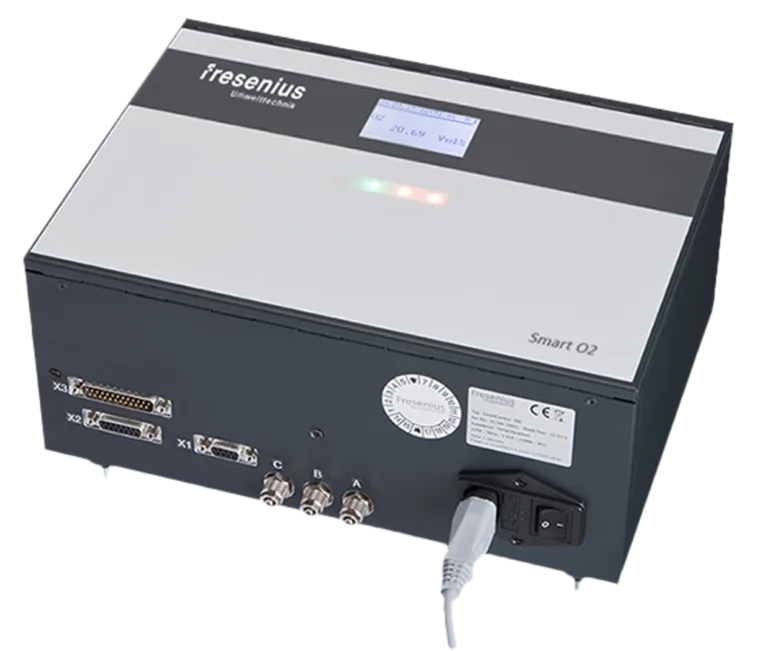 Smart O₂ Oxygen with zirconia, compact, a reading every second.
-
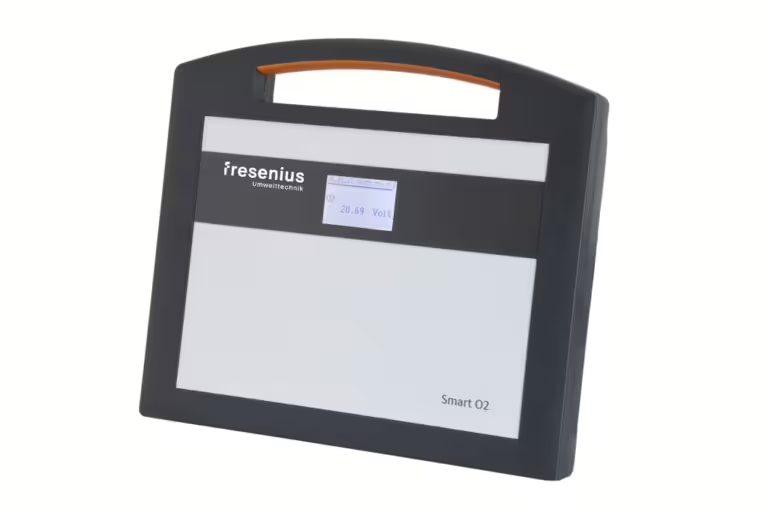 Smart O₂ Portable Oxygen with zirconia to take along, battery-powered.
-
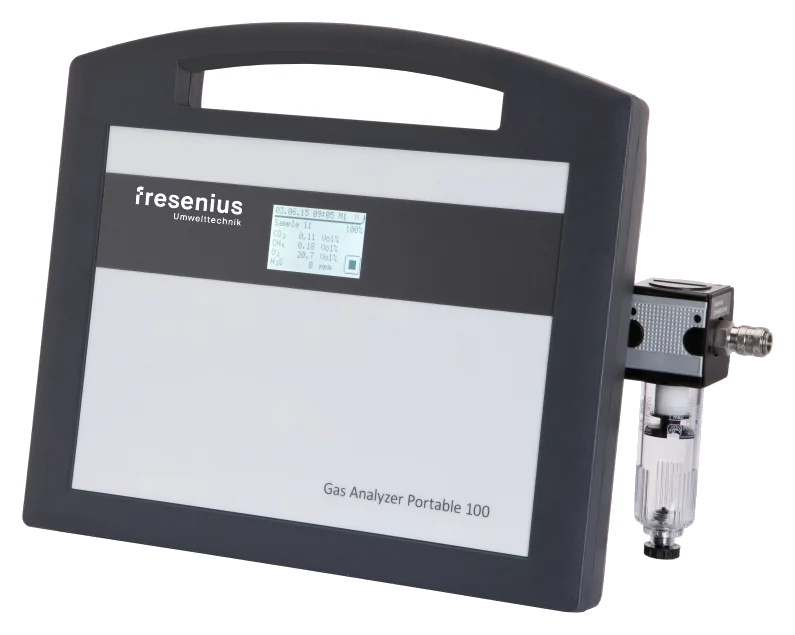 GAP 100 Portable: CH₄, CO₂, O₂ and H₂S for spot checks.
Complete system
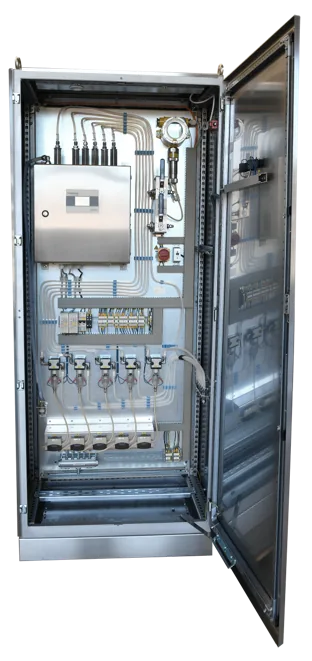
From sampling to your control system
-
Measured extractively
A pump draws the gas through the sampling line to the device. It stands protected in the cabinet; only the sampling point stays on site.
-
Sample gas conditioned
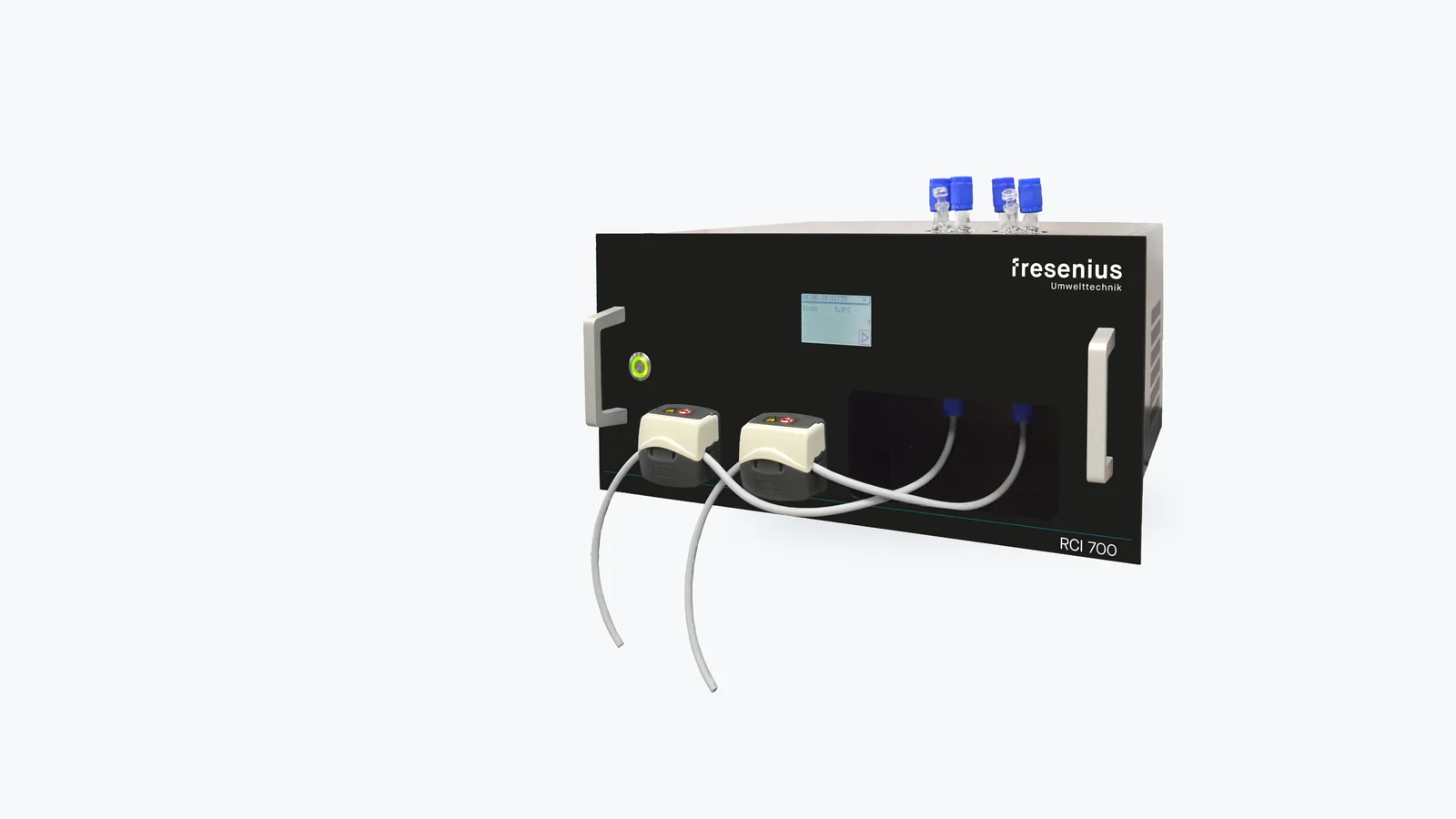
An RCI series sample gas cooler dries humid gas to a 5 °C dew point – for stable, comparable values.
-
Several sampling points, one device
The devices switch between up to eight sampling points one after another – depending on device and task.
-
Values straight to your control system
Via 4–20 mA, relays or fieldbus such as Modbus TCP, Profibus DP and Profinet. Your data stays with you.
Read on
Measuring principle, substances, industries
Advice
Tory – your advisor for sample gas analysis
Which gas, which measuring range, how many sampling points? Tory asks for the details in a few steps and takes you to the right process measurement technology – or straight to a meeting with our team.
- Measuring principle matched to gas and gas matrix
- One device for several sampling points
- Direct path to a quote request

FAQ
Frequently asked questions about sample gas analysis
What is sample gas analysis?
Determining the composition of a gas from a process. In extractive sample gas analysis, a pump draws the gas through a sampling line to the measuring device; the device stands protected and can measure several sampling points one after another.
Which measuring principle suits my gas?
Infrared (NDIR) for IR-active gases such as CH₄, CO₂, N₂O, solvents and refrigerants. For oxygen paramagnetic, zirconia or electrochemical, for H₂S electrochemical, for hydrogen electrochemical or by thermal conductivity. What fits also depends on the rest of the gas – the substance database shows it for each substance.
How many gases does one device measure?
The GA 210 measures one component, the GA 320 up to six IR components. The GA 220 combines up to three NDIR components with electrochemical sensors and zirconia, up to six in total.
How many sampling points can one device measure?
The GA 150, GA 210 and GA 220 up to eight, the GA 320 and the GA 210 O₂ paramagnetic up to six, the BioBasic up to five. The devices switch between the sampling points one after another.
Paramagnetic or zirconia – which O₂ measurement is right?
Zirconia is compact and fast but is ruled out when the gas contains silicones, fluorinated hydrocarbons, sulphur oxides or hydrogen. Then the GA 210 O₂ paramagnetic measures selectively and without a consumable sensor – with dried sample gas.
How do the readings get into my control system?
Via 4–20 mA, relays or fieldbus such as Modbus TCP, Profibus DP, Ethernet IP and Profinet – depending on the device. Your data stays with you.
Can I also measure with a portable device?
Yes. The GAP 100 measures CH₄, CO₂, O₂ and H₂S on battery power for spot checks, the Smart O₂ Portable measures oxygen with zirconia.
Good to know
- Tailored to your process: we define gases, measuring ranges and the number of sampling points together with you – as a complete system with sample conditioning on request.
- Your measuring task goes further – for example certified emission measurement or the full analysis of a gas mixture? With our partner network we find the right solution for that, too.
- Developed and built in Germany – process measurement technology from Fresenius Instruments in Herten.
Which gas do you want to measure?
Tell us about your measuring task – we design the process measurement technology with you.