



BioBasic Biomethane
Online gas analyzer for CH₄, CO₂, O₂ and H₂S at the grid injection point
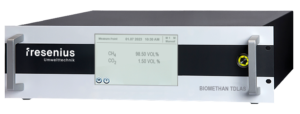
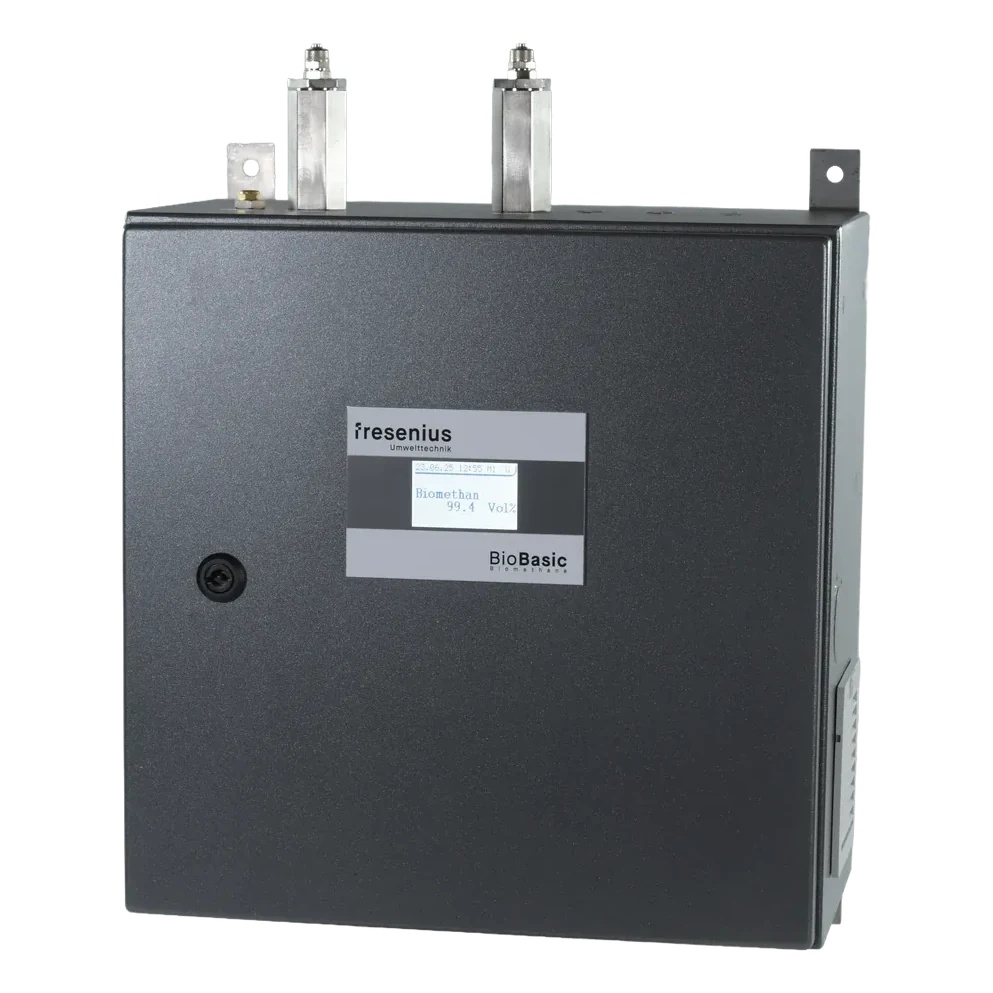
The BioBasic Biomethane monitors the quality of the product gas after biogas upgrading — on your plant, before handover to the gas grid. It measures CH₄, CO₂, O₂ and H₂S every second and shows you at any moment whether the upgraded gas is within the required specification. You see a deviation while it develops — early enough to readjust the upgrading process, rather than having it confirmed for you at the feed-in station.
Application
The BioBasic Biomethane monitors the product gas after biogas upgrading — on your plant, before handover to the natural gas grid. It measures methane (CH₄), carbon dioxide (CO₂), oxygen (O₂) and hydrogen sulphide (H₂S) continuously at one-second intervals.
The task is your own quality assurance: you need to know whether your upgraded gas meets the required specification before it leaves your plant. The measurement at the feed-in station is no longer in your hands — what is measured there is a finding, not a control variable.
That is exactly what the BioBasic Biomethane is built for. It sits on your side of the handover and makes quality fluctuations visible immediately, so that amine scrubbing, pressure swing adsorption or membrane separation can be readjusted while that still changes something.
Because upgraded biomethane is dry, the instrument needs no sample gas conditioning. A pump-free version is optionally available, which moves the sample gas using the line pressure itself — useful wherever a pump as a wear part is to be avoided.
Features
The most important features at a glance:
- Measurement at one-second intervals: continuous, one second per reading.
- NDIR dual-beam method for CH₄ and CO₂ — high long-term stability thanks to the reference beam.
- NDUV with reference detector for H₂S: sensitive and wear-free, without the electrochemical cell that has to be replaced regularly.
- Automatic, error-monitored calibration against zero and test gas at an adjustable interval; calibration factor, standard deviation at the zero point and offset are checked against limits.
- Temperature-stabilised measuring cells: NDIR and NDUV cells are held at 45 °C so that ambient temperature does not enter the reading.
- No sample gas conditioning required, because upgraded biomethane arrives dry.
- Optionally pump-free: sample gas transport via self-pressure from around 60 mbar.
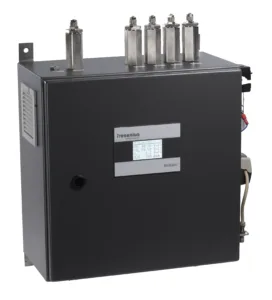
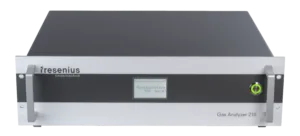
- Plug & play: delivered pre-configured, operated via a 2.5-inch touch display.
- Plain-text error messages on the display instead of error codes.
- Flexible data transmission: 4–20 mA as standard, with Profibus DP, Profinet, Ethernet IP and Modbus TCP optional.
- Safety technology: ATEX-certified flame arrester at the sample gas inlet and a speed-monitored housing fan with tachometer signal. The instrument itself is therefore not approved for installation in a hazardous zone — the flame arrester protects the plant.
- Optionally UL Listed / CSA Listed.
Areas
The BioBasic Biomethane is designed for quality monitoring at the end of the upgrading chain:
- Biomethane feed-in systems: monitoring the product gas before handover to the natural gas grid.
- Gas network transfer stations: continuous control of the injected quality between two chromatograph cycles.
- Biogas upgrading: a control variable for amine scrubbing, pressure swing adsorption or membrane separation — methane slip becomes visible immediately.
- Power-to-Gas and SNG: checking the methanated product gas against grid quality.
It is not intended for measurement in the raw gas upstream of the upgrading plant — the concentrations there are on an entirely different scale. That task is covered by the BioBasic.
Data
| Measurement technology | CH₄ and CO₂: NDIR dual-beam method · O₂: electrochemical (galvanic) · H₂S: NDUV with reference detector |
|---|---|
| Gas components | CH₄, CO₂, O₂, H₂S |
| Measuring ranges | CH₄ 90–100 vol.-% · CO₂ 0–10 vol.-% · O₂ 0–30 vol.-% · H₂S 0–100 ppm |
| CH₄ measurement accuracy | Precision 0.1 %, expanded measurement uncertainty 0.2 % of full-scale value — figures for the other components are in the data sheet |
| Measurement interval | 1 second (continuous) |
| Conditioning | NDIR and NDUV sensing cells temperature-stabilised at 45 °C; no sample gas conditioning required (dry biomethane) |
| Installation | Air-conditioned indoor rooms only, ambient temperature 20–30 °C |
| Sample gas inlets | 1 × sample gas, 1 × zero gas, 1 × test gas mixture |
| Calibration | Automatic against test and zero gas, adjustable interval, approx. 4 min per cycle; error-monitored |
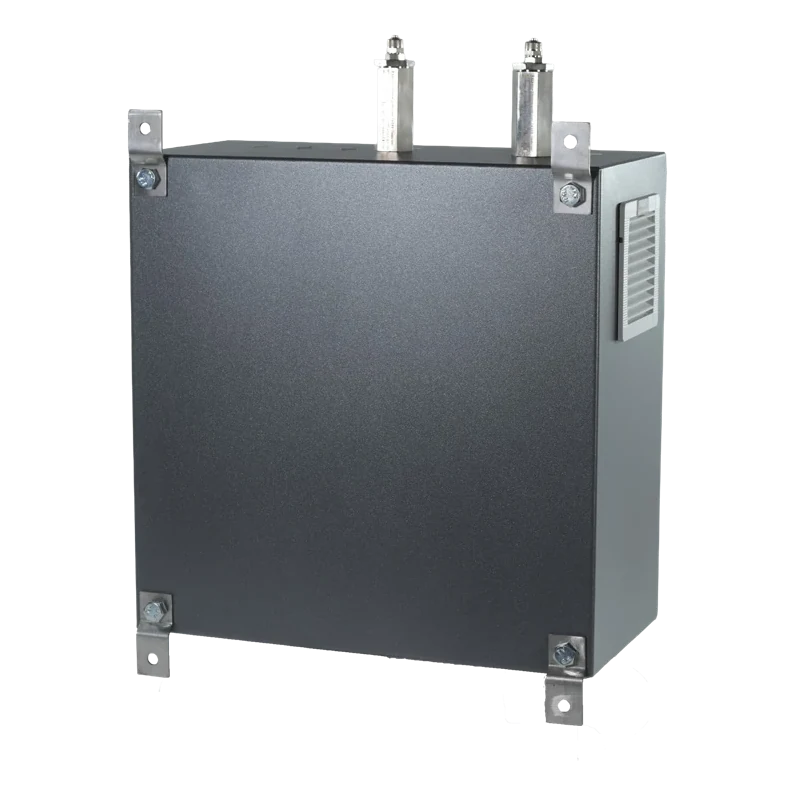
| Housing | Wall-mounted enclosure IP 54, 400 × 600 × 220 mm, 18 kg |
| Interfaces | Standard 4–20 mA (galvanically isolated); optional Profibus DP, Profinet, Ethernet IP, Modbus TCP |
| Safety technology | ATEX-certified flame arrester at the sample gas inlet; speed-monitored housing fan with tachometer signal |
This table is an extract. Tolerances, response times, terminal assignments and the full list of options are in the data sheet. As of 11 August 2026. The data sheet is always the binding version. Request the data sheet →
Measurable substances
- CH₄ Methane
- CO₂ Carbon dioxide
- O₂ Oxygen
- H₂S Hydrogen sulfide
Key data
- CH₄ measuring range
- 90 – 100 vol.-%
- Measurement interval
- 1 second, continuous
- Measurement principle
- NDIR dual-beam · NDUV · electrochemical
- CH₄ measurement uncertainty
- 0.2 % of full scale
- Sample gas transport
- Pump 4 l/min, optionally pump-free
- Housing
- Wall enclosure IP 54, 18 kg
Advantages
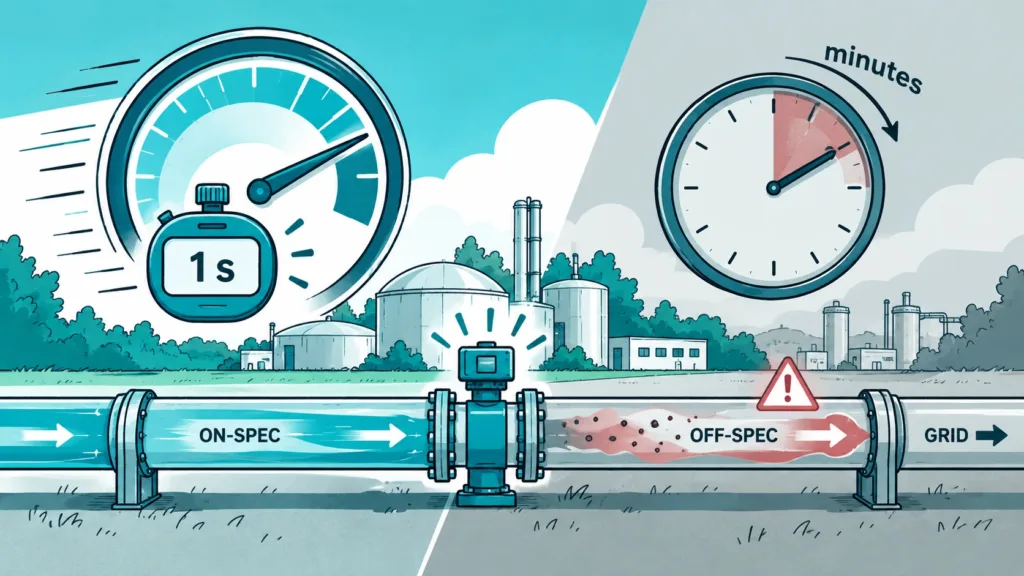
One-second intervals instead of minutes
The analyzer measures continuously at one-second intervals. The process gas chromatograph at the same measuring point needs several minutes for a reading — in that time a plant can already be feeding gas outside specification into the grid. The BioBasic Biomethane closes exactly that gap.

Two optical methods, no wear parts in the measuring path
CH₄ and CO₂ are measured using the NDIR dual-beam method, H₂S using NDUV with a reference detector. Both work optically and therefore without wear — unlike electrochemical H₂S cells, which are consumables and have to be replaced regularly. Only the oxygen channel uses a galvanic cell.

Calibration runs automatically and monitors itself
The instrument calibrates itself against zero and test gas at an adjustable interval. One cycle takes around four minutes. It checks the calibration factor, the standard deviation at the zero point and the offset against stored limits and reports when a value drifts away — instead of quietly continuing to drift.

Plug & play, error messages in plain text
The instrument arrives pre-configured, is mounted on the wall and operated via a 2.5-inch touch display. Faults appear as readable text on the display, not as an error code to look up. For connection to the control room, 4–20 mA is standard, with Profibus DP, Profinet, Ethernet IP and Modbus TCP available as options.
Frequently asked questions
What is the BioBasic Biomethane for?
For continuous quality monitoring of the product gas after biogas upgrading — where upgraded biomethane is handed over to the natural gas grid. It measures CH₄, CO₂, O₂ and H₂S at one-second intervals and makes deviations visible immediately, so the upgrading plant can be readjusted.
How does it relate to the process gas chromatograph at the feed-in station?
The two sit on different sides of the handover. The process gas chromatograph belongs to the feed-in station, is the instrument relevant for billing there, and is not under your control — you receive its result, you do not steer it.
The BioBasic Biomethane is your own measurement upstream of it. It does not replace the chromatograph and is not meant to; it makes sure that what arrives there is already in order. That it measures every second while the chromatograph reports every few minutes is the decisive difference.
How does it differ from the standard BioBasic?
The measuring task sits at the other end of the chain. The BioBasic measures raw gas in biogas plants, sewage treatment plants and landfills — methane around 50 – 60 vol.-%, H₂S up into the percent range, moist gas with a condensate trap.
The BioBasic Biomethane measures product gas: CH₄ 90 – 100 vol.-%, H₂S 0 – 100 ppm, dry gas without conditioning. For H₂S it uses NDUV instead of an electrochemical cell, and it measures every second rather than every few minutes.
Which measuring ranges does the instrument cover?
CH₄ 90 – 100 vol.-%, CO₂ 0 – 10 vol.-%, O₂ 0 – 30 vol.-% and H₂S 0 – 100 ppm. The ranges are tailored to upgraded biomethane — the instrument is not designed for raw gas at 50 vol.-% methane.
How accurate is the BioBasic Biomethane?
Precision is 0.1 % (CH₄), 0.05 % (CO₂), 0.1 % (O₂) and 0.2 % (H₂S) of the full-scale value. The expanded measurement uncertainty is 0.2 % (CH₄), 0.5 % (CO₂), 0.3 % (O₂) and 0.5 % (H₂S) of the full-scale value.
Why is H₂S measured optically rather than electrochemically?
Because an electrochemical H₂S cell is a consumable: it ages and has to be replaced regularly. The NDUV method with a reference detector works optically, so there is no wear in the measuring path, and it is sensitive enough in the ppm range. Only the oxygen channel still uses a galvanic cell — there is no equivalent optical method for O₂ in this form factor.
Does the instrument need sample gas conditioning?
No. Upgraded biomethane arrives dry at the feed-in point, so conditioning is not required. The NDIR and NDUV measuring cells are temperature-stabilised at 45 °C so that ambient temperature does not enter the reading. The device is approved only for air-conditioned indoor rooms at 20–30 °C ambient temperature — the tight specification of the NDUV measurement requires it.
How does calibration work?
Automatically, at an adjustable interval, against zero and test gas. One cycle takes around four minutes, during which no readings are available. The instrument monitors its own calibration and checks the calibration factor, the standard deviation at the zero point and the offset against stored limits. The standard test gas is a mixture of CH₄ 94.999 vol.-%, CO₂ 4 vol.-%, O₂ 1 vol.-% and H₂S 10 ppm; other mixtures are available on request.
Is there a version without a sample gas pump?
Yes. On the pump-free version the sample gas is moved by the line pressure itself, which requires around 60 mbar. That version has no bypass outlet. It makes sense wherever a moving component in the gas path is to be avoided in principle.
May the instrument be installed in a hazardous area?
No. There is an ATEX-certified flame arrester at the sample gas inlet, and the housing fan is speed-monitored — both protect the plant. The instrument itself, however, is not approved as equipment for hazardous areas and belongs outside the zone.
How is the analyzer connected to the control room?
As standard via a galvanically isolated 4–20 mA analogue output. Profibus DP, Profinet, Ethernet IP and Modbus TCP are available as options. In addition there are four freely programmable binary inputs and relay outputs, including one digital output each for “ready” and “fault”.
Can I test the instrument beforehand?
Yes, we provide loan and test units. Get in touch — we will check together beforehand whether the measuring ranges suit your feed-in point.
Find a partner near you
Authorised partners advise on the BioBasic Biomethane, deliver it and service it on site. Or talk to us directly.
Select a country on the map to filter.
Prefer us directly?
Tell us about your application — we will advise you and put you in touch with the right partner.
Our authorised partners worldwide
No suitable partner in your region? Contact Fresenius Instruments directly →
Interested in the BioBasic Biomethane?
We advise you comprehensively — holistic and solution-oriented.