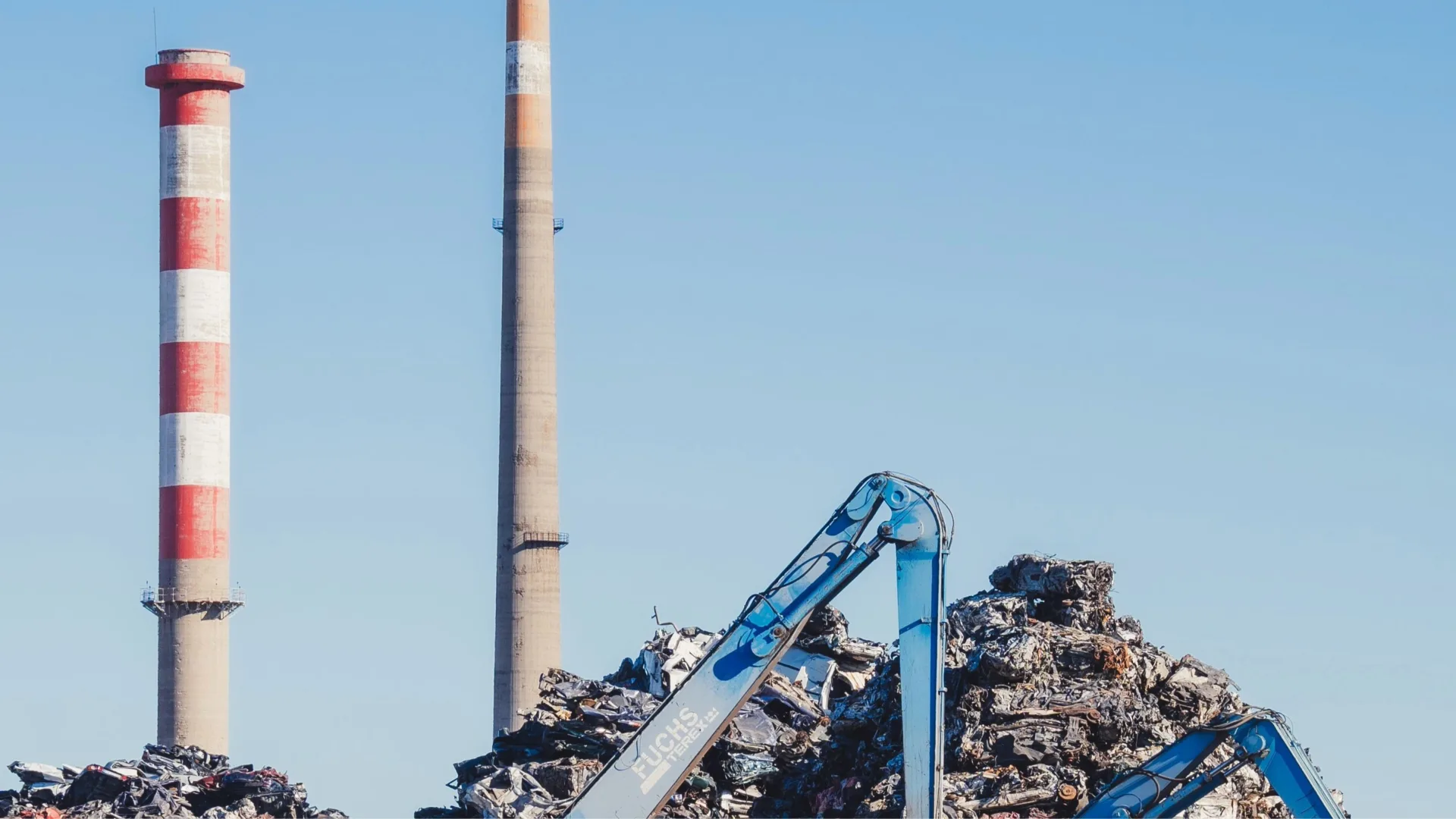
The waste management industry is undergoing a fundamental transformation. Pure disposal operations are becoming raw material and energy facilities, where gas composition is a decisive factor for yield, plant availability, and documentation requirements.At Fresenius Instruments, we develop measurement technology solutions for this change, making gas flows in recycling measurable – from the pyrolysis reactor to the landfill body and open basins.The New Era of Waste Recovery: Why Precision is EssentialWaste streams are inherently highly heterogeneous and often change their chemical composition minute by minute. These fluctuations pose technical challenges for thermal and chemical recovery plants: the measuring point experiences varying concentrations over a wide range and a changing accompanying matrix.Timely analysis of the resulting gases makes these changes visible – early enough to adjust combustion, air supply, or extraction. It thus provides the data basis for process control and operational documentation; plant control performs the interventions.Pyrolysis & Plastic Recycling: Safely Recovering Valuable MaterialsThe chemical recycling of plastics using pyrolysis is one of the promising processes in the circular economy. Under exclusion of air, long-chain polymers are broken down at high temperatures. This produces pyrolysis oil, a solid residue, and pyrolysis gas – a mixture of carbon monoxide, carbon dioxide, methane, higher hydrocarbons, and hydrogen. Syngas is only formed via a downstream gasification step.These reactors are operated under inert conditions. Oxygen monitoring shows whether the oxygen content remains safely below the oxygen limiting concentration of the mixture. Carbon monoxide and hydrocarbons describe the quality of the product gas; it changes with the input material and reactor temperature.We supply the measurement technology for both tasks: oxygen monitoring for inertization control and multi-component measurement of the product gas in one system. This allows operational disruptions to be detected early, and the quality of the generated pyrolysis gas can be kept consistent. In this way, difficult-to-recycle plastic waste becomes a secondary raw material for the chemical industry.Landfill Gas Monitoring: Mastering Hazards & Generating EnergyEven decades after closure, complex biochemical degradation processes continue in landfill bodies. This continuously produces methane (CH₄) and carbon dioxide (CO₂) as well as corrosive hydrogen sulfide (H₂S). The gas is actively captured – however, since the end of the deposition of landfill gas-relevant waste, gas volume and methane content have significantly decreased, and engine operation in combined heat and power plants is no longer possible at many sites.Thus, the measurement task has shifted: the focus is no longer on gas quality for the engine, but on methane content as a criterion for the treatment path. Standard combustion plants operate from approximately 12 vol.-%, plants with regenerative air preheating from approximately 6 vol.-%, regenerative lean gas combustion from approximately 2 vol.-%, and regenerative thermal oxidation from approximately 1 vol.-%. Methane measurement must cleanly resolve this low percentage range; hydrogen sulfide remains the key factor for the service life of downstream technology. We provide measurement support for this entire process: from methane-rich recovery gas down to the low percentage range where the treatment path is decided – including hydrogen sulfide.Diffuse Emissions: Clarifier Basins & Digestate Storage in FocusNot every climate-relevant emission leaves the facility through a chimney. In wastewater treatment plants, nitrous oxide (N₂O) is produced during biological treatment, especially during aeration; with a global warming potential of 273 compared to carbon dioxide, it is the most climate-relevant single component there, followed by methane with a factor of 28. In biogas plants, the open digestate storage is the corresponding area source.We record the emission via a floating cover on the open basin: the rising gases passively collect underneath and are fed to the analyzer, which measures N₂O, CH₄, and CO₂. The output is the area-specific emission rate – the value used to establish a greenhouse gas balance.CEMS Emission Monitoring: Legal Certainty & Environmental Protection CombinedThe legal requirements of TA Luft and the 17th BImSchV place high demands on exhaust gas monitoring of recycling and incineration plants. With the revised Industrial Emissions Directive (IED 2.0, Directive (EU) 2024/1785), the requirements for documentation continue to grow.For continuous emission monitoring (CEMS), responsibilities are clearly regulated: the measuring equipment used must be suitability-tested as a whole according to QAL1 / EN 15267, and the legal calibration QAL2 as well as the annual AST according to DIN EN 14181 are carried out by an accredited measuring body notified under § 29b BImSchG.Here, we provide manufacturer-independent advice and collaborate with specialized system integrators. For an existing emission measurement system, we take over ongoing quality assurance during operation – drift control (QAL3) as well as maintenance and calibration between statutory deadlines.Why Fresenius Instruments? Your Partner for Demanding Tasks As one of the leading specialists in gas analytics, we know the harsh operating conditions in the waste management industry from decades of practical experience. Our measuring devices are characterized by maximum longevity, ease of maintenance, and modular expandability.We accompany you from the initial inventory and customer-specific system development to reliable service – in our workshop and on site at your facility. Together, we make your processes more efficient, safer, and more sustainable.Would you like to take gas analysis to a new level? Speak with our experts at Fresenius Instruments about your individual requirements in recycling.Which gases matter in which material stream – from refrigerator recycling through plastics and batteries to landfill – and which process measurement technology fits is shown in our overview gas analysis for recycling plants – with an interactive loop, application examples and a configurator.
Request service
Services
- Maintenance Preventive inspection · filter service · performance test
- Repair On site & workshop · certified refrigeration · lab diagnostics
- Commissioning & calibration On-site installation · factory calibration · maintenance & operator training
- Spare parts Original parts · third-party devices too
Our promise
- On-site service Maintenance, repair and commissioning – internationally with service partners
- Mail-in repair service Loan devices available — no production downtime during maintenance or repair
- Cloud Connect ready Cellular telemetry from the factory
- ISO 9001:2015 certified Audited service processes
 Blog · Process Biomethane Feed-in into the Natural Gas Grid: How Precise Gas Analysis Supports Quality Assurance and Grid Injection Secure Biomethane Feed-in Thanks to Precise Gas Analysis: Fresenius Umwelttechnik's fast online process analytics continuously monitors relevant accompanying… 07. Oct 2026
  Blog Gas Analysis in Recycling: Efficient Process Control and Emission Monitoring in Waste Recovery From Waste to Raw Material: Precise Gas Analytics for the Recycling Revolution. Waste becomes energy – but highly… 10. Sep 2026
 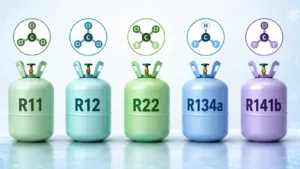 Tipps Refrigerant Calibration Gases Are Becoming More Expensive and Scarcer: What You Need to Know Now In brief: Calibration gases based on refrigerants R11, R12, R22, R134a, and R141b will become significantly more expensive… 03. Sep 2026
  Tipps New EU Requirements for Industrial Emissions: What Operators Need to Know Now With the revised Industrial Emissions Directive (IED 2.0, Directive (EU) 2024/1785), the European Union has significantly tightened the… 13. Aug 2026
 Company
Career & Events

Get in touch
Jedes Vol.-% CH₄ ist Geld wert. BioBasic — präzise Biogas-Analyse, Made in Germany.

Measuring What Matters
GAS ANALYZERS · MADE IN GERMANY · SINCE 1848