

Solutions · Areas
From sample gas to measured value
Two areas, one goal: reliable readings. Sample gas conditioning makes the gas measurable, sample gas analysis makes it visible – both from Fresenius Instruments, as a complete system on request.
Extractive gas analysis consists of two steps: a pump draws the gas through the sampling line, sample gas conditioning dries and cleans it, then the measuring device determines its composition. Without conditioning, humidity and dust distort the readings.
Area · Sample gas analysis
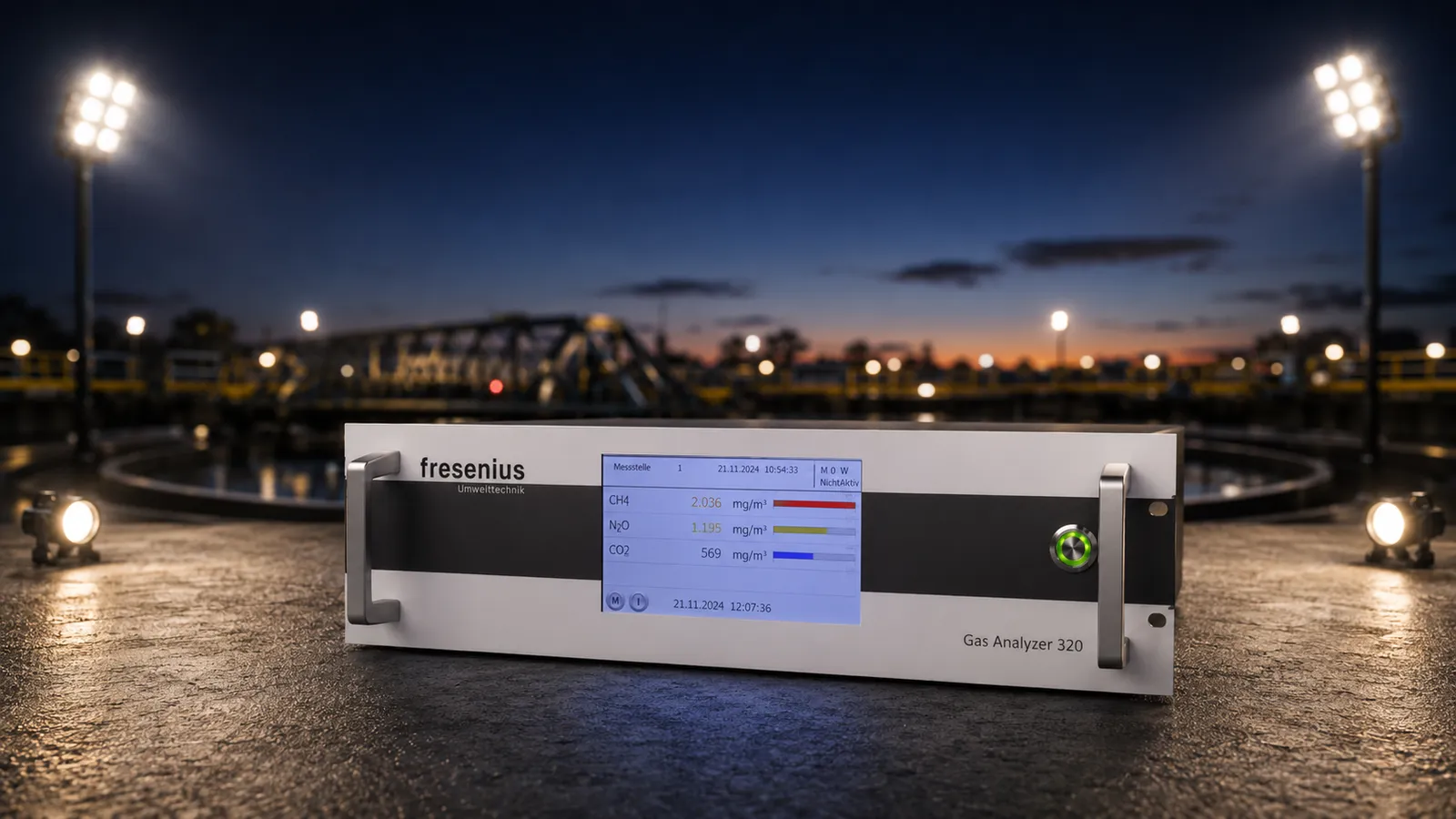
Sample gas analysis: measuring what happens in the process
From one component up to six IR components in one device – by NDIR, thermal conductivity, paramagnetically or electrochemically, permanently installed or portable.
- 6IR components in one GA 320
- 1 smeasuring cycle for paramagnetic O₂ and in biomethane
- 115substances in the substance database
Area · Sample gas conditioning
Sample gas conditioning: dry gas, stable readings
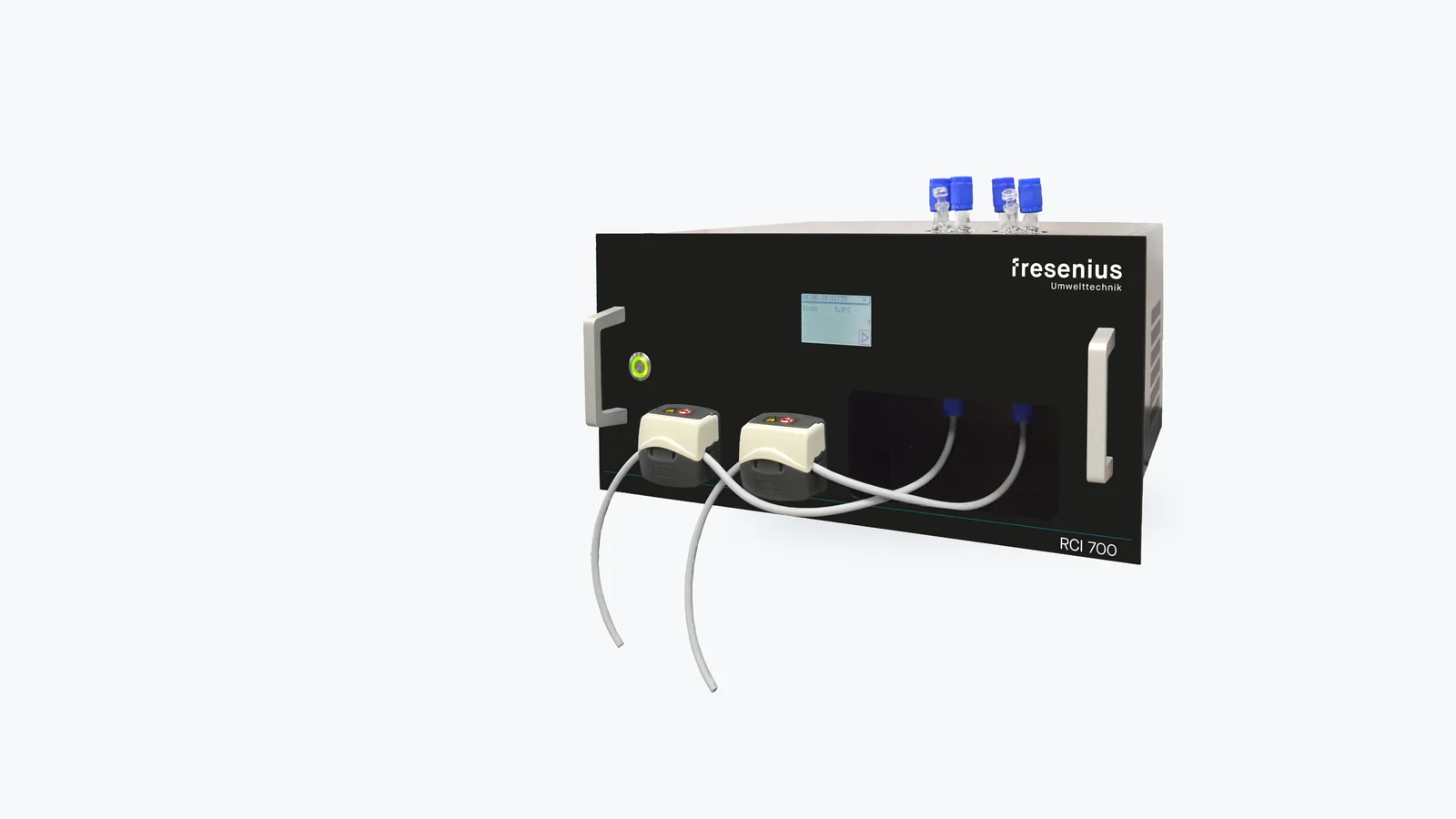
Humidity distorts the measurement. The RCI series sample gas coolers dry the sample gas with a compressor to a dew point of 5 °C – in a wall or floor housing or as a 19-inch rack unit, for one or two gas streams.
- 5 °Cdew point, residual humidity max. 0.86 vol.%
- 260 l/hflow per sample gas stream
- 2gas streams with one RCI 700
Read on
Measuring principle, substances, industries
- NDIR measurement method How infrared measures gases – and what keeps NDIR measurement stable in the long term.
- Substance database Look up more than a hundred gases and vapours with measuring principle and range.
-
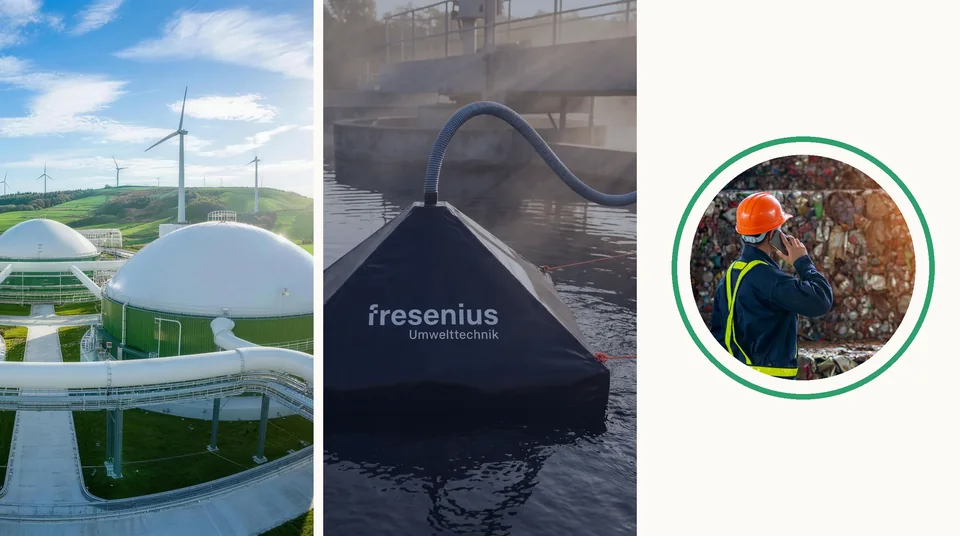 Gas analysis by industry Biogas, wastewater, recycling – where each gas matters.
-
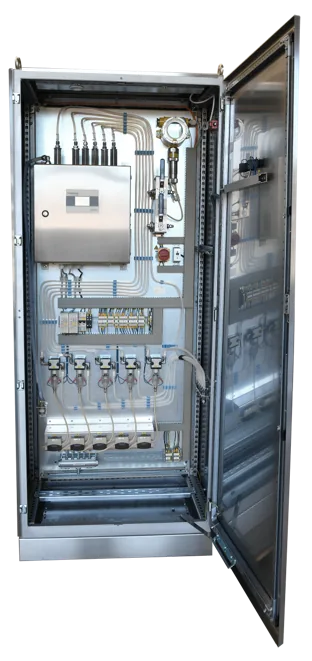 All products Measuring devices, sample gas coolers and system cabinets at a glance.
Advice
Tory – your advisor for measurement and conditioning
Which gas, how humid, how hot? Tory asks for the details in a few steps and takes you to the right combination of measuring device and conditioning – or straight to a meeting with our team.
- Measuring device and conditioning combined to fit
- Gases, humidity and measuring ranges in a few steps
- Direct path to a quote request

FAQ
Frequently asked questions
What is sample gas conditioning?
Preparing the sample gas before analysis: a sample gas cooler dries it, filters and condensate traps hold back dust and water. Without conditioning, humidity and particles distort the measurement.
Why is the sample gas cooled?
Humidity interferes with the measurement and can condense inside the device. The sample gas cooler lowers the dew point – to 5 °C with the RCI series, leaving at most 0.86 vol.% residual humidity.
How do the RCI sample gas coolers cool?
With a compressor. The heat exchanger is made of Duran glass, a peristaltic pump removes the condensate. The RCI 700 cools two sample gas streams in a 19-inch rack unit.
When is it better to measure hot and wet?
When the component is highly water-soluble, such as formaldehyde: cooling would lose part of it with the condensate. A hot-gas device such as the GA 315 Hot Gas then measures without a sample gas cooler.
Which measuring principle suits my gas?
Infrared (NDIR) for many IR-active gases, thermal conductivity for hydrogen, paramagnetic for oxygen, electrochemical sensors for individual gases. What fits depends on the gas, the measuring range and the gas matrix – the substance database shows it for each substance.
Which measuring task is next for you?
Tell us about your measuring task – we design the process measurement technology with you.