

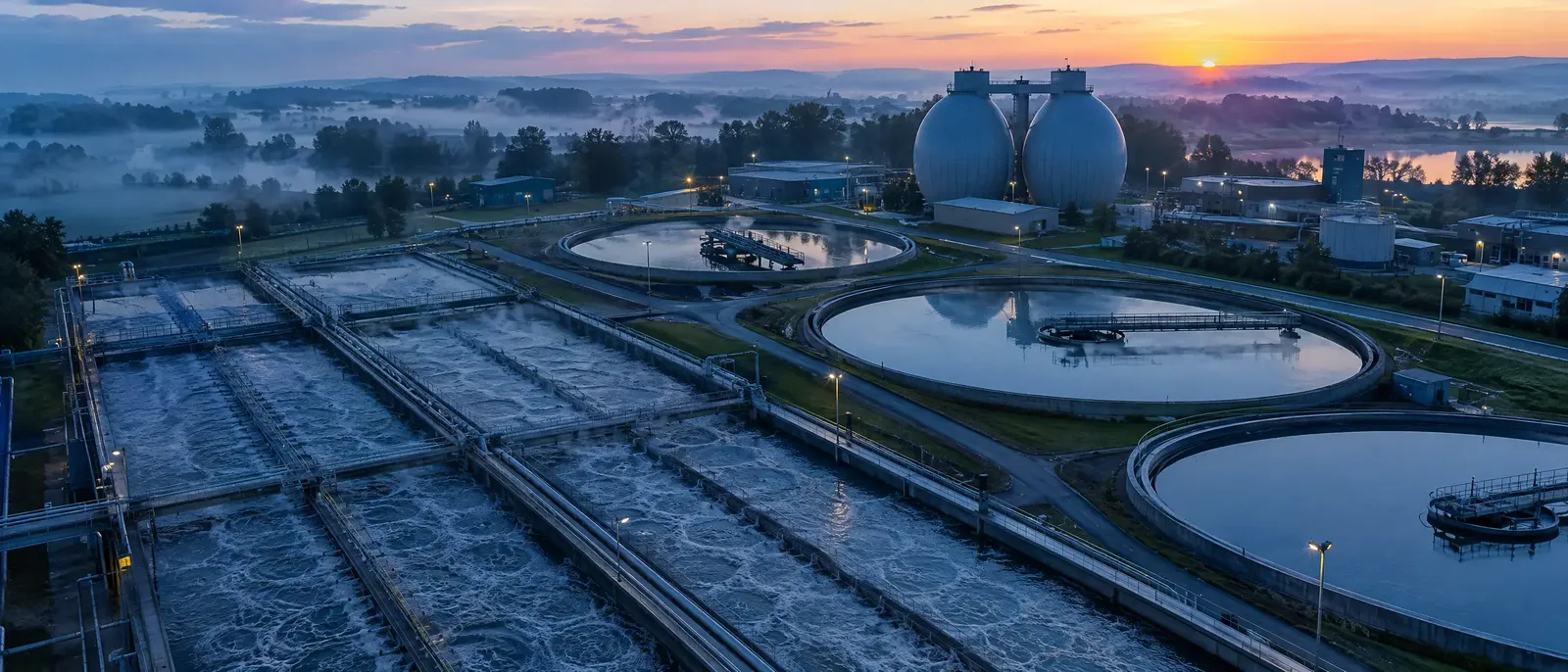
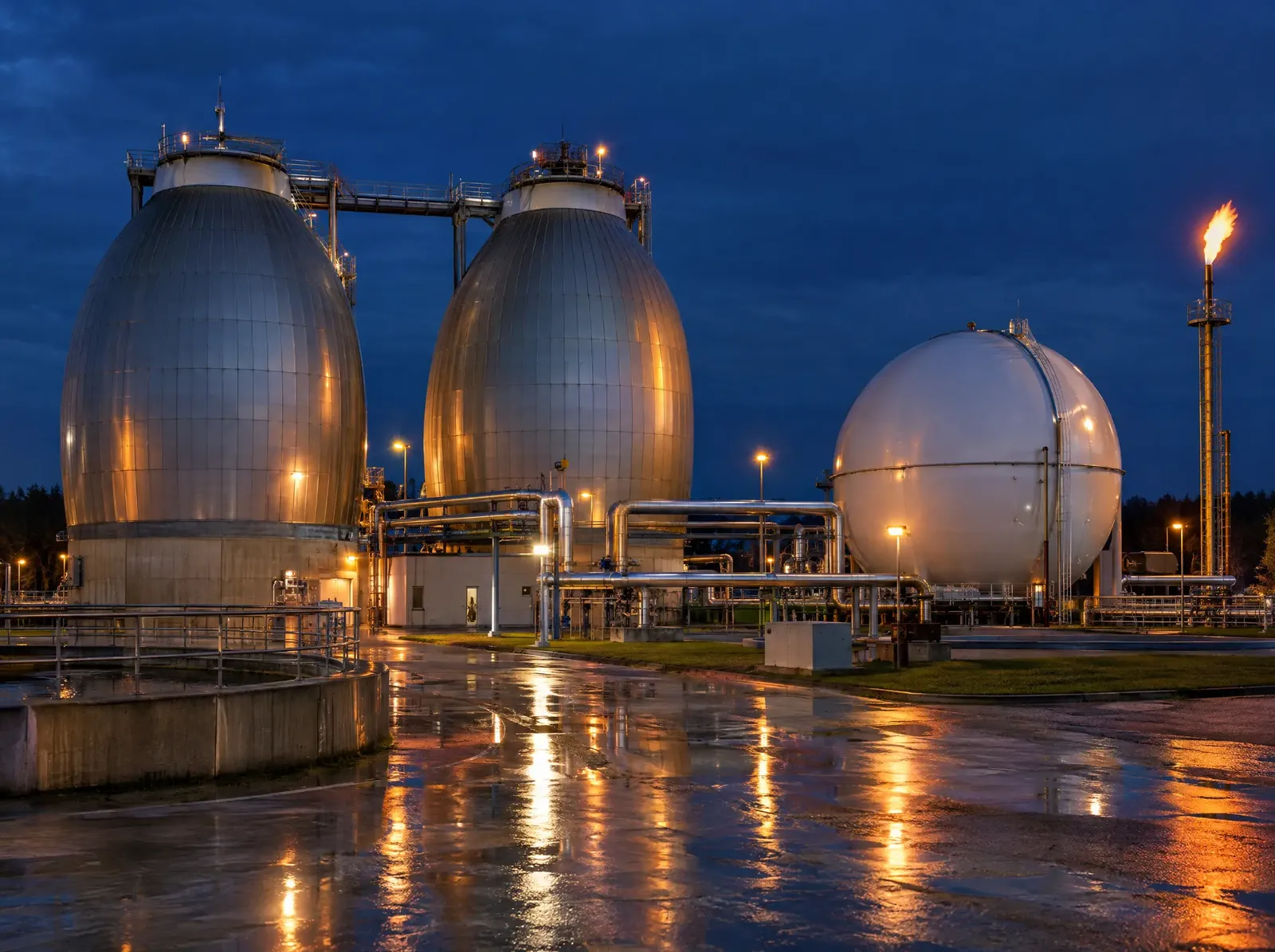
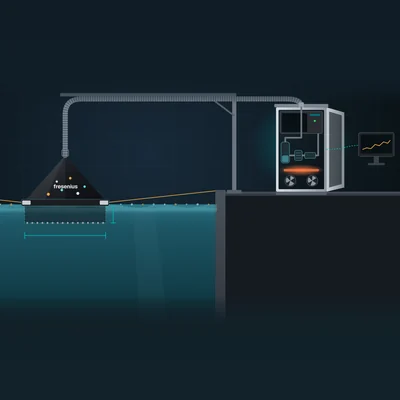
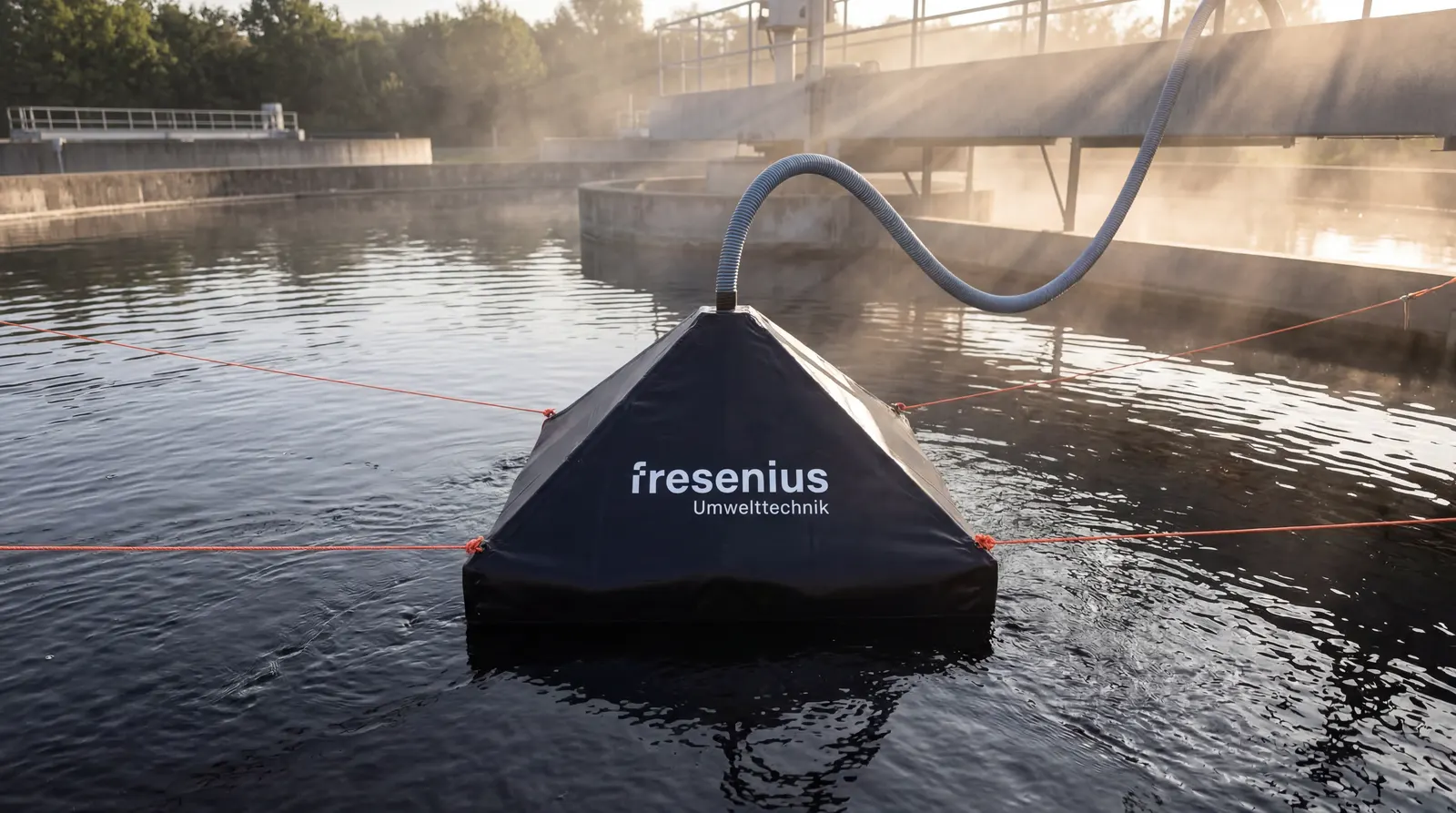
Aeration tank of a wastewater treatment plant with the Gas Dome 300 floating hood for nitrous oxide and methane measurementAerial view of a wastewater treatment plant at dawnDigesters and gas holder of a treatment plant

Solutions · Wastewater

Gas analysis for wastewater treatment plants

From the aeration tank to the CHP unit: this page shows which gases you should measure at each point of your wastewater treatment plant. It also shows which process measurement technology from Fresenius Instruments does the job.

  • 7measuring points from aeration to exhaust air
  • N₂O · CH₄ · H₂Sthe gases that matter most
  • 2027Urban Wastewater Directive: account for N₂O and methane

Interactive plant map

Which gas you should measure where on your plant

Pick a measuring point or filter by substance. Below, you can see which measurement technology works there.

Schematic of a wastewater treatment plant with seven measuring points Water path from inlet, screen house, grit chamber and primary clarifier through the aeration tank with floating hood, cabinet and blower and the secondary clarifier to the receiving water. Sludge to the digester, digester gas via desulphurisation and gas holder to CHP unit and flare. Sludge hall with centrifuge, process water stripping, exhaust air via fan into the biofilter. Receiving water Inlet Screen house Grit chamber Biofilter Primary clarifier Cabinet Blower Aeration tank Secondary clarifier Digester Desulphurisation Gas holder CHP Flare Sludge hall Stripping 1 2 3 4 5 6 7
  1. 1Aeration tank
  2. 2Digester gas
  3. 3CHP exhaust
  4. 4Sludge hall
  5. 5Exhaust air
  6. 6NH₃ stripping
  7. 7Spot check

Measuring point 1

Aeration tank

  • N₂ONitrous oxide
  • CH₄Methane
  • CO₂Carbon dioxide

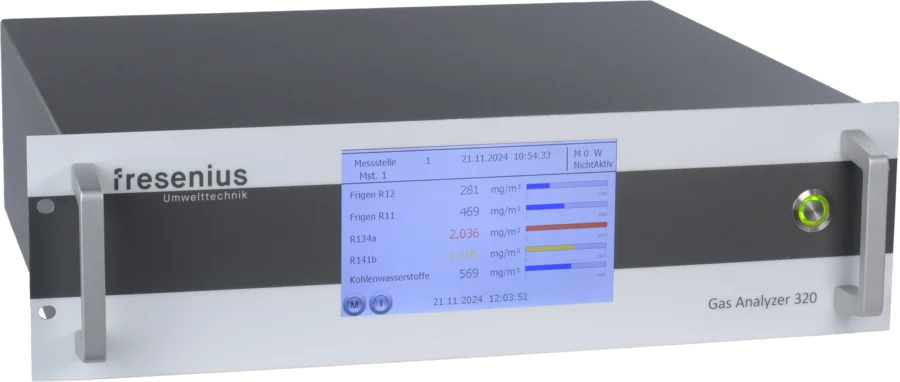
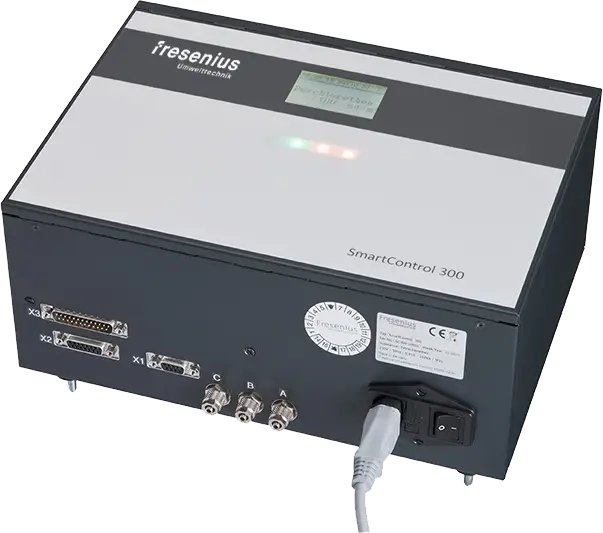
The Off-Gas System comes as Smart with the Smart Control 300 or as Expert with the GA 320. Both versions work with the Gas Dome 300 floating hood.

  • 1.00 m² collection area per hood
  • The gas analyser calculates the emission rate E = c × Q / A in mg/(m²·h)
  • N₂O detection limit 10 ppmV (Smart) or 0.5 ppmV (Expert)
  • No blower, no zero or span gas

Measuring point 2

Digester gas

  • CH₄Methane
  • H₂SHydrogen sulphide
  • CO₂Carbon dioxide
  • O₂Oxygen

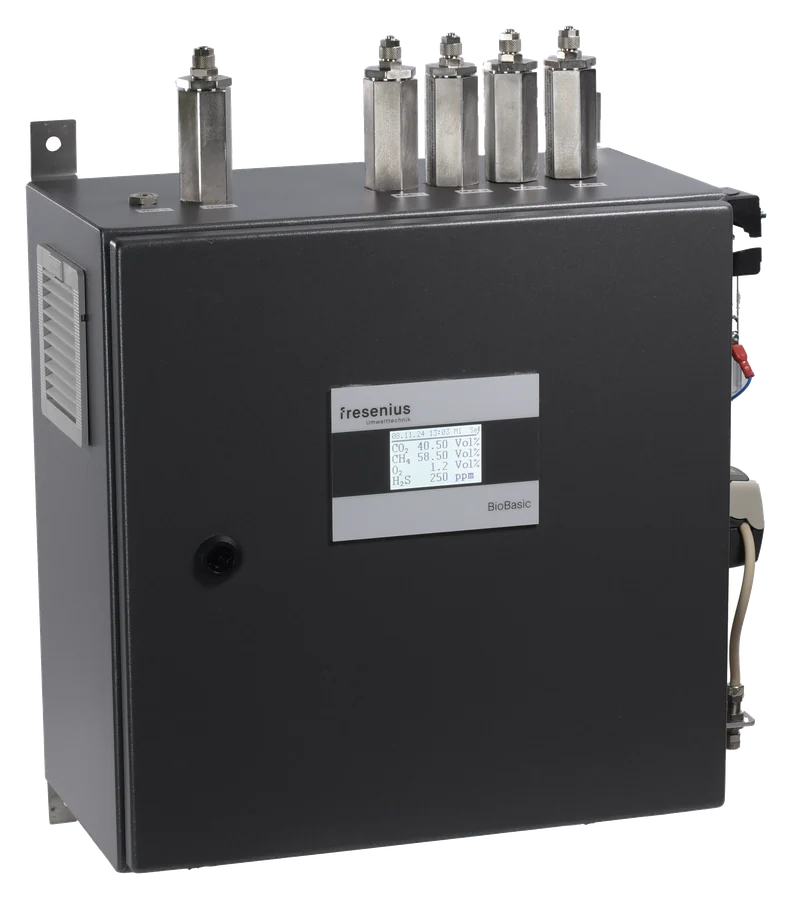
The BioBasic measures methane and H₂S, and optionally CO₂, O₂ and H₂. It measures at one or several points between digester, gas holder and CHP unit.

  • Measuring cycle per measuring point 22 min 20 s: interval from 15 min, plus pre-purge, 20 s measurement and post-purge
  • H₂S via a bypass three times a day per measuring point
  • Sampling line 40 m as standard
  • 1 sample gas inlet, expandable to up to 5

Measuring point 3

CHP exhaust

  • CH₂OFormaldehyde

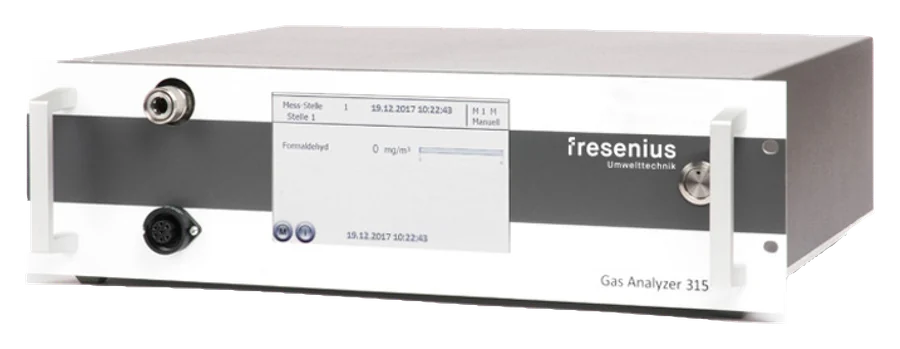
The GA 315 Hot Gas measures formaldehyde hot and wet, directly in the exhaust stream. It uses NDIR and needs no sample gas cooler. So there is no washout loss.

  • Measuring range 0–200 mg/m³ (0–160 ppm)
  • Detection limit 2 mg/m³ (1.6 ppm)
  • Measurement uncertainty < 5 % of reading
  • Hot gas measurement up to 300 °C, without gas cooler

Measuring point 4

Sludge hall

  • CH₄Methane

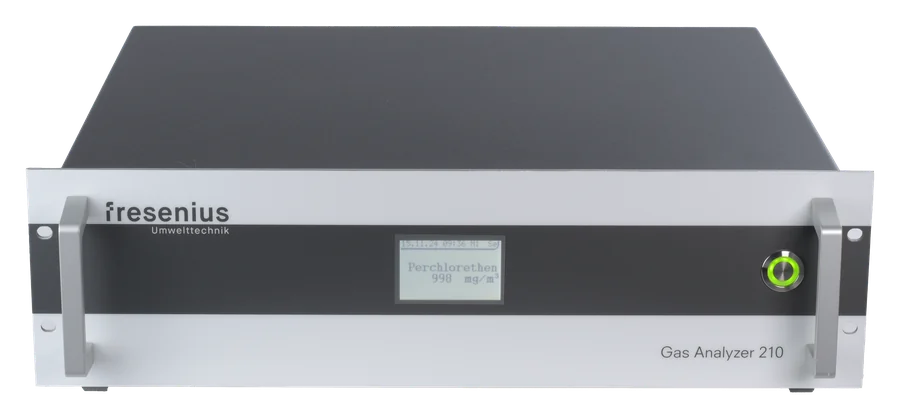
Here, the GA 210 in its LEL version does the job. This version is optimised for 0–10 vol.% methane. The device stands outside the Ex zone. The sampling line brings the sample gas to it.

  • Measuring range 0–10 vol.% CH₄
  • NDIR dual beam with reference detector, no cross-sensitivity to H₂S and CO₂
  • Measurement every second, analyser T₉₀ approx. 3 s
  • Sampling line up to 40 m, internal pump approx. 4 l/min

Measuring point 5

Exhaust air

  • H₂SHydrogen sulphide
  • NH₃Ammonia

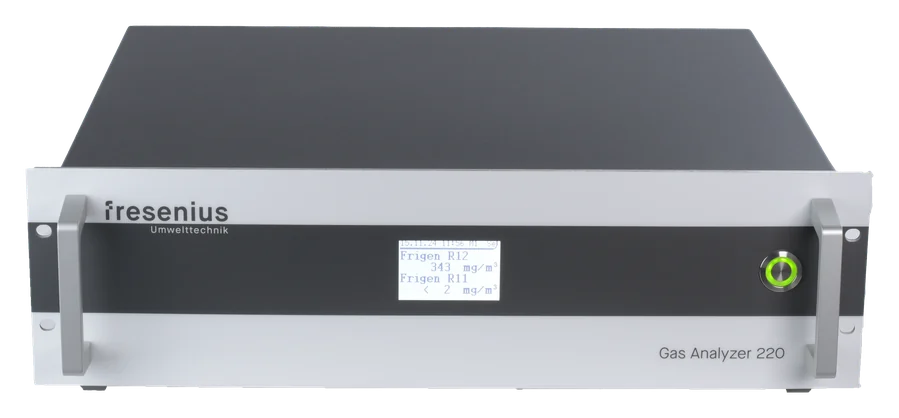
The GA 210 suits one component, the GA 220 several. Depending on the gas, they use an NDIR or an electrochemical sensor. The right version depends on what you measure: room exhaust air or gas from covered tanks.

  • GA 210: NDIR, electrochemical or zirconium oxide
  • Up to 8 sample gas inlets per device
  • Continuous (1 s) or quasi-continuous (20 s) measurement
  • Profibus DP, Modbus TCP, EtherNet/IP, Profinet, 4–20 mA

Measuring point 6

NH₃ stripping

  • NH₃Ammonia

The GA 315 Hot Gas measures highly water-soluble substances directly in the hot, humid gas stream. It uses NDIR and needs no gas cooling. We design the ammonia version to suit your process.

  • Ammonia version on request
  • Fully heated sample path – no washout loss
  • The humidity in the gas is compensated
  • Heated sampling probe and sample line are part of the system

Measuring point 7

Spot check

  • CH₄Methane
  • CO₂Carbon dioxide
  • H₂SHydrogen sulphide
  • O₂Oxygen

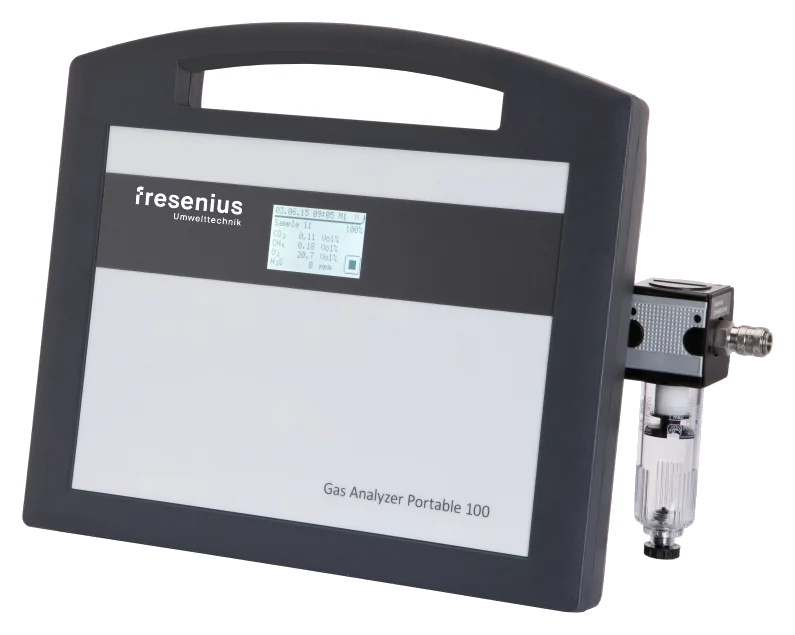
The GAP 100 measures methane, CO₂, H₂S and oxygen in the field.

  • CH₄ 0–100 vol.%, CO₂ 0–65 vol.%
  • H₂S 0–2,000 ppm, O₂ 0–25 vol.%
  • NDIR dual beam for CH₄ and CO₂, electrochemical for H₂S and O₂
  • Full specification after 5 minutes

Measuring points and solutions

Seven measuring points – and the right measurement technology for each

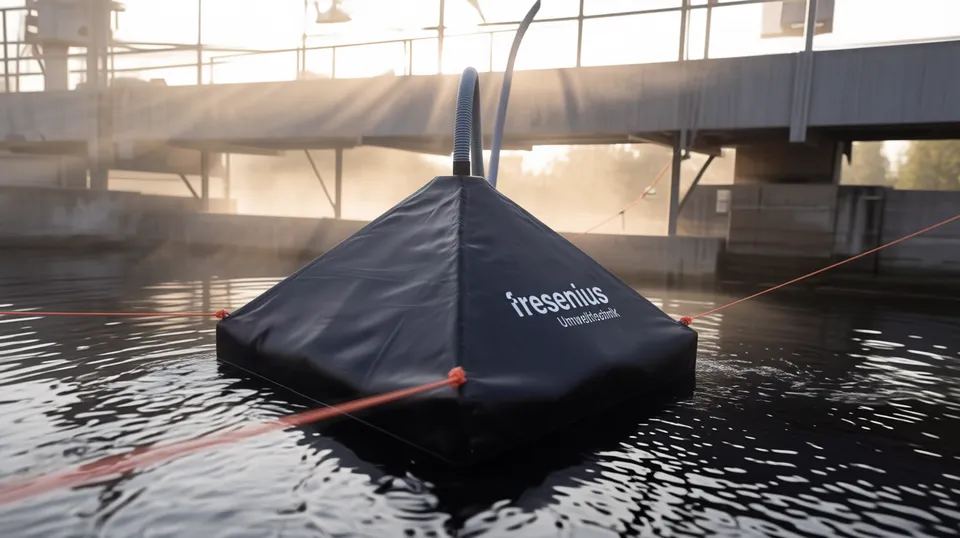
Gas Dome 300 on the aeration tank of a wastewater treatment plant

Measuring point 01

Aeration tank: nitrous oxide and methane as an emission rate

  • N₂ONitrous oxide
  • CH₄Methane
  • CO₂Carbon dioxide

Nitrous oxide (N₂O) forms in the aeration tank during biological nitrogen removal. Methane (CH₄) enters the tank with the influent and from anaerobic zones. Aeration strips it out. The off-gas is measured above the water surface. A floating hood covers a known area for this.

Solution: The Off-Gas System comes as Smart with the Smart Control 300 or as Expert with the GA 320. Both versions work with the Gas Dome 300 floating hood.

  • 1.00 m² collection area per hood
  • The gas analyser calculates the emission rate E = c × Q / A in mg/(m²·h)
  • N₂O detection limit 10 ppmV (Smart) or 0.5 ppmV (Expert)
  • No blower, no zero or span gas
  • One or two measuring points per system
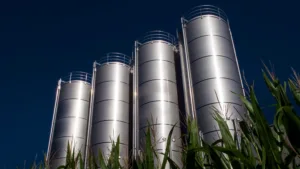
Digesters and gas holder of a wastewater treatment plant at dusk

Measuring point 02

Digester and gas holder: digester gas ahead of the CHP unit

  • CH₄Methane
  • H₂SHydrogen sulphide
  • CO₂Carbon dioxide
  • O₂Oxygen

Digester gas is also called sewage gas. It forms in the digester during anaerobic sludge digestion and consists mainly of methane and carbon dioxide. Two values matter for the CHP unit. The methane content determines the energy content. Hydrogen sulphide (H₂S) attacks the engine and gas lines. The H₂S value also shows whether desulphurisation is working.

Solution: The BioBasic measures methane and H₂S, and optionally CO₂, O₂ and H₂. It measures at one or several points between digester, gas holder and CHP unit.

  • Measuring cycle per measuring point 22 min 20 s: interval from 15 min, plus pre-purge, 20 s measurement and post-purge
  • H₂S via a bypass three times a day per measuring point
  • Sampling line 40 m as standard
  • 1 sample gas inlet, expandable to up to 5
  • NDIR dual-pressure reference method for methane and CO₂ with automatic zero-point correction
  • ATEX-certified flame arresters; the device stands outside the Ex zone
  • 4–20 mA, Modbus TCP, Profinet; wall housing IP 54
GA 315 Hot Gas

Measuring point 03

CHP exhaust: measuring formaldehyde

  • CH₂OFormaldehyde

The gas engine of the CHP unit forms formaldehyde (CH₂O) during combustion. Emission limits apply to the exhaust, in Germany under the 44th BImSchV. Formaldehyde is highly water-soluble. If you cool the sample gas, a large share is lost with the condensate. At a dew point of around 4 °C, the loss is typically 30–60 % or more.

Solution: The GA 315 Hot Gas measures formaldehyde hot and wet, directly in the exhaust stream. It uses NDIR and needs no sample gas cooler. So there is no washout loss.

  • Measuring range 0–200 mg/m³ (0–160 ppm)
  • Detection limit 2 mg/m³ (1.6 ppm)
  • Measurement uncertainty < 5 % of reading
  • Hot gas measurement up to 300 °C, without gas cooler
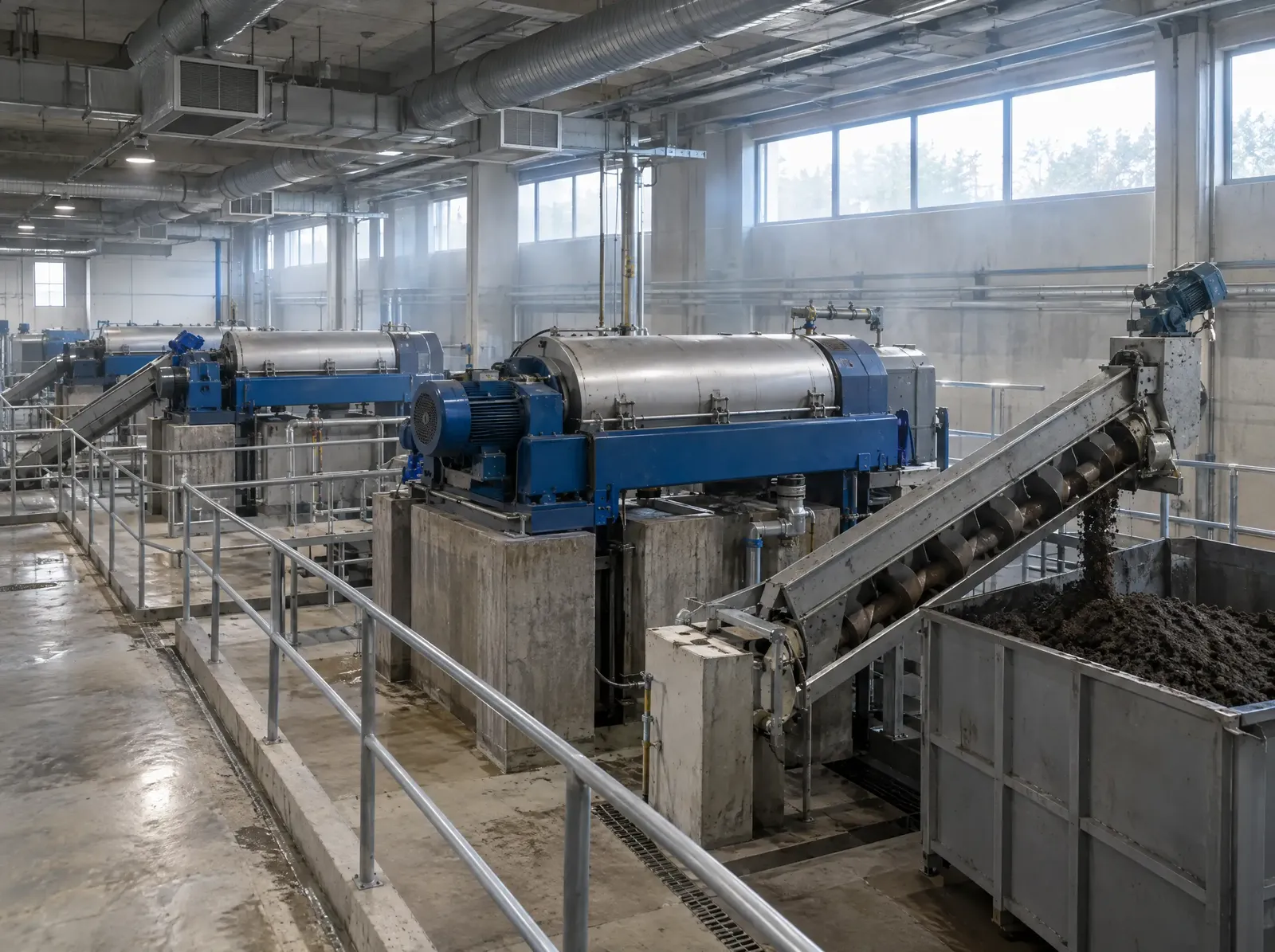
Sludge dewatering with centrifuges in the sludge hall of a treatment plant

Measuring point 04

Sludge hall and dewatering: methane below the LEL

  • CH₄Methane

Sewage sludge continuously releases methane. The lower explosive limit (LEL) of methane is 4.4 vol.%. Continuous methane monitoring is therefore part of explosion protection in sludge halls. NDIR measures methane selectively in the infrared. H₂S and siloxanes do not poison the NDIR measurement.

Solution: Here, the GA 210 in its LEL version does the job. This version is optimised for 0–10 vol.% methane. The device stands outside the Ex zone. The sampling line brings the sample gas to it.

  • Measuring range 0–10 vol.% CH₄
  • NDIR dual beam with reference detector, no cross-sensitivity to H₂S and CO₂
  • Measurement every second, analyser T₉₀ approx. 3 s
  • Sampling line up to 40 m, internal pump approx. 4 l/min
  • 4–20 mA for the PLC
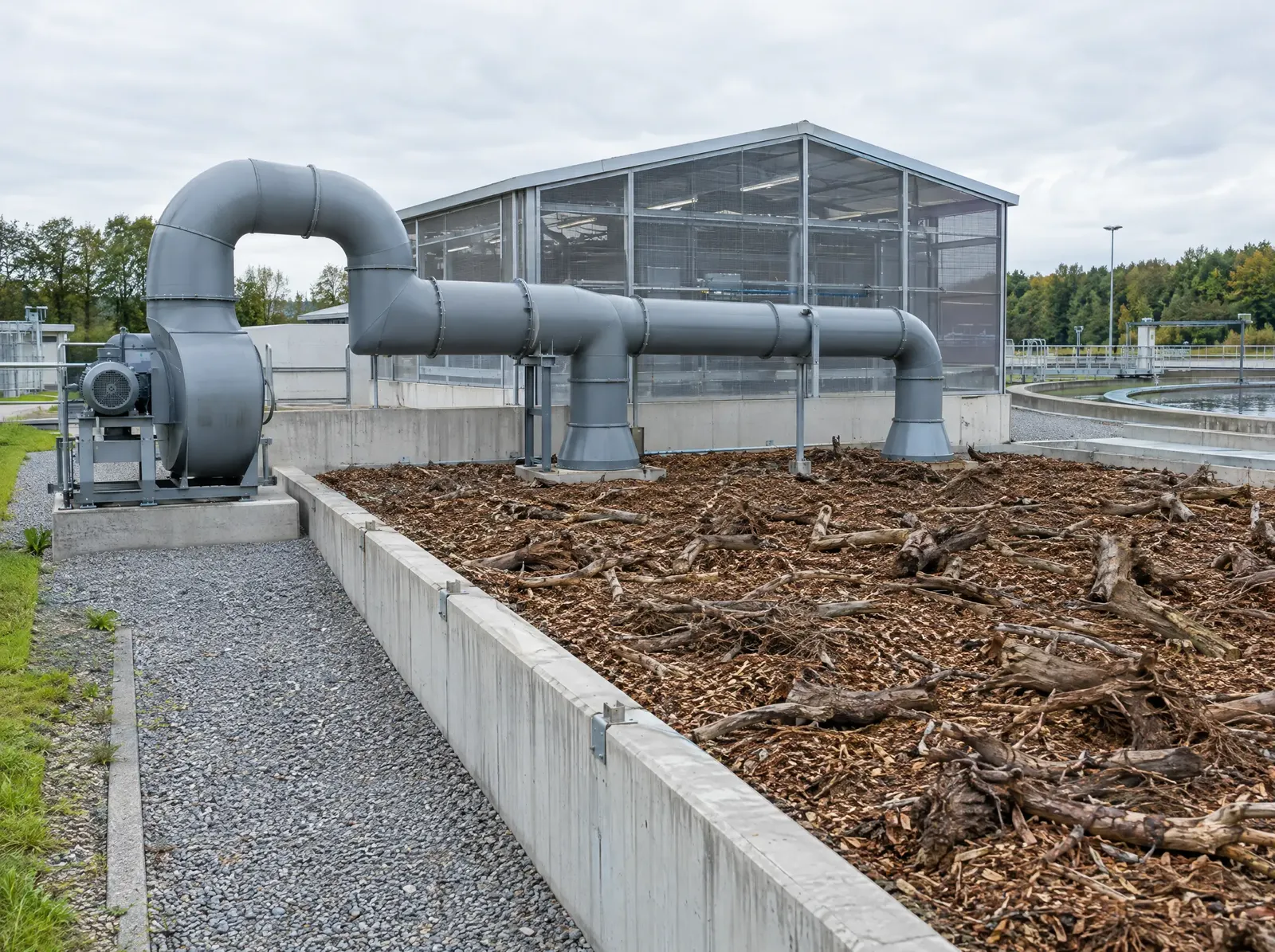
Biofilter and exhaust air ducts at a wastewater treatment plant

Measuring point 05

Exhaust air ahead of biofilter and scrubber: H₂S and NH₃

  • H₂SHydrogen sulphide
  • NH₃Ammonia

Air is extracted from the screen house, covered tanks and sludge treatment. This exhaust air goes to biofilters or scrubbers. Hydrogen sulphide and ammonia are the main causes of odour. Their concentration in the raw gas shows how heavily the exhaust air treatment is loaded.

Solution: The GA 210 suits one component, the GA 220 several. Depending on the gas, they use an NDIR or an electrochemical sensor. The right version depends on what you measure: room exhaust air or gas from covered tanks.

  • GA 210: NDIR, electrochemical or zirconium oxide
  • Up to 8 sample gas inlets per device
  • Continuous (1 s) or quasi-continuous (20 s) measurement
  • Profibus DP, Modbus TCP, EtherNet/IP, Profinet, 4–20 mA
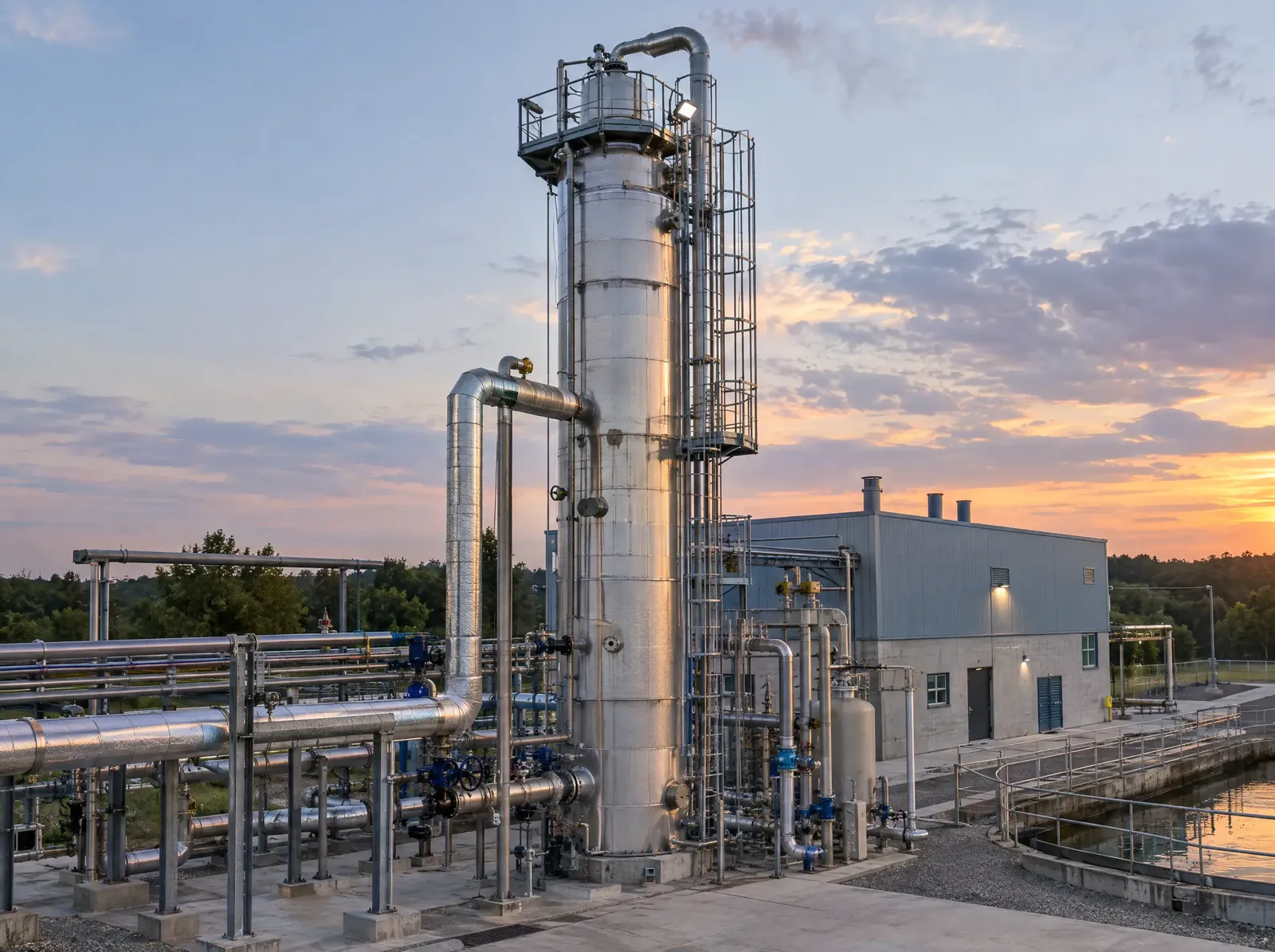
Stripping column for removing ammonia from process water

Measuring point 06

Process water: ammonia during stripping

  • NH₃Ammonia

The process water from sludge dewatering is rich in ammonium. When it is treated by stripping, the ammonia ends up in a hot, steam-saturated gas. A sample gas cooler would wash it out with the condensate. That is why the device measures hot and wet.

Solution: The GA 315 Hot Gas measures highly water-soluble substances directly in the hot, humid gas stream. It uses NDIR and needs no gas cooling. We design the ammonia version to suit your process.

  • Ammonia version on request
  • Fully heated sample path – no washout loss
  • The humidity in the gas is compensated
  • Heated sampling probe and sample line are part of the system
GAP 100

Measuring point 07

Spot checks: testing digester gas on the move

  • CH₄Methane
  • CO₂Carbon dioxide
  • H₂SHydrogen sulphide
  • O₂Oxygen

Not every point needs a fixed installation. A portable device measures the same gases. It is enough for spot checks on gas lines and vessels. You can also use it to cross-check permanent measuring points.

Solution: The GAP 100 measures methane, CO₂, H₂S and oxygen in the field.

  • CH₄ 0–100 vol.%, CO₂ 0–65 vol.%
  • H₂S 0–2,000 ppm, O₂ 0–25 vol.%
  • NDIR dual beam for CH₄ and CO₂, electrochemical for H₂S and O₂
  • Full specification after 5 minutes
Aerial view of a wastewater treatment plant with aeration tanks and digesters at dawn

Urban Wastewater Treatment Directive

Nitrous oxide and methane enter the inventory

By July 2027 the EU member states transpose the new Urban Wastewater Treatment Directive (EU) 2024/3019. It requires treatment plants to account for their methane and nitrous oxide. Default emission factors give you a calculated value. A hood on the tank gives you a measured value. According to the IPCC, nitrous oxide has around 273 times the climate impact of CO₂. For biogenic methane, the factor is around 27.

To the Off-Gas System
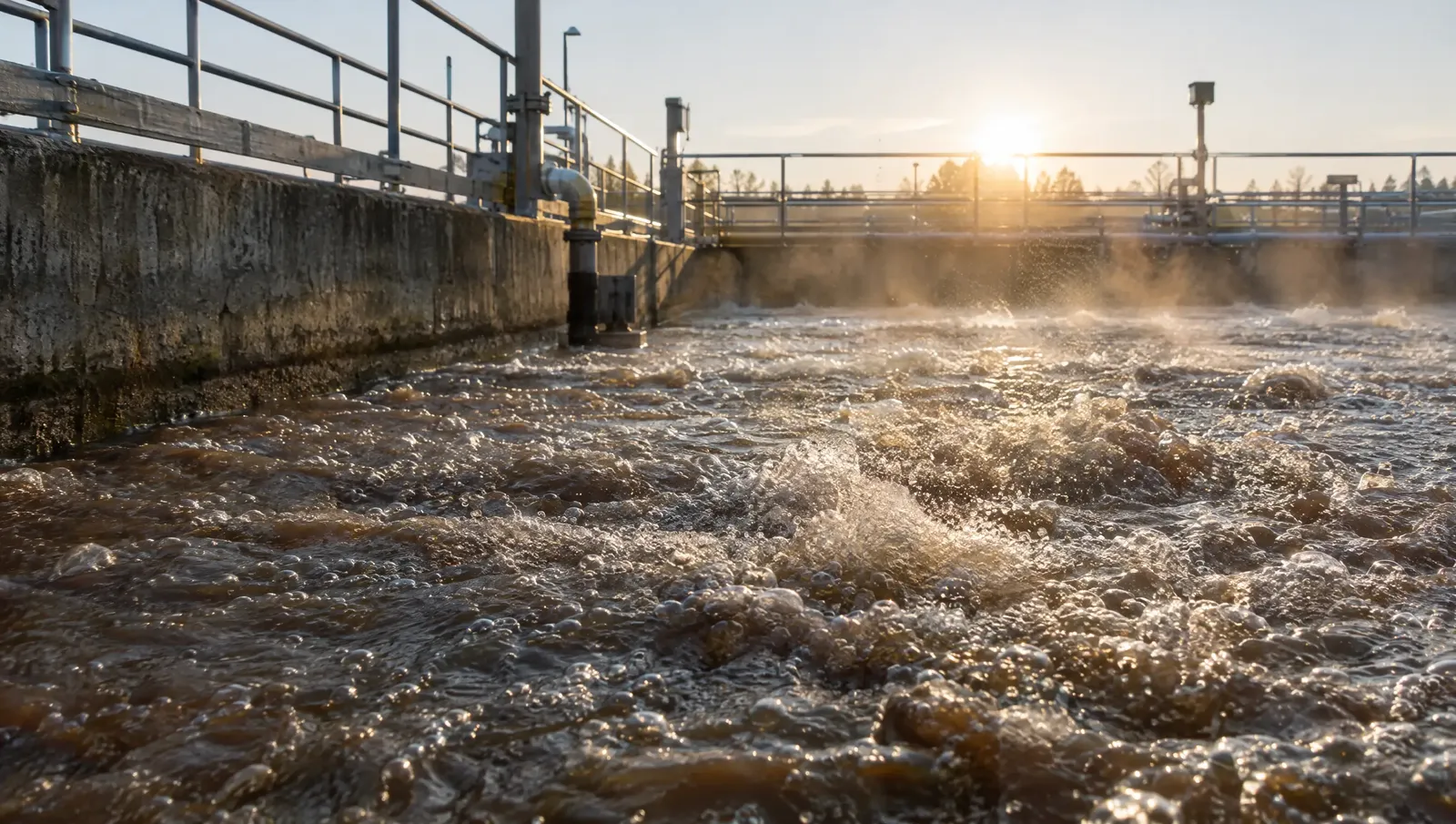
Aerated tank of a wastewater treatment plant in backlight

Case study

Stockholm Vatten measures instead of estimating

Stockholm Vatten serves 1.1 million people. Seven measuring systems with the GA 220 and the GA 320 run at the Henriksdal and Bromma treatment plants. They continuously transmit methane, nitrous oxide and CO₂ values to the SCADA system. The systems compensate for cross-sensitivities.

  • 1.1 mpeople served
  • 7measuring systems
  • CH₄ · N₂O · CO₂continuously to SCADA
Read the case study

Overview

Measuring point, gases and solution at a glance (extract)

Measuring point Gases Solution
Aeration tank N₂O · CH₄ · CO₂ Off-Gas System, Gas Dome 300, Smart Control 300, GA 320
Digester gas CH₄ · H₂S · CO₂ · O₂ BioBasic
CHP exhaust CH₂O GA 315 Hot Gas
Sludge hall CH₄ GA 210
Exhaust air H₂S · NH₃ GA 210, GA 220
NH₃ stripping NH₃ GA 315 Hot Gas
Spot check CH₄ · CO₂ · H₂S · O₂ GAP 100

As of 16.10.2026. The datasheets and brochures of each product are authoritative.

Complete system

From sampling to your control system

  • Measured extractively

    The device draws in the sample gas and analyses it in a cabinet or technical room. There, the devices are protected. Out in the plant, you only need the sampling point.

  • Sample conditioning included

    Condensate trap, filter and, where needed, a sample gas cooler are part of the system. This keeps humidity from distorting the measurement.

  • Values straight to your control system

    Readings reach your control system via 4–20 mA, relays or fieldbus such as Modbus TCP and Profinet. Your data stays with you.

  • Worldwide service

    Our service team handles maintenance and calibration. For maintenance, you can take the devices out of the cabinet and send them in.

To our service

Your benefits

What our gas analysis for wastewater treatment gives you

  • Drawn guardian angel with the Fresenius Instruments logo above a wastewater treatment plant

    Safety for plant and team

    Our process measurement technology keeps H₂S and methane on your plant in view. You act before it gets critical.

  • Drawn target with an arrow in the centre

    Precise at every measuring point

    Nitrous oxide, methane, CO₂ and H₂S: we choose the right measuring principle for every measuring point.

  • Drawn shield in front of the tanks of a wastewater treatment plant

    Protection against corrosion

    Measuring H₂S in the digester gas protects the CHP unit, pipes and catalyst from corrosion.

  • Drawn coins in front of a falling cost curve

    Lower operating costs

    Durable devices with automatic zero-point correction save test gas and maintenance effort.

  • Drawn Fresenius Instruments service technician at a service van on a wastewater treatment plant

    On-site and workshop service

    Our service team maintains and calibrates your devices on site or in our workshop – internationally with service partners. You can also send devices in.

Advice

Tory – your advisor for the treatment plant

Which measuring point, which gases, how many sampling points? Tory asks for the details in a few steps. She then takes you to the right solution or straight to a meeting with our team.

  • The right solution for each measuring point
  • Off-Gas System, BioBasic or GA series
  • Direct path to a quote request

FAQ

Frequently asked questions on gas analysis at treatment plants

Which gases are measured at a wastewater treatment plant?

At the aeration tank, operators measure nitrous oxide (N₂O), methane (CH₄) and CO₂ as emissions. In the digester gas between digester and CHP unit, the focus is on methane and hydrogen sulphide (H₂S), often with CO₂ and oxygen. In the CHP exhaust, formaldehyde matters. In sludge halls, methane monitoring serves explosion protection. In exhaust air, the key gases are H₂S and ammonia (NH₃). When process water is stripped, ammonia is measured.

What is the difference between digester gas and sewage gas?

There is none: both terms mean the gas from anaerobic sludge digestion in the digester. It consists mainly of methane and carbon dioxide and contains traces such as hydrogen sulphide. It is measured mainly before the CHP unit uses it.

How is nitrous oxide measured at a wastewater treatment plant?

A floating hood such as the Gas Dome 300 captures the off-gas from 1.00 m² of tank surface. The gas analyser measures the concentration. A flow measurement records the volume flow. Together, they give the emission rate E = c × Q / A in mg/(m²·h).

Why is H₂S measured in digester gas?

Hydrogen sulphide is toxic and corrosive. In the CHP unit it attacks the engine and exhaust aftertreatment. The H₂S value after desulphurisation shows whether it is still working. This lets you replace an activated carbon filter, for example, only when it is actually needed.

How is methane monitored in a sludge hall?

An NDIR device monitors methane continuously in a range up to 10 vol.%. This range covers the lower explosive limit of 4.4 vol.%. Unlike pellistors, NDIR is not poisoned by H₂S or siloxanes. It also needs no oxygen for its signal.

How is gas measured when the sampling point is in an Ex zone?

Extractively: a sampling line carries the sample gas to the device. The device stands outside the zone. On the BioBasic, ATEX-certified flame arresters protect the plant. With the GA 210, the sampling line reaches up to 40 m.

Do wastewater treatment plants have to account for nitrous oxide and methane?

The new Urban Wastewater Treatment Directive (EU) 2024/3019 requires treatment plants to account for their methane and nitrous oxide. EU member states transpose it by July 2027. Measured values replace default emission factors.

How do the readings get into the control system?

The devices output readings via 4–20 mA analogue outputs and relays. Depending on the device, a fieldbus is added, such as Modbus TCP, Profibus DP, EtherNet/IP or Profinet. No cloud is required.

Which solution fits my treatment plant?

That depends on the measuring point, the gases and the number of sampling points. Tory, our digital advisor, asks for the details needed. She then takes you to a quote request. Or you talk to our team directly.

Good to know

  • The Off-Gas System delivers operational emission data. You can use it for accounting, to prove optimisations and for continuous monitoring.
  • We define gases, measuring ranges and the number of sampling points together with you – tailored to your plant.
  • Fresenius Instruments develops and builds its process measurement technology in Germany, in Herten.
  • Does your measuring task go further? Together with our partner network, we find the right solution for that, too.

Which measuring point is next on your plant?

Tell us about your measuring task – we design the process measurement technology with you.

Measuring What Matters

GAS ANALYZERS · MADE IN GERMANY · SINCE 1848