Schematic of an NDIR cell: infrared source, cell with sample gas, filter and detector IR source Cell with sample gas Filter Detector Measuring window for CO₂

Signal at the detector 41 %

Solutions · Measuring principle

NDIR: how an infrared gas analyzer measures

From methane in biogas to refrigerants in exhaust air: our process measurement technology measures gases that absorb infrared light by NDIR – in two designs that we tailor to your measuring task.

NDIR (non-dispersive infrared absorption) measures a gas by the infrared light it absorbs: a source shines through the sample gas, a filter passes only the wavelength of the target gas, and a detector measures how much light arrives. The more gas, the less light – the Beer-Lambert law turns this into the concentration. “Non-dispersive” means the light is not split into a spectrum but selected with fixed filters.

  • No test gasin routine operation – thanks to automatic zero-point correction
  • 1 sone reading per second with multi-beam technology
  • Trace to raw gastiny and very high concentrations – with the right cell

Interactive spectrum

Infrared gas analysis: every gas has its measuring window

In infrared gas analysis every gas absorbs light in its own ranges of the spectrum. A filter selects the measuring window of your target gas – if another gas absorbs in the same window, cross-sensitivity arises. We compensate for it. Choose what you want to measure and what else is in the sample gas.

Example:
What you want to measure
Also in the sample gas
Schematic infrared absorption bands of the selected gases with the measuring window of the target gas 2 4 6 8 10 12 14 Measuring window
Wavelength in µm · schematic, rounded
  • None of the selected gases interferes in the measuring window.

Cross-sensitivity compensation: we calculate the interference out

Choosing a different measuring window is only one possible way to compensate for cross-sensitivities. Often the target gas and the interfering gas lie so close together that no filter can separate them. Then mathematics takes over: our devices capture the interference as well and calculate it out of the measured value in every measuring cycle. The models behind this have grown over many applications – they are our know-how.

Measuring signalTarget gas and interference together
Interference, capturedfor example humidity
Measured valueonly the target gas – steady and stable

Schematic illustration. In practice, our compensation model combines several measured variables at once.

  • Capture the interferenceThe device also measures what interferes in the measuring window – such as humidity or CO₂.
  • Compensate mathematicallyOur compensation separates the gases even when several of them influence each other.
  • Matched to your sample gasWe match the compensation to your sample gas. Your measured value then shows the target gas.

Simplified illustration: position and shape of the absorption ranges are rounded. We define the measuring window and compensation your measurement needs to suit your sample gas.

Know-how

Two routes to a stable zero point

Every infrared gas analyzer needs a reference, otherwise the zero point drifts. Test gas is often used for this. As with a scale, the zero point has to be right for every reading to be right. We master two advanced methods: they reduce the use of test gas and greatly minimise long-term drift. Together with you, we choose the method that fits your desired measuring range, the measuring interval and maintenance. We also build the cell to suit your application.

Automatic zero-point correction with the two-pressure reference method

Zero drift is the silent adversary of every infrared measurement: sources age, windows get dirty, temperatures wander. Our two-pressure reference method lets the sample gas check itself – in every single measuring cycle. A precisely controlled pressure change in the cell delivers the reference along with it, and the zero point corrects itself automatically, measurement after measurement.

  1. Fill Fresh sample gas flows into the cell.
  2. Measure The device measures how much infrared light the gas absorbs at normal pressure.
  3. Pressure change The pump lowers the pressure in the cell in a controlled way.
  4. Reference The same gas, fewer molecules in the beam – the comparison corrects the zero point and yields the concentration.
  • Self-referencing: no reference gas and no zero gas in routine operation.
  • Drift compensation in every cycle – an ageing source and contaminated optics are calculated out.
  • No moving optics, designed for long-term stability.
  • Several detectors measure several gases in parallel in one cell.

Continuous drift compensation with dual, triple and quad-beam technology

Here the reference runs constantly: a beam splitter divides the infrared light between measuring and reference channels, and a reference detector watches a wavelength at which no gas absorbs light. Whatever intensity the source loses, the reference channel sees immediately – and the device calculates it out, second by second.

Continuous signal – one reading per second

  • A reading every second – for fast processes and safety measurements such as LEL monitoring.
  • Up to four channels in one cell: for several gases or as additional channels against cross-sensitivity and for very high concentrations.
  • Cell kept at constant temperature – for consistent conditions.
  • Zero and span are calibrated regularly with test gas – automatically, on a schedule or on an external signal.
What matters in operation
Two-pressure referenceDual, triple, quad beam
Zero-point correctionautomatic in every measuring cyclecontinuous via the reference channel
Referencethe same gas at reduced pressurereference detector at a wavelength without absorption
Readingper measuring cycle and sampling pointevery second, continuously
Test gas in routine operationnot neededfor zero and span, triggered automatically
Ideal forlong-term process monitoring without interventionfast processes, safety and personal protection measurement
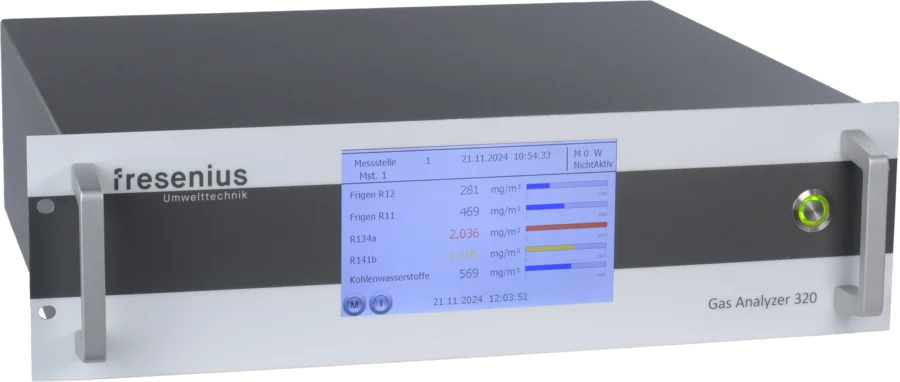
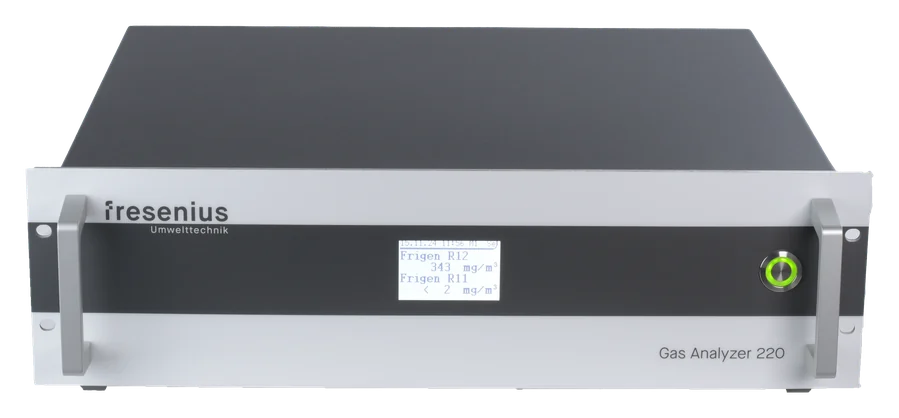
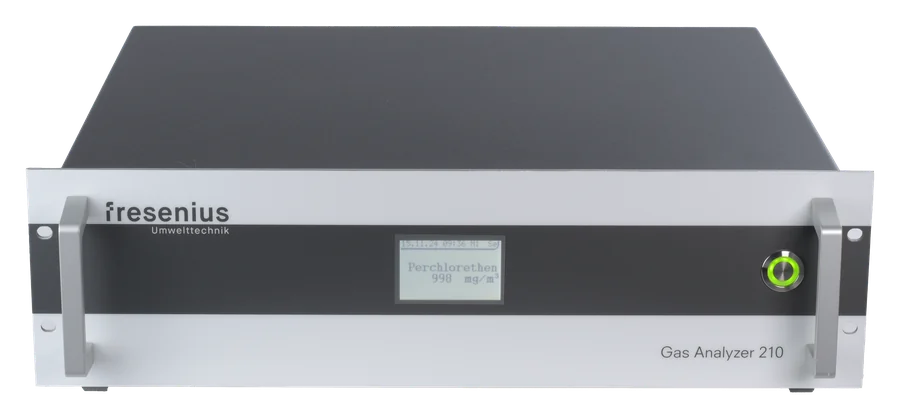
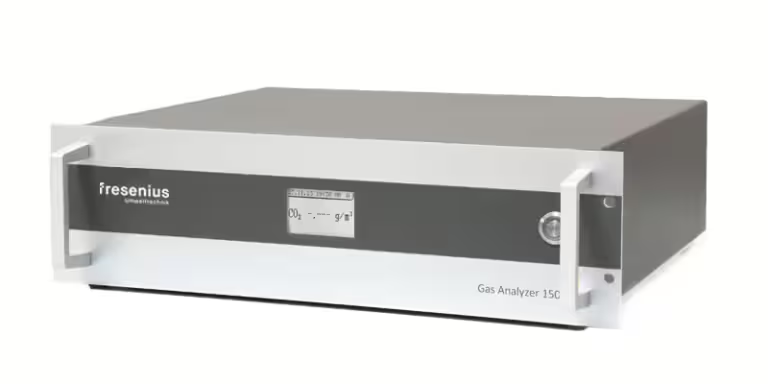
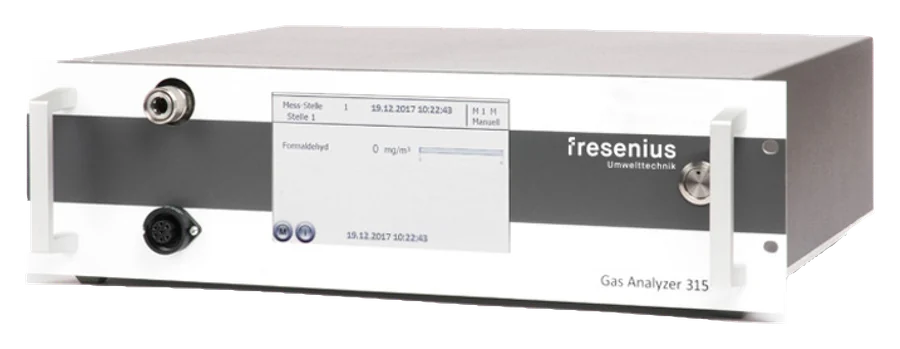
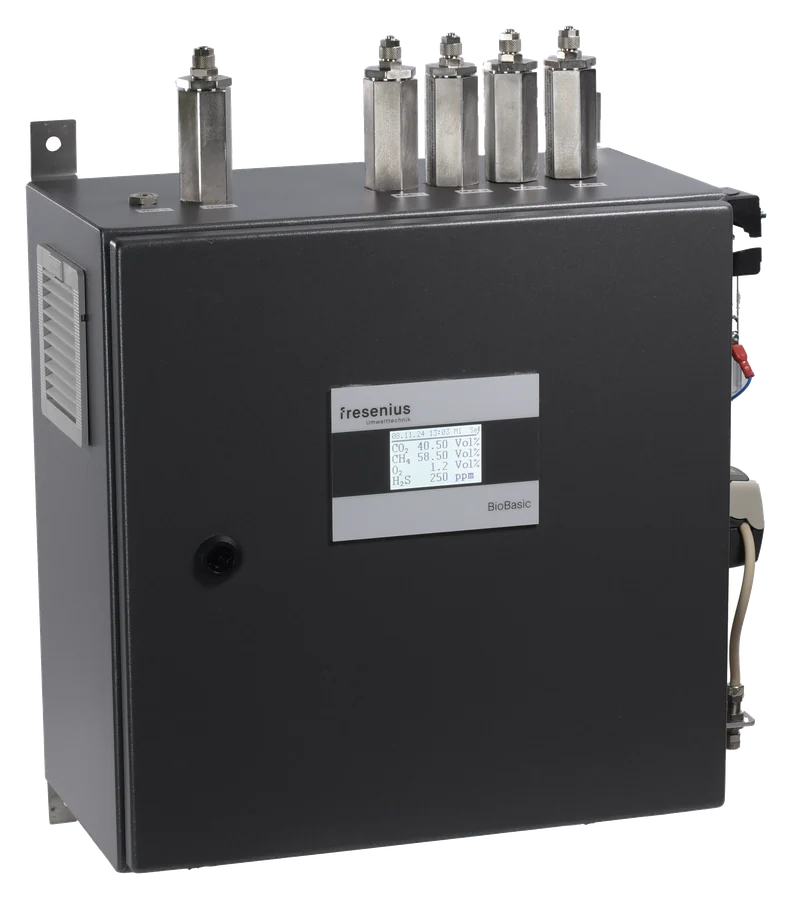
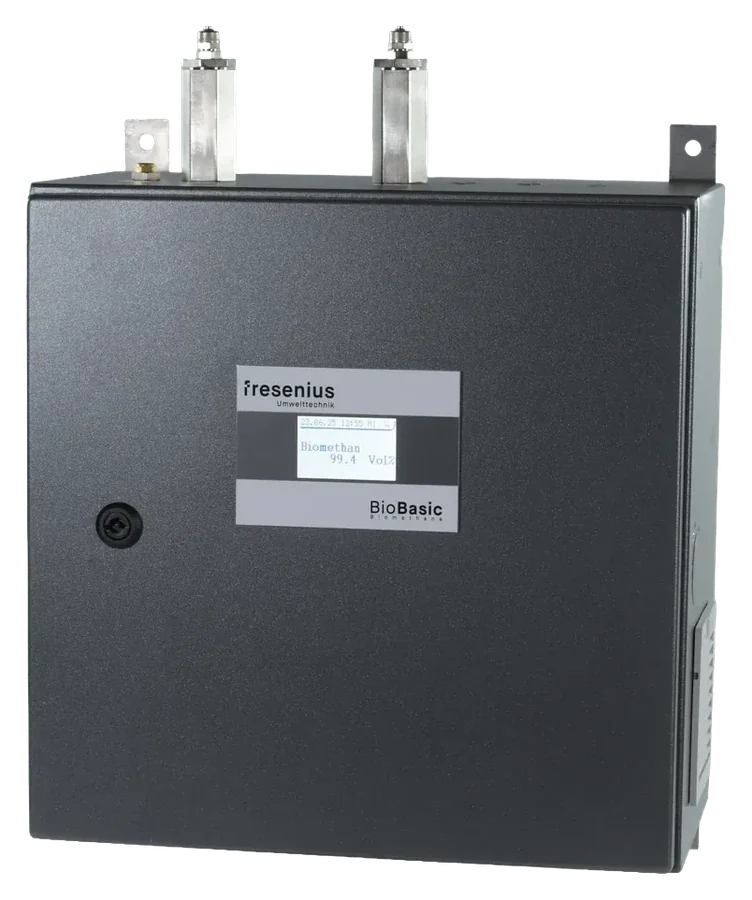
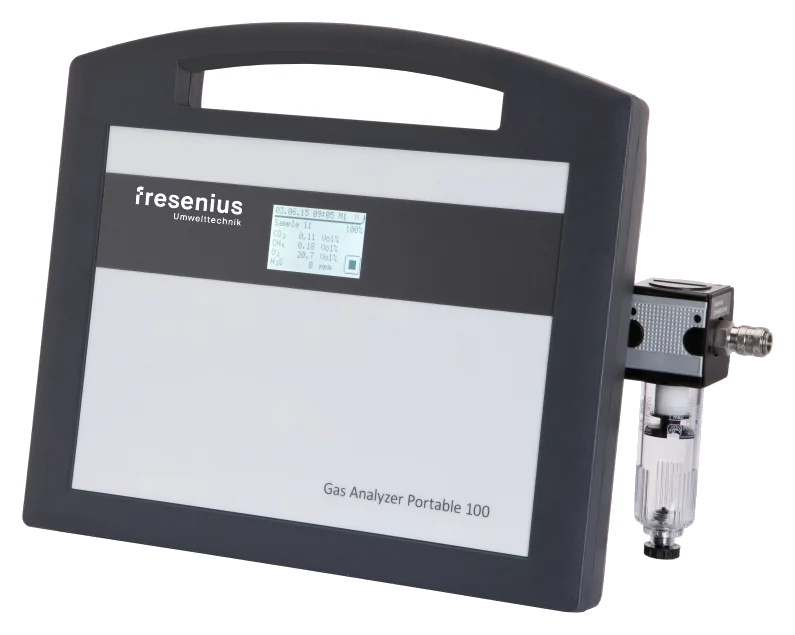
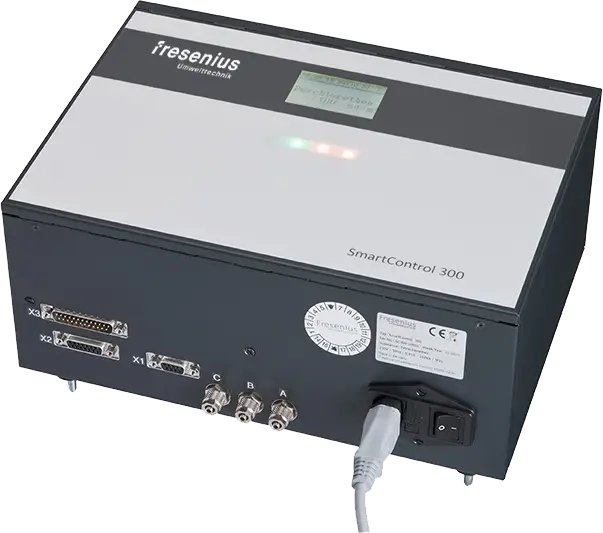
DevicesGA 150, GA 210, GA 220, GA 315, GA 320, BioBasic, Smart Control 300GA 210, GA 220, BioBasic Biomethane, GAP 100

Cell and detection limit

Detection limit: from trace gas to raw gas

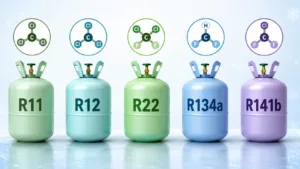
How low the detection limit goes depends on the length of the cell: the longer the path through the gas, the more light is absorbed. Short cells measure high concentrations in raw gas, long cells with a refined interior measure traces in clean gas. Using refrigerants as an example, see which cell measures your concentration.

Traces: when every last ppm counts

For trace measurements we build cells that guide the infrared light through the gas for a particularly long way and waste hardly any of it. This takes detection limits down into the ppm range – below that for some gases. And when it has to be finer still – for example greenhouse gases in outdoor air, where only tiny amounts occur – our partner network finds the right laser spectroscopy.

Concentration 50 mg/m³

Trace range
Raw gas range
  • Long clean gas cell for traces in clean gas and exhaust air
  • Short raw gas cell for high concentrations in raw gas

Example refrigerants; schematic illustration. Measuring ranges depend on gas and configuration – we design them for your plant together with you.

Gases

What NDIR measures – and where another principle fits

Where another principle fits

Molecules made of two identical atoms such as H₂, N₂ and O₂, and noble gases, do not absorb infrared. For these we have other measuring principles – and where none fits, our partner network.

  • O₂ paramagnetic, with zirconia or electrochemically – GA 210 O₂ paramagnetic
  • H₂ by thermal conductivity or electrochemically – FTC300
  • H₂S electrochemically, in biomethane by UV absorption – BioBasic Biomethane
  • N₂ · Ar · He Nitrogen and noble gases: we find the right measurement technology with our partner network

Your advantages

Advantages of our NDIR technology

  • Drawn hand setting a measuring pointer to zero

    Automatic zero-point correction

    The zero point corrects itself with every measurement – without zero gas and without intervention. This saves time, test gas and calibration effort.

  • Drawn anchor holding steady in moving waves

    Long-term stability

    Robust cells and a reference in every cycle keep your readings stable, even when temperature and ambient pressure fluctuate. Less maintenance, longer service life.

  • Drawn arrow hitting the target precisely

    High precision

    A carefully chosen measuring window, compensated cross-sensitivities and our own characteristic-curve technology that also maps high concentrations cleanly: your reading belongs to your target gas.

Advice

Tory – your questions about NDIR

Which gas, which measuring range, what else is in the sample gas? Tory clarifies in a few steps whether NDIR fits and which design – and takes you straight to our team.

  • Measuring principle and design matched to your gas
  • Spot cross-sensitivities early
  • Direct path to a quote request

FAQ

Frequently asked questions about NDIR

What is NDIR?

NDIR stands for non-dispersive infrared absorption. A source shines through the sample gas, a filter passes only the wavelength of the target gas, and a detector measures how much light arrives. The more gas, the less light – the Beer-Lambert law turns this into the concentration.

How does an NDIR gas analyzer work?

A pump draws the sample gas into the cell. Infrared light crosses the cell, the target gas absorbs part of it, and a filter in front of the detector selects the measuring window. To keep the reading stable, every measurement needs a reference: either the same gas at reduced pressure (two-pressure reference) or a reference channel at a wavelength without absorption (multi-beam).

What is the difference between an NDIR sensor and an NDIR gas analyzer?

An NDIR sensor is a component, for example for CO₂ in room air. A gas analyzer is a complete measuring system for process gas: with pump, sample gas conditioning, compensation of cross-sensitivities, switching between sampling points and connection to your control system.

Which gases can NDIR measure?

Gases that absorb infrared light: for example CH₄, CO₂, CO, N₂O, NH₃, SO₂, ethylene, formaldehyde, methanol, refrigerants such as R134a and chlorinated solvents. H₂, N₂, O₂ and noble gases cannot be measured by NDIR – for these we use other measuring principles.

What is cross-sensitivity, and how is it compensated?

Cross-sensitivity arises when another gas absorbs in the measuring window of the target gas. We choose a measuring window without interference or measure the interfering gas as well and calculate it out – also in mixtures where several gases influence each other.

Does humidity interfere with NDIR measurement?

Water vapour absorbs infrared in several ranges. A sample gas cooler dries the sample gas to a dew point of 5 °C; where the smallest concentrations matter, a separate channel also measures the humidity and calculates it out.

What is automatic zero-point correction?

It compensates the zero drift of an infrared measurement without anyone having to connect zero gas. With the two-pressure reference method this happens in every measuring cycle via a pressure change in the cell, with multi-beam technology continuously via a reference channel. This keeps the readings stable over a long time.

How often does an NDIR device need calibrating?

With the two-pressure reference you need no test gas in routine operation – the zero point corrects itself automatically with every measurement. Multi-beam devices calibrate zero and span at fixed intervals with test gas, triggered automatically.

How low is the detection limit?

It depends on the gas and the cell. With long cells with a refined interior we reach detection limits down into the ppm range – which one for your gas, we tell you after a look at your measuring task.

Good to know

  • We define the measuring window, the cell and the compensation of interfering gases to suit your sample gas – the device datasheets are authoritative.
  • Greenhouse gases in outdoor air, where only tiny amounts occur, or gases that do not absorb infrared? With our partner network we find the right solution for that, too.
  • Developed and built in Germany – process measurement technology from Fresenius Instruments in Herten.

Is NDIR right for your gas?

Tell us about your measuring task – we design the process measurement technology with you.

Measuring What Matters

GAS ANALYZERS · MADE IN GERMANY · SINCE 1848