


Floating hood for nitrous oxide and methane monitoring at wastewater treatment plants
Gas Dome 300
The floating hood captures nitrous oxide (N₂O), methane (CH₄) and CO₂ from a defined area of 1.00 m² directly above the aeration tank. It is the core of the Off-Gas System – with the Smart Control 300 (Smart) or the GA 320 (Expert).
Part of the Off-Gas System Compare Smart and Expert- CH₄ Methane GWP 28× CO₂
- N₂O Nitrous oxide GWP 273× CO₂
- CO₂ Carbon dioxide Reference

The Product
GAS DOME 300
Floating hood for direct capture of nitrous oxide, methane and CO₂ from 1.00 m² of basin surface.
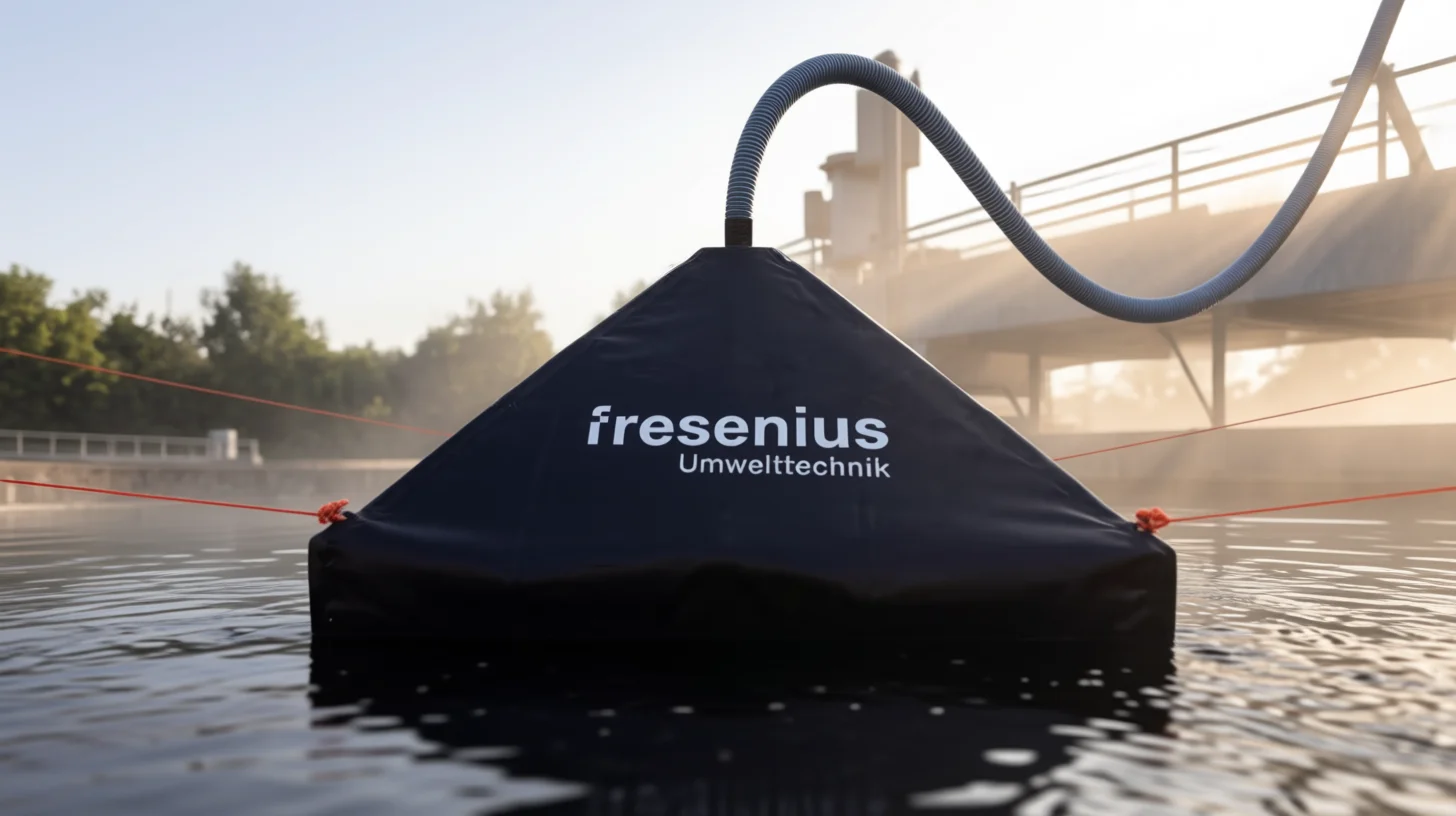
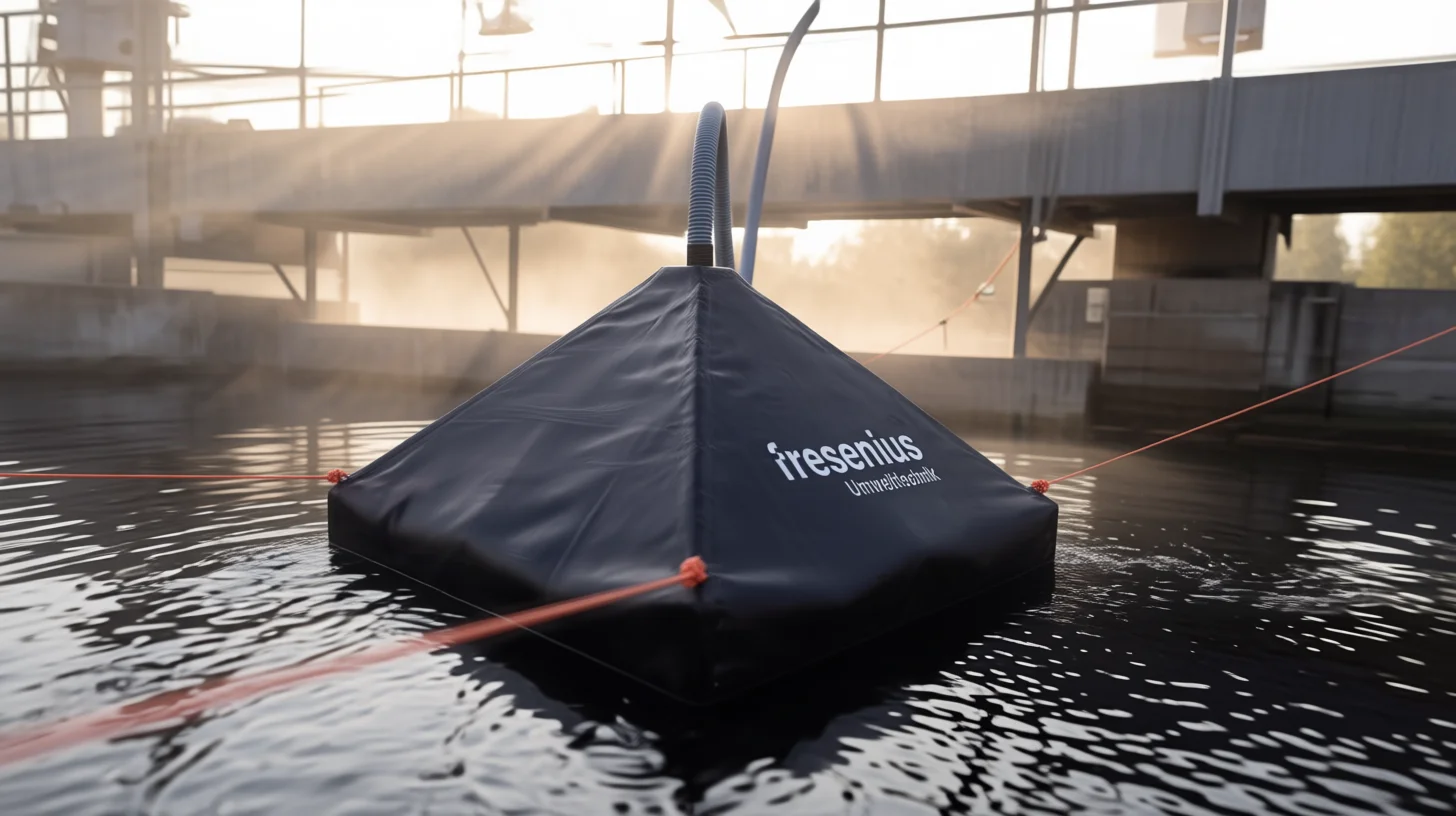
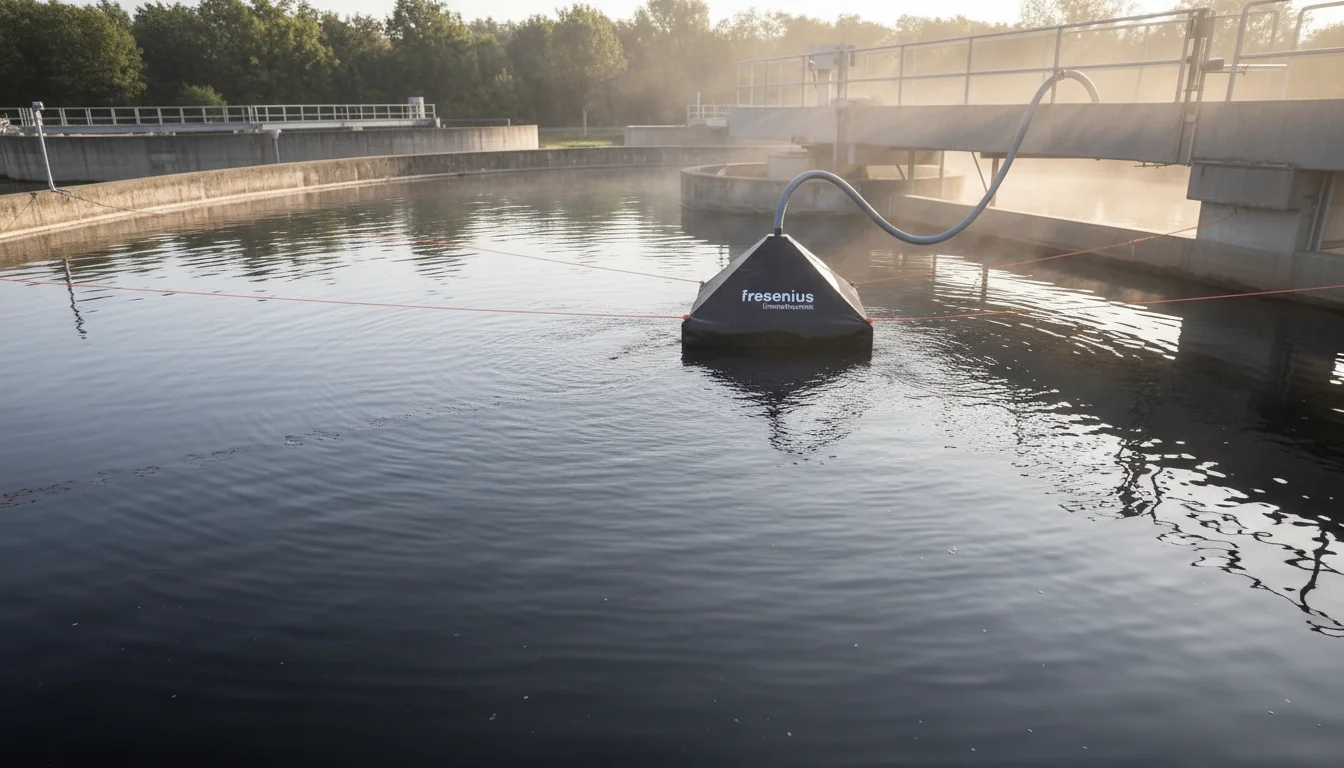
Illustration for reference only. The tube must be guided vertically upward.
How it works
From basin to gas analyzer
Rising greenhouse gases (N₂O, CH₄, CO₂) collect under the hood over 1.00 m² of basin surface. Without a blower, driven by its own pressure, the off-gas flows through the hose, condensate trap, filter and flow measurement into the outdoor cabinet. There the analyzer – Smart Control 300 in the Smart system, GA 320 in the Expert system – measures and calculates the emission rate in mg/(m²·h).
Hood details (extract)
Construction in eight facts
- Collection area
- 1.00 m² collection area (inside dimension)
- Design
- Pyramid on a PVC-U floating frame, dark PVC skin
- Buoyancy
- Closed-cell PE buoyancy insulation
- Skirt
- Skirt all round, 20–30 cm immersed, chain ballast
- Connection
- Tank feedthrough 1½″, 40 mm hose nozzle
- Flow
- Flow 0–20 m³/h, no blower
- Positioning
- Guy ropes or fixed bridge, boom for strain relief
- Hose
- Hose ID 40 mm, 25 m per measuring point, down to −20 °C
Extract, as of 06.10.2026. The Off-Gas System Smart and Expert brochures are binding.
Smart · Expert
With SC 300 or GA 320: 10 ppmV or 0.5 ppmV detection limit
The Gas Dome 300 comes with gas path and outdoor cabinet as the Off-Gas System. Which analyzer goes into the cabinet depends on how low your nitrous oxide values are.
-
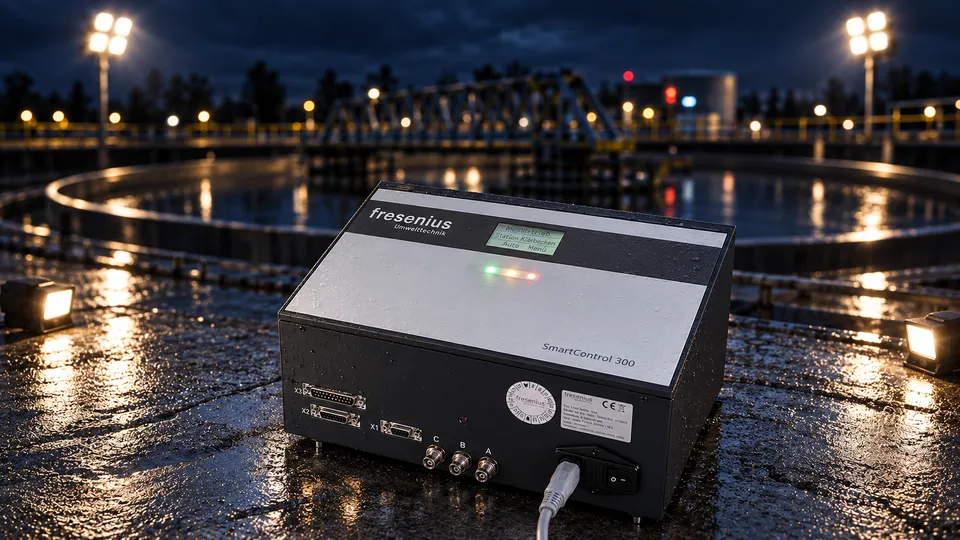
Gas Dome 300 + Smart Control 300
Off-Gas System Smart
The economical solution for continuous emission monitoring.
- N₂O detection limit 10 ppmV
- UWWTD accounting, continuous monitoring
- Cabinet 1200 × 600 × 400 mm
-
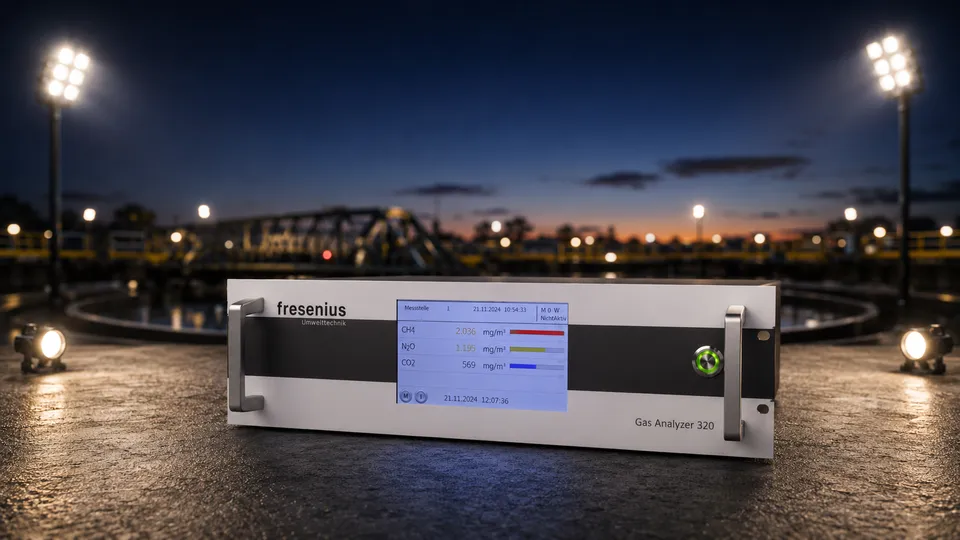
Gas Dome 300 + GA 320
Off-Gas System Expert
For the highest demands on detection limit, accuracy and stability.
- N₂O detection limit 0.5 ppmV
- Uncertainty ≤ 2 %, humidity compensation
- Cabinet 1200 × 600 × 600 mm
Measurement methods
What happens inside the analyzer
Self-referencing, no zero or span gas
Both analyzers – Smart Control 300 and GA 320 – measure N₂O, CH₄ and CO₂ using the NDIR dual-pressure reference method. The zero point is corrected with every measurement, so the system needs neither zero gas nor span gas and no consumables. The GA 320 additionally compensates for humidity and cross-sensitivities.
Oxygen in the off-gas
Optionally, an electrochemical sensor measures the oxygen in the off-gas, range 0–30 vol.%.
Advice
Tory — your Gas Dome 300 advisor
Which basins on your plant are candidates for the hood? Is the Smart system enough, or do you need the detection limit of the Expert? Tory guides you to the right configuration in just a few steps — or straight to a meeting with our team.
- Suitable hood placement on your plant
- Choice of system: Smart (SC 300) or Expert (GA 320)
- Direct path to a quote request

Frequently asked
Gas Dome 300 FAQ
Which gas analyzers does the Gas Dome 300 work with?
Which gases does the Gas Dome 300 capture at a wastewater plant?
What area does the Gas Dome 300 cover?
Does the Gas Dome 300 need a blower or pump?
How is the Gas Dome 300 held in place?
Can two basins or two points be measured at the same time?
Does it replace an official emission measurement?
Where does the measurement data go?
Request a consultation
Put your GHG inventory on defensible measurement data
We discuss with you free of charge whether the Smart or Expert system fits your measurement goals, how many measuring points make sense and where hood and outdoor cabinet go on your plant. Outcome: a concrete proposal for a measurement campaign or a permanent installation.
Request a free consultation