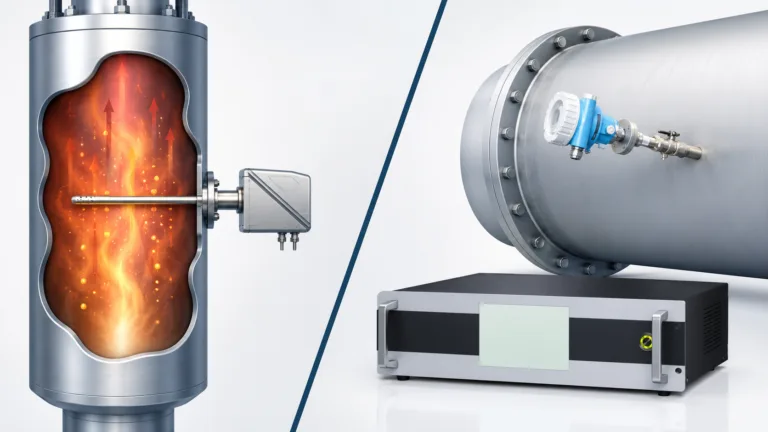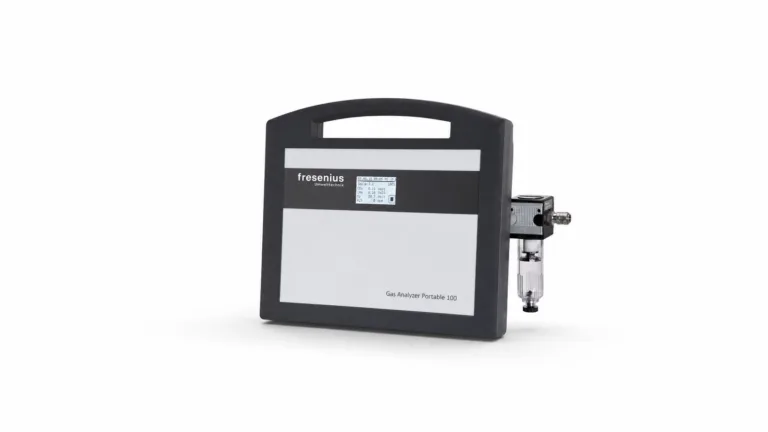
As little as 3% drift in gas analysis can cause five-figure losses. While others are constantly calibrating, Fresenius Umwelttechnik eliminates the measurement error directly in the optics.
The result: patented long-term stability, minimal maintenance costs, and a hardware service life of more than 30 years. Learn how intelligent physics safeguards your return on investment.
Blog
Methane Monitoring in Sludge Halls: NDIR Measurement for Reliable LEL
Explosion hazard in the sludge hall: When sensors go “blind.”
Hydrogen sulfide and moisture often turn conventional methane monitoring into a safety risk. Learn why the right measurement principle determines whether you get a false alarm or real safety – and how to cleverly position the technology outside the Ex zone.
Phosphine Measurement in the Food Industry with NDIR: Precise PH3 Monitoring for Safe Fumigation
Phosphine Measurement without Compromise: Safe. Selective. Low Maintenance. In the food industry, every detail counts in fumigation. Our NDIR analyzers precisely monitor phosphine concentrations from the high fumigation range to critical release measurement (OEL). Rely on the durable measurement technology from Fresenius Umwelttechnik – for maximum process reliability without constant sensor replacement.
Trace-gas H2S measurement in multi-stage biogas cleaning | NDUV
Continuous monitoring of hydrogen sulfide is essential for upgrading biogas to biomethane, but due to drastically varying concentrations and extreme process conditions—such as 300°C, 10 bar pressure, and high hydrogen content—it places the highest demands on analytics. This is where classic electrochemical sensors reach their limits, making the NDUV technology of the GA210 analyzers from Fresenius Umwelttechnik an efficient solution.
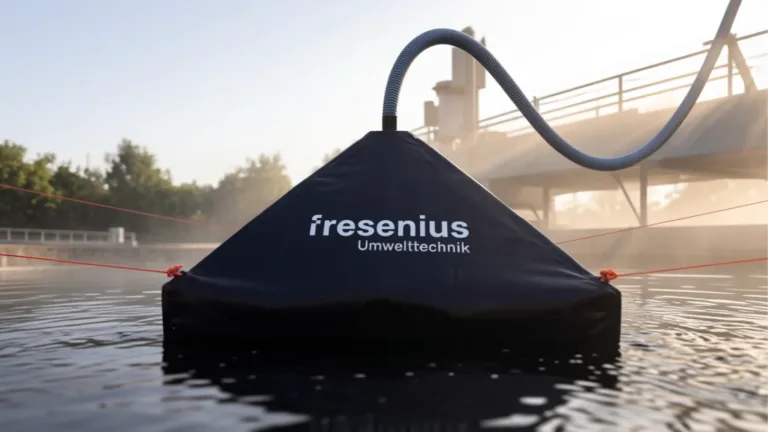
Greenhouse Gases Under Control: How Stockholm Makes Wastewater Treatment More Climate-Neutral
Discover how networked measurement systems combine precise process control and climate protection. The new White Paper presents the technical implementation and results of our collaboration with Stockholm Vatten – Innovation made in Germany. Download now and learn more about efficient environmental monitoring!
HCl Measurement in Ambient Air: Electrochemical Trace Gas Analysis
The GA210 from Fresenius Umwelttechnik enables highly precise monitoring of hydrogen chloride immissions in ambient air. By utilizing sensitive electrochemical sensor technology, the compact system reliably detects even the smallest trace concentrations from 0.5 ppm. Automatic calibration functions and a robust design make the analyzer a low-maintenance, long-term stable solution that can be both permanently installed and flexibly used as a rental unit.
Hot-Wet Measurement: Gas Analysis without Washout Loss
Cooling leads to loss: For water-soluble gases like formaldehyde or ethanol, a conventional gas cooler simply washes away up to 35% of your measured values. Learn why physics is not a matter of choice and how Fresenius Umwelttechnik’s hot-wet solutions ensure precise results instead of systematic measurement errors.
CO Measurement up to the Explosion Limit in RTO Systems | LEL
CO Monitoring in RTO Systems: Safe. Fast. Reliable.
At the lower explosion limit, there is no margin for error. The SC300 LEL analyzer combines robust NDIR measurement technology with a response time of only 5 seconds. This provides the chemical industry with a highly specialized solution for CO measurement in potentially explosive atmospheres—including intelligent sample conditioning.
Gas analysis in the cloud with the Cloud Connect Kit
Gas analysis systems generate valuable measurement data – but they often remain difficult to access.
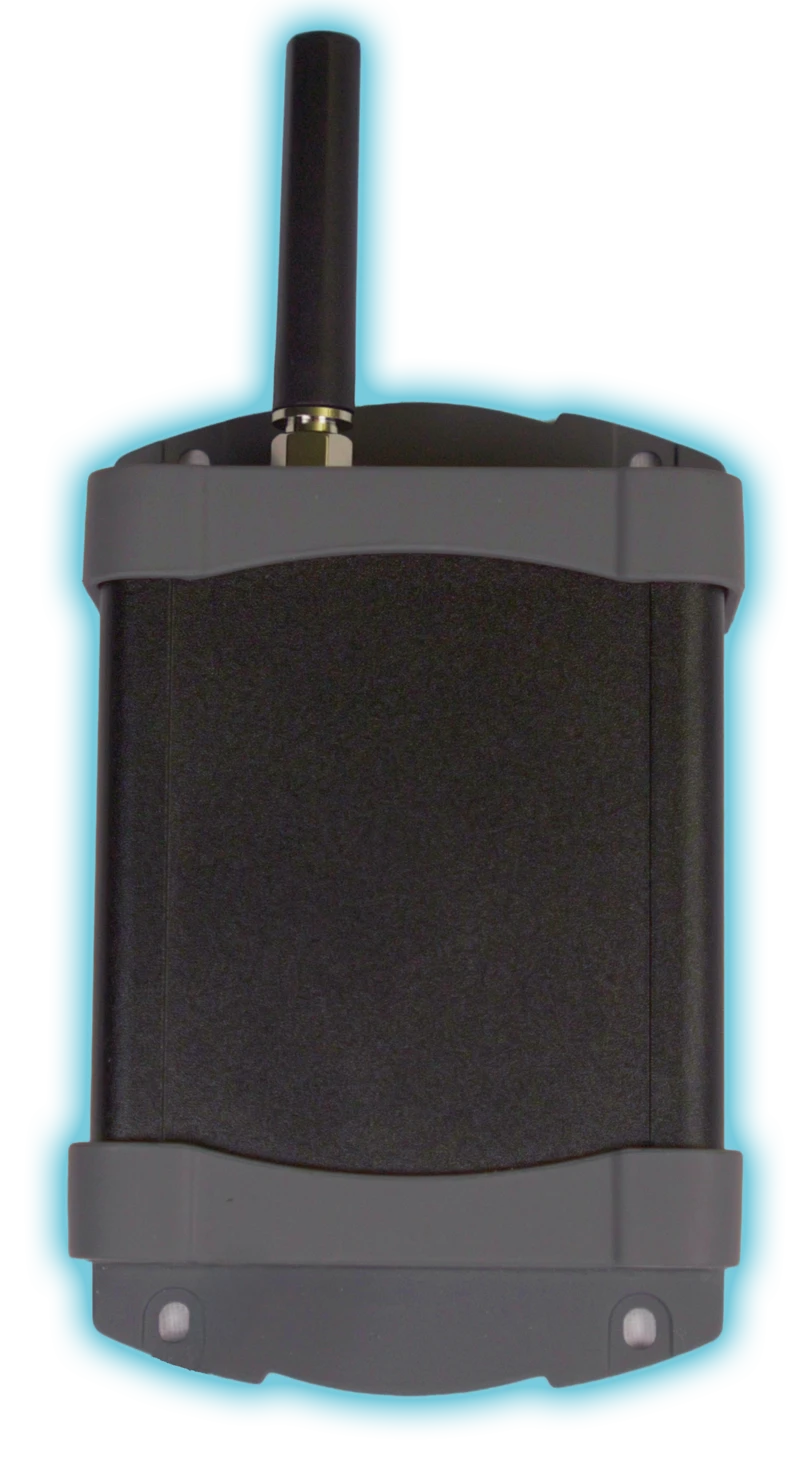
The Cloud Connect Kit finally makes monitoring easy: real-time data, transparency in operation, and digital connection without IT effort.
Plug in. Connect. Keep track.
Read Now: How We Compensate for Cross-Sensitivities in our Measurement Technology
What if your measurement technology could detect and correct interferences on its own? Our intelligent cross-sensitivity compensation makes exactly that possible. It uses targeted wavelength analysis and mathematical correction methods to precisely separate superimposed signals.
The result: accurate, stable measurement values – even where other systems reach their limits. Discover in the white paper how Fresenius Umwelttechnik elevates gas analysis to a new level with this.