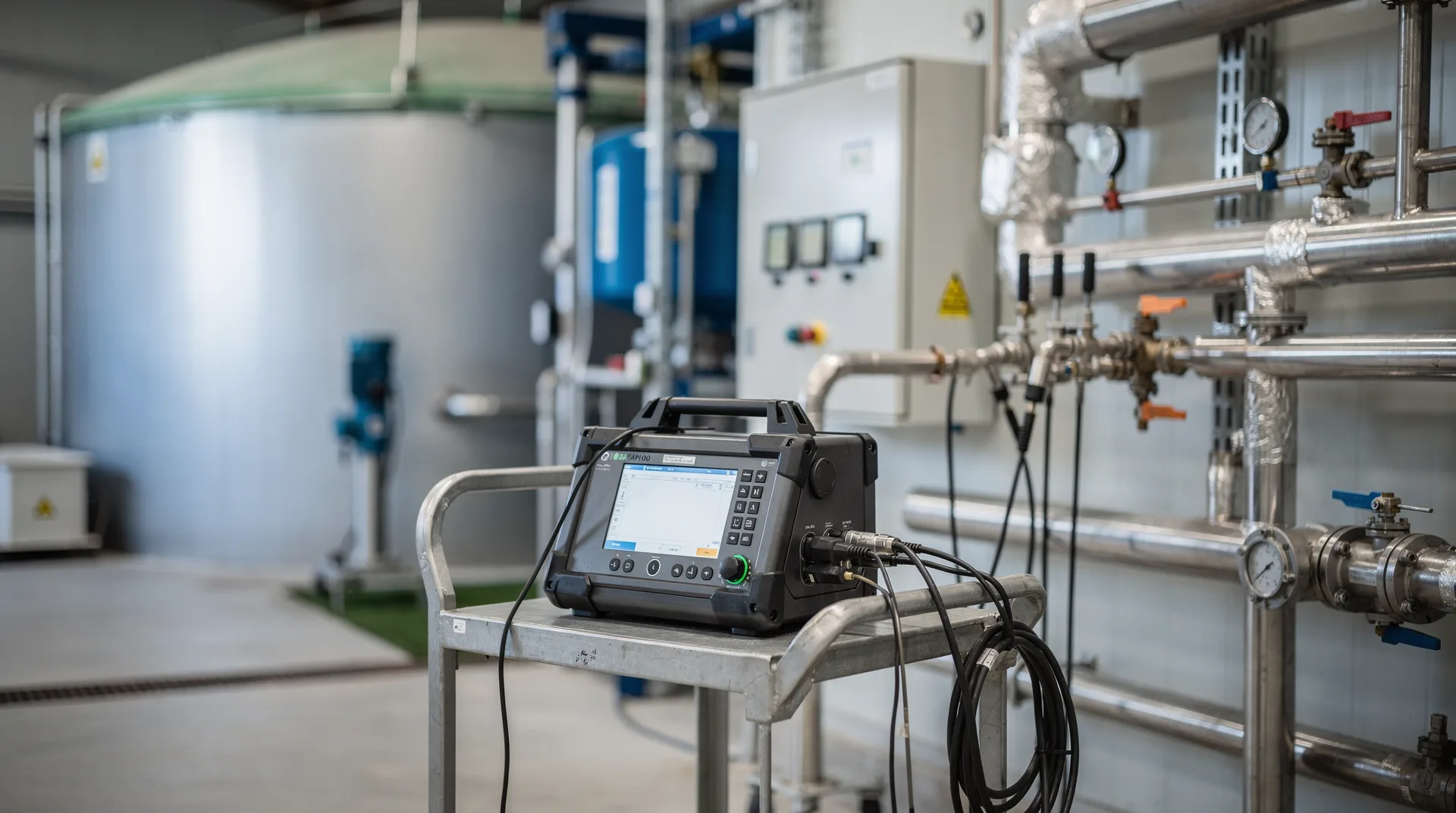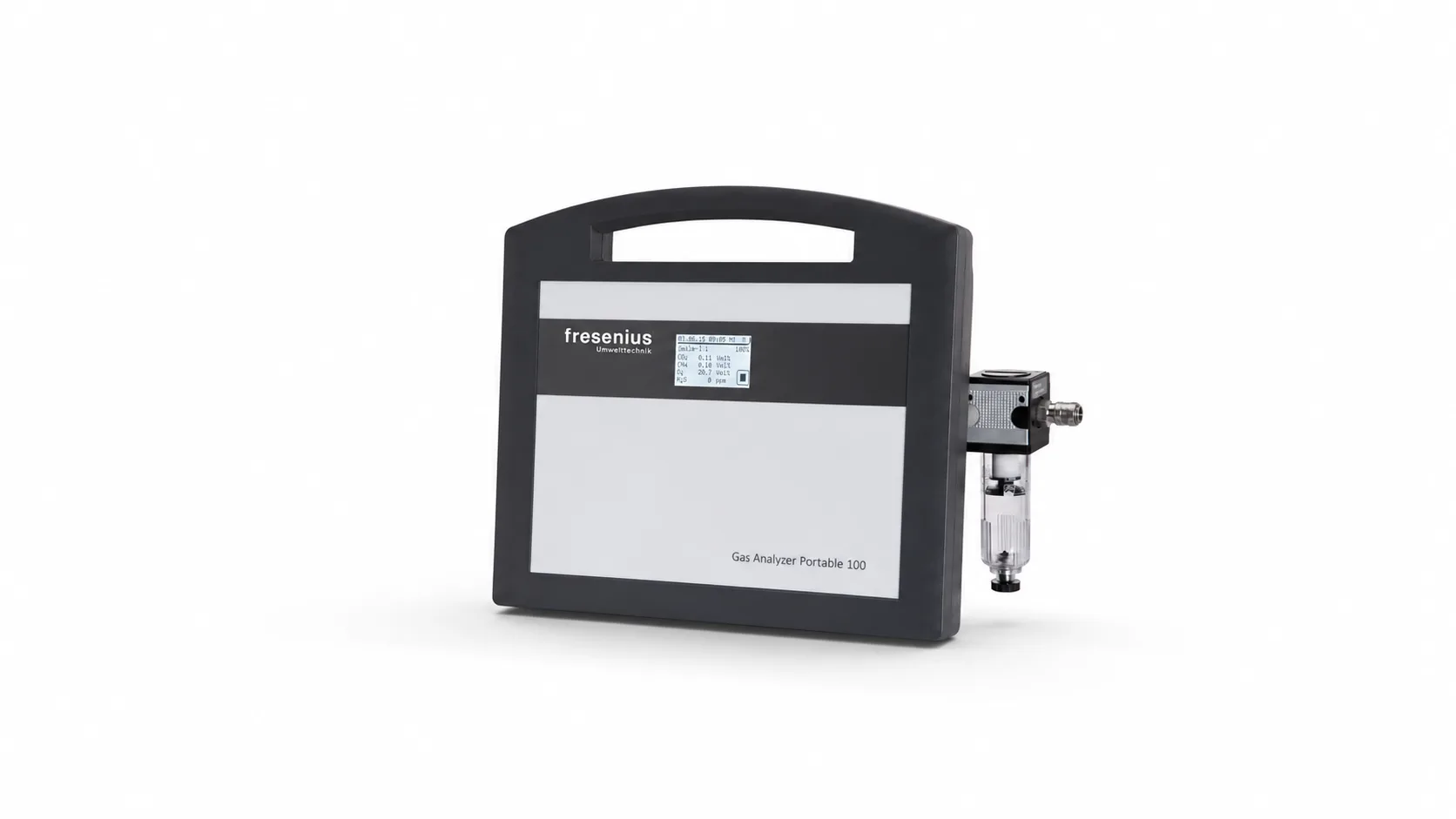
Biogas Plants in Agriculture: Why Mobile Spot Measurements Are Crucial for Efficiency and Safety Agricultural biogas plants are complex biological reactors. Slurry, silage and residues such as sugar beet pulp are anaerobically fermented into biogas in fermenters – a process that is sensitive to temperature fluctuations, substrate changes and oxygen ingress. Especially in two-stage plants with mesophilic (approx. 35–40°C) and thermophilic (approx. 50–55°C) fermentation, close monitoring of the gas composition is indispensable. A current project at an agricultural operation shows, by way of example, how mobile spot measurements with the Gas Analyzer Portable GAP100 increase process safety – even under demanding climatic conditions. The Starting Point: 11 Measuring Points, Two Fermentation Stages, One Mobile DeviceThe operator ferments agricultural residues (slurry, maize silage, sugar beet residues) in a two-stage plant with parallel mesophilic and thermophilic process operation. For quality assurance, spot measurements are required twice a week at eleven defined measuring points:Main fermenter (mesophilic and thermophilic)Post-digesterGas storage (before and after desulfurization)Consumer side (CHP inlet after activated carbon filter)The required measurement components: CH₄ (0–100 vol.%), CO₂ (0–65 vol.%) and O₂ (0–25 vol.%). A stationary installation at every point would be uneconomical – this is where a portable handheld measuring device really comes into its own.H₂S as a “Hidden Added Value”: Why Hydrogen Sulfide Measurement Should Be MandatoryIn addition to CH₄ and CO₂, hydrogen sulphide is a key parameter for system protection. Depending on the substrate, raw biogas contains 100 to over 2,000 ppm H₂S. If desulphurisation is insufficient, the following effects are possible, among others:Corrosion of gas-carrying pipes, heat exchangers, and CHP componentsCatalyst poisoning in the exhaust gas aftertreatment systemSO₂ emissions after combustion, which can exceed official limitsThe GAP100 measures H₂S as standard up to 2,000 ppm via an electrochemical sensor. This allows the efficiency of the activated carbon filter to be verified directly: if the H₂S content rises downstream of the filter, a filter change is due before downstream components are damaged. The GAP100 is a process measuring device for spot measurement of gas quality and not a personal protection or gas warning device.The GAP100 in Detail: Stationary Measurement Accuracy in a Mobile HousingWe developed the GAP100 consistently as a mobile version of our stationary analysers. The most important technical key data:ParameterSpecificationmeasurement principle CH₄ / CO₂NDIR single-beam method with referencingmeasurement principle O₂ / H₂SElectrochemical sensorsmeasuring rangesCH₄ 0–100 vol.% · CO₂ 0–65 vol.% · O₂ 0–25 vol.% · H₂S 0–2,000 ppmPressure compensation0.7–1.1 bar absoluteGas flowapprox. 2.5 l/min (integrated pump)Weight4.2 kgBattery lifeapprox. 8 hoursOperational readinessas soon as the target temperature of the measuring cell of 45 °C ± 2 K is reachedInterfaceRS232protection class / housingIP 54, ASA+PC-FR plasticAmbient temperature+5 to +45 °CKey point: the integrated pump and the condensate separator with filter make external additional devices unnecessary. The supplied accessory kit – carrying bag, PTFE sample gas line, sampling tube and the GMM evaluation software – enables immediate field use without further purchases.Pre-conditioning: Why the Customer-Side Gas Cooler Perfectly Matches the GAP100Biogas is saturated with water vapour and leaves the fermenter at around 35 to 55°C depending on the stage. Without drying, condensate would precipitate in the measuring device and impair the NDIR measuring cell as well as the electrochemical cells. In the project described, the GAP100 is preceded by a customer-provided gas cooler that dries the sample gas to a dew point of around 5°C.As the measuring cell of the GAP100 is heated to 45°C ± 2 K, it is well above this dew point, so no re-condensation occurs in the device. The usual low-pressure overpressure at the measuring point is within the device’s pressure compensation range. Upstream gas conditioning also extends sensor service life and keeps the calibration effort within the intended annual interval.Extreme Climate Zone: Mobile Measurement in Winter ConditionsIn the project, operability at ambient temperatures down to −20°C was requested. The GAP100 is specified by the manufacturer for +5 to +45°C; temperatures below this are outside the device specification. In frost, the sensitivity of electrochemical sensors decreases, the usable capacity of lithium-ion batteries drops significantly – charging below 0°C should be avoided as it damages the cells – and condensate can freeze in supply lines. Within the specification, the device can be operated if the following deployment concept is observed:Storage exclusively in a heated room or vehicle (e.g., technical container, operating building)Acclimatization to at least +5 °C before commissioningOnly short-term outdoor use for the actual sampling at the measuring pointTransport in an insulated carrying case, keep sample gas line warmVisual inspection for condensate/ice formation after each usePractical Benefits: What the Data from 11 Measuring Points Provides the OperatorThe twice-weekly collection of the four main components provides a complete picture of the plant:CH₄ trend in the fermenter: Indicator for biological activity and substrate qualityCO₂/CH₄ ratio: Early indicator for acidification or process disturbancesO₂ content: Control of biological desulfurization (targeted air dosing) and leakage detectionH₂S before and after activated carbon filter: Residual capacity of the filter and protection status of the CHPAll measured values, including timestamps and measuring point assignments, are documented via the RS232 interface and the GMM software – a solid basis for operational documentation and maintenance management.Mobile Precision for Growing Biogas MarketsAgricultural biogas plants are the backbone of decentralised energy generation – especially in regions with a high volume of agricultural residues. Mobile spot measurements with the GAP100 offer operators an economically attractive entry into systematic process monitoring: four components, stationary measurement accuracy, eight hours of battery life and a complete case for field use.The standard H₂S measurement is more than just a bonus – it is a crucial building block for plant and occupational safety. For demanding climate zones, we work with the customer to define a deployment concept that respects the device specification while still delivering reliable measured data. This turns a standard device into a customised solution for biogas production. Contact us for your individual solution!
Request service
Services
- Maintenance Preventive inspection · filter service · performance test
- Repair Workshop · certified refrigeration · lab diagnostics
- Commissioning & calibration Installation · factory calibration · maintenance & operator training
- Spare parts Original parts · third-party devices too
Our promise
- Mail-in repair service Loan devices available — no production downtime during maintenance or repair
- Cloud Connect ready Cellular telemetry from the factory
- ISO 9001:2015 certified Audited service processes
 Blog · Process Biomethane Feed-in into the Natural Gas Grid: How Precise Gas Analysis Supports Quality Assurance and Grid Injection Secure Biomethane Feed-in Thanks to Precise Gas Analysis: Fresenius Umwelttechnik's fast online process analytics continuously monitors relevant accompanying… 07. Oct 2026
  Blog Gas Analysis in Recycling: Efficient Process Control and Emission Monitoring in Waste Recovery From Waste to Raw Material: Precise Gas Analytics for the Recycling Revolution. Waste becomes energy – but highly… 10. Sep 2026
  Tipps Refrigerant Calibration Gases Are Becoming More Expensive and Scarcer: What You Need to Know Now In brief: Calibration gases based on refrigerants R11, R12, R22, R134a, and R141b will become significantly more expensive… 03. Sep 2026
  Tipps New EU Requirements for Industrial Emissions: What Operators Need to Know Now With the revised Industrial Emissions Directive (IED 2.0, Directive (EU) 2024/1785), the European Union has significantly tightened the… 13. Aug 2026
 Company
Career & Events

Get in touch
Jedes Vol.-% CH₄ ist Geld wert. BioBasic — präzise Biogas-Analyse, Made in Germany.

Measuring What Matters
GAS ANALYZERS · MADE IN GERMANY · SINCE 1848