

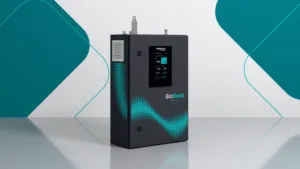




Solutions · Areas · Sample gas conditioning
Sample gas conditioning: dry gas, stable readings
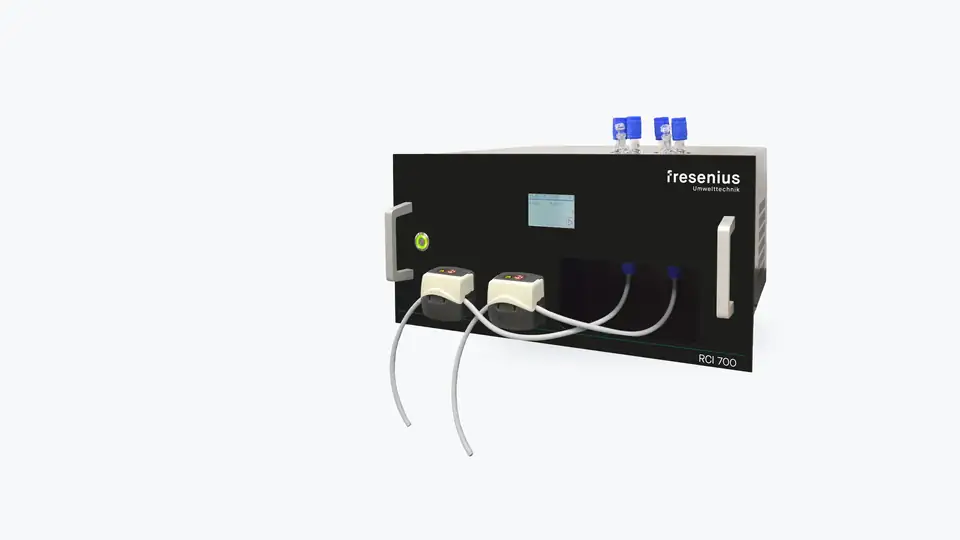
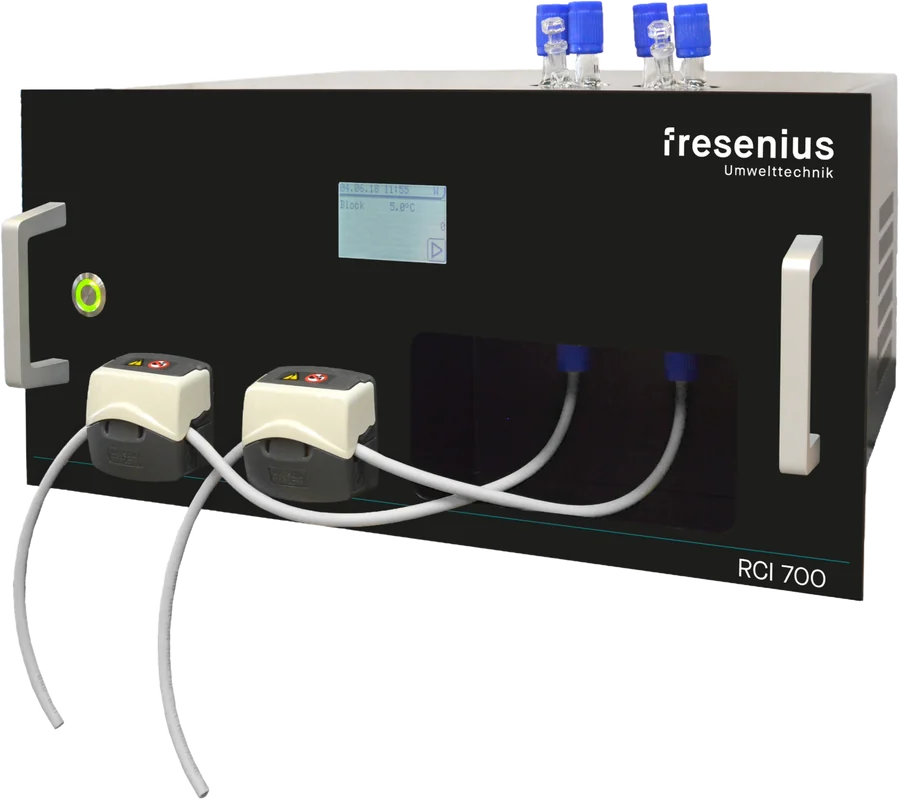
Humidity distorts the measurement and condenses inside the device. The RCI series sample gas coolers dry your sample gas with a compressor to a dew point of 5 °C – in a wall or floor housing or as a 19-inch rack unit, for one or two sample gas streams.
Sample gas conditioning prepares the gas between sampling point and measuring device: a sample gas cooler lowers the dew point and removes the humidity as condensate, filters hold back dust. The device always measures dry gas – comparable, stable and without condensate in the measuring cell.
- 5 °Cdew point, residual humidity max. 0.86 vol.%
- 260 l/hflow per sample gas stream
- 300 kJ/hcooling capacity by compressor
Dew point calculator
How much humidity stays in your sample gas?
Set how humid your sample gas is and how much of it flows to the device. The calculator shows how much humidity the sample gas cooler removes – and why a reading in dry gas comes out higher than in wet gas.
- After the cooler, at most 0.86 vol.% humidity remains at a 5 °C dew point – however humid the gas was before.
- Your reading therefore always refers to almost dry gas. Fluctuating humidity no longer shifts it.
- A pump continuously removes the condensate – without you having to intervene.
- Humidity before the cooler
- 7.27 vol.%
- after the cooler (dew point 5 °C)
- 0.86 vol.%
- Condensate removed by the cooler
- 13.5 g/h
- 10 vol.% CO₂ in the wet gas correspond in the dried sample gas to
- 10.69 vol.%
Calculated for saturated gas at standard pressure (Magnus formula, flow at standard conditions). If your dew point is higher or the gas carries acids and dust, we design the conditioning together with you.
Conditioning line
From sampling point to reading
-
Sampling
A pump draws the gas from your process through the sampling line. A filter holds back dust before it reaches the cooler and measuring cell.
-
Cooling
In the Duran glass heat exchanger, a compressor cools the gas to a 5 °C dew point. The humidity condenses out.
-
Removing condensate
A condensate pump continuously removes the condensate – on the RCI 700 each sample gas stream has its own heat exchanger.
-
Measuring
The measuring device receives dry gas and passes stable values to your control system – as a complete system with our sample gas analysis on request.
Comparison
RCI 100, RCI 500 and RCI 700 compared
| Model | Design | Sample gas streams | Cooling | Dew point | Flow per stream |
|---|---|---|---|---|---|
| RCI 100 | Wall or floor housing | 1 | Compressor | 5 °C | max. 260 l/h |
| RCI 500 | 19-inch rack unit | 1 | Compressor | 5 °C | max. 260 l/h |
| RCI 700 | 19-inch rack unit | 2 | Compressor | 5 °C | max. 260 l/h |
Extract, as of 22.10.2026. The datasheets of each product are authoritative.
Products
RCI series sample gas coolers
-
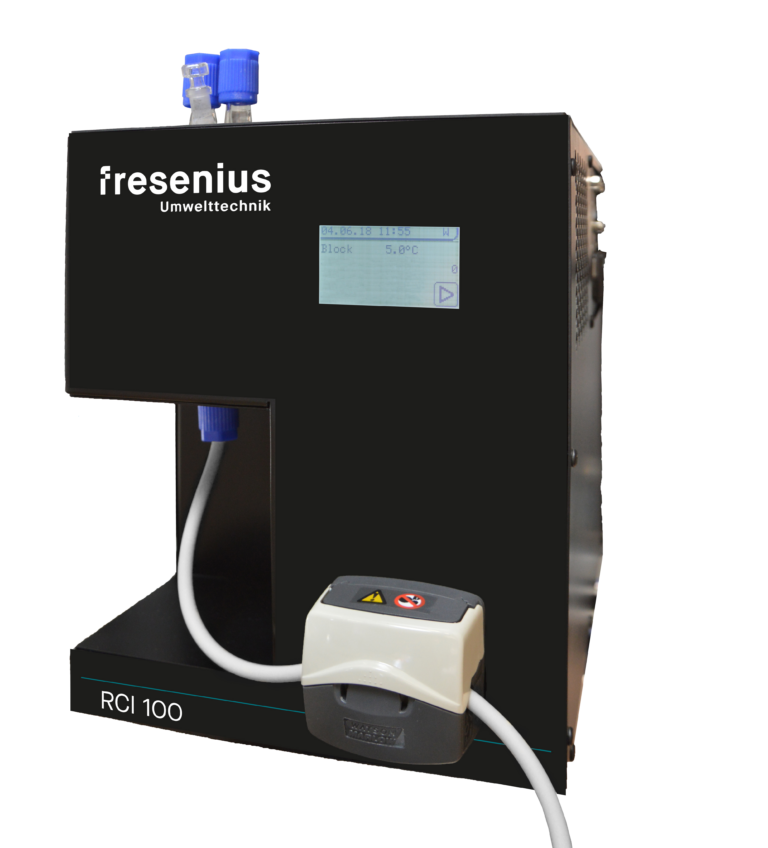 RCI 100 Wall or floor housing for one sample gas stream.
-
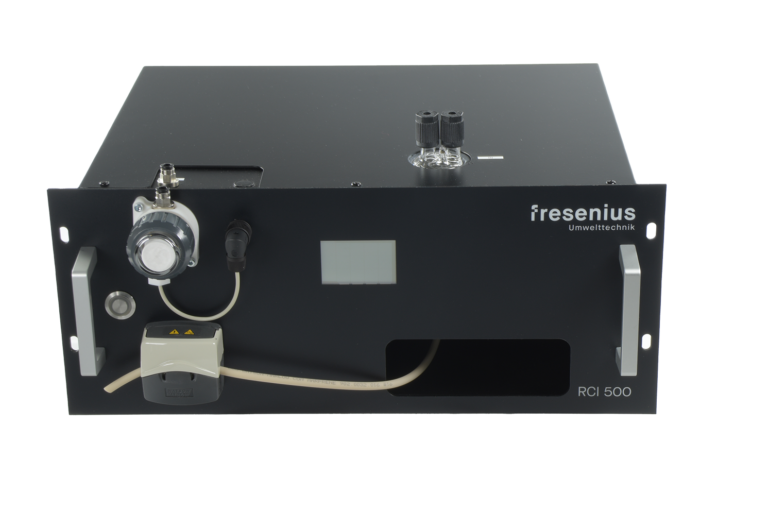 RCI 500 19-inch rack unit for one sample gas stream – for installation in your cabinet.
- RCI 700 19-inch rack unit for two sample gas streams, each with its own heat exchanger and filter.
-
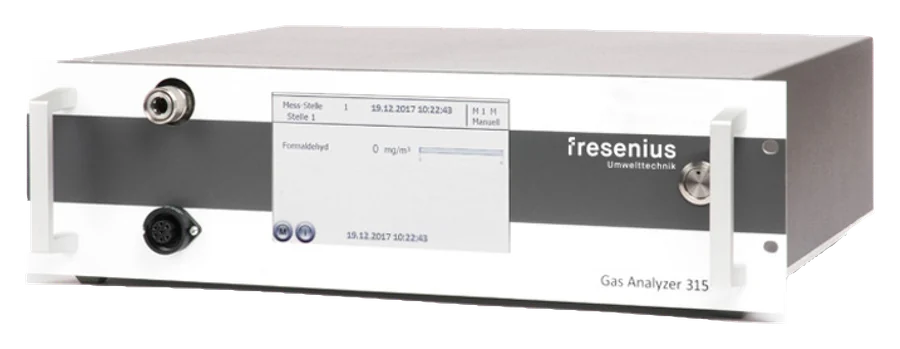 GA 315 Hot Gas When cooling is not an option: measures water-soluble gases such as formaldehyde hot and wet.
Read on
Measure, cool – or measure hot
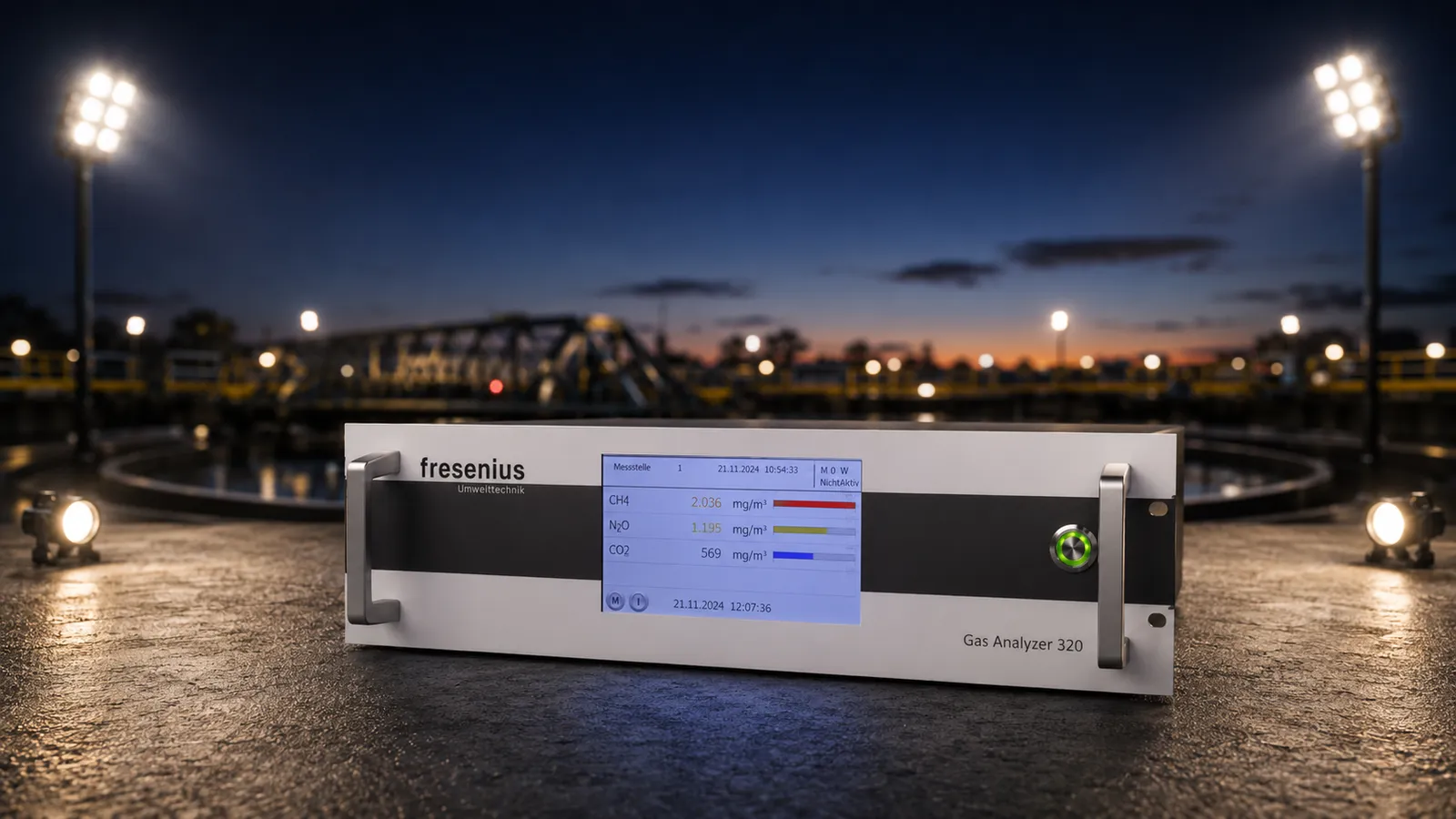
Advice
Tory – your advisor for sample gas conditioning
How humid, how hot, how many sample gas streams? Tory asks for the details in a few steps and takes you to the right sample gas cooler – or straight to a meeting with our team.
- Cooler matched to humidity and flow
- Wall, floor housing or 19-inch rack unit
- Direct path to a quote request

FAQ
Frequently asked questions about sample gas conditioning
What is sample gas conditioning?
Everything that happens to the gas between sampling point and measuring device: filters hold back dust, a sample gas cooler lowers the dew point and removes the humidity as condensate. The device always measures dry gas.
Why does the sample gas have to be cooled?
Humidity interferes with the measurement and can condense inside the device. The reading also fluctuates with humidity. After the cooler, at most 0.86 vol.% humidity remains at a 5 °C dew point – your reading refers to almost dry gas.
Why is the reading higher after the cooler?
Because the humidity is missing: the remaining gases spread over a smaller volume. 10 vol.% CO₂ in gas with a 40 °C dew point becomes about 10.7 vol.% in the dried gas. The dew point calculator on this page shows it for your values.
How do the RCI series sample gas coolers cool?
With a compressor, cooling capacity 300 kJ/h. The heat exchanger is made of Duran glass, a pump continuously removes the condensate.
Which sample gas cooler suits my plant?
For one sample gas stream the RCI 100 in a wall or floor housing or the RCI 500 as a 19-inch rack unit. For two sample gas streams the RCI 700, also as a 19-inch rack unit. All three handle up to 260 l/h per sample gas stream.
When is it better to measure without a cooler?
When the component is highly water-soluble, such as formaldehyde: cooling would lose part of it with the condensate. A hot-gas device such as the GA 315 Hot Gas then measures the gas hot and wet.
Under which conditions do the sample gas coolers operate?
At ambient temperatures from 10 °C to 45 °C. After switching on, they are ready for operation after 15 minutes.
Good to know
- Sample gas cooler and measuring device from one source: on request we supply the conditioning together with our sample gas analysis as a ready-wired complete system.
- The cooler needs no consumables for drying – the pump continuously removes the condensate.
- Developed and built in Germany – process measurement technology from Fresenius Instruments in Herten.
- Your conditioning needs more – for example heated sampling lines or special filters? With our partner network we find the right solution for that, too.
Which sample gas do you want to dry?
Tell us about your measuring task – we design the process measurement technology with you.
