


Smart and Expert · for wastewater plants
Off-Gas System N₂O, CH₄ and CO₂ in mg/(m²·h) – measured on one square metre of aeration tank
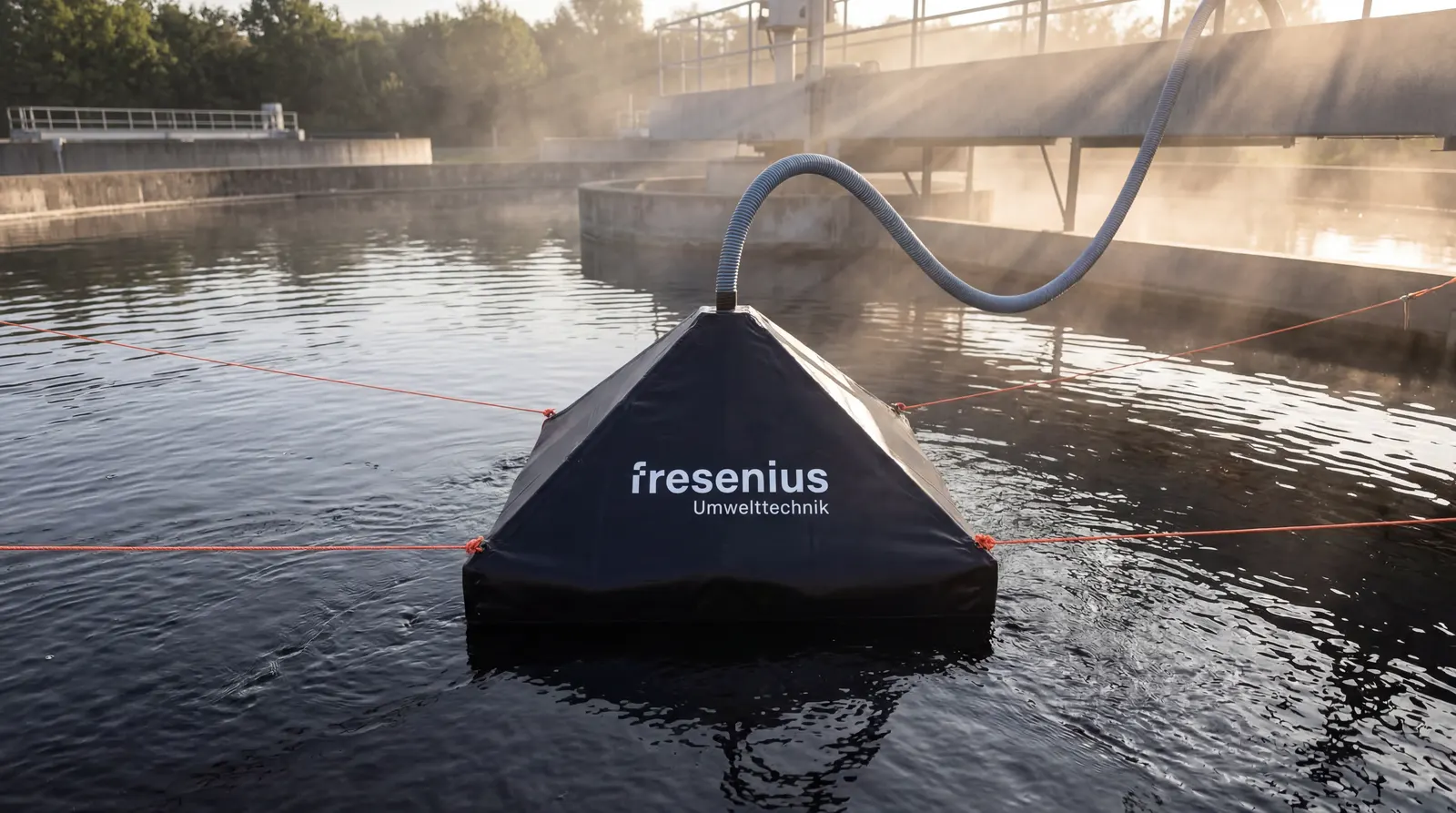
Gas Dome 300 floating hood, gas path and outdoor cabinet – with the Smart Control 300 or the GA 320. No blower, no span gas, no cloud.
- N₂ONitrous oxide
- CH₄Methane
- CO₂Carbon dioxide
- O₂optional
Gas Dome 300
1.00 m²
This is the area one hood covers. Whatever rises from the basin there, the system reports as an emission rate in mg/(m²·h).
Urban Wastewater Directive
July 2027: nitrous oxide and methane enter the inventory
By July 2027 the EU member states transpose the new Urban Wastewater Treatment Directive. It requires methane and nitrous oxide from treatment plants to be accounted for. Default emission factors let you calculate it – a hood on the basin lets you measure it.
9 months to transposition
01How the system measures
1 m² hood, 25 m hose, one cabinet at the basin edge
-
01Gas Dome 300
The hood captures the off-gas from 1.00 m² of water
The floating hood captures the off-gas from 1.00 m² of water surface. A skirt is immersed 20–30 cm so that no ambient air is drawn in. It is held in place with guy ropes or a fixed bridge.
- 1.00 m² collection area
- PVC-U floating frame
- 0–20 m³/h
-
02Gas path, no blower
Its own pressure pushes the gas to the cabinet
Driven only by its own pressure under the hood, the gas flows through the hose, the condensate trap with level switch and the sample gas filter to the thermal flow measurement in the DN 50 tube.
- Hose ID 40 mm, 25 m
- Condensate trap + filter
- Flow DN 50
-
03Outdoor cabinet + SC 300 / GA 320
The analyzer measures and calculates itself
In the heated cabinet the analyzer measures N₂O, CH₄ and CO₂ and calculates the emission rate from concentration and flow. Smart Control 300 in the Smart system, GA 320 in the Expert system.
- IP 55 · IK 10
- 100 W heater
- NDIR dual-pressure reference
-
04Your data stays with you
The values go straight into your control system
Analogue and relay outputs, RS-232 and optionally Profibus DP, Modbus TCP, EtherNet/IP or Profinet. No cloud, no subscription, no ongoing licence fees.
- 4–20 mA + relays
- Modbus TCP · Profinet
- no cloud
02The figure
From ppm to mg per square metre and hour
E=c×Q/A
- E
- Emission rate in mg/(m²·h)
- c
- Concentration in the off-gas, measured by the analyzer
- Q
- Flow from the flow measurement
- A
- Collection area of the hood: 1.00 m²
A concentration value shows what is inside the gas. The emission rate shows what actually leaves the basin. The analyzer calculates it itself – in its firmware, without extra software.
03Smart or Expert
10 ppmV or 0.5 ppmV: the analyzer decides
Hood, gas path and outdoor cabinet are identical in both systems. The GA 320 in the Expert system resolves nitrous oxide concentrations twenty times smaller than the Smart Control 300.
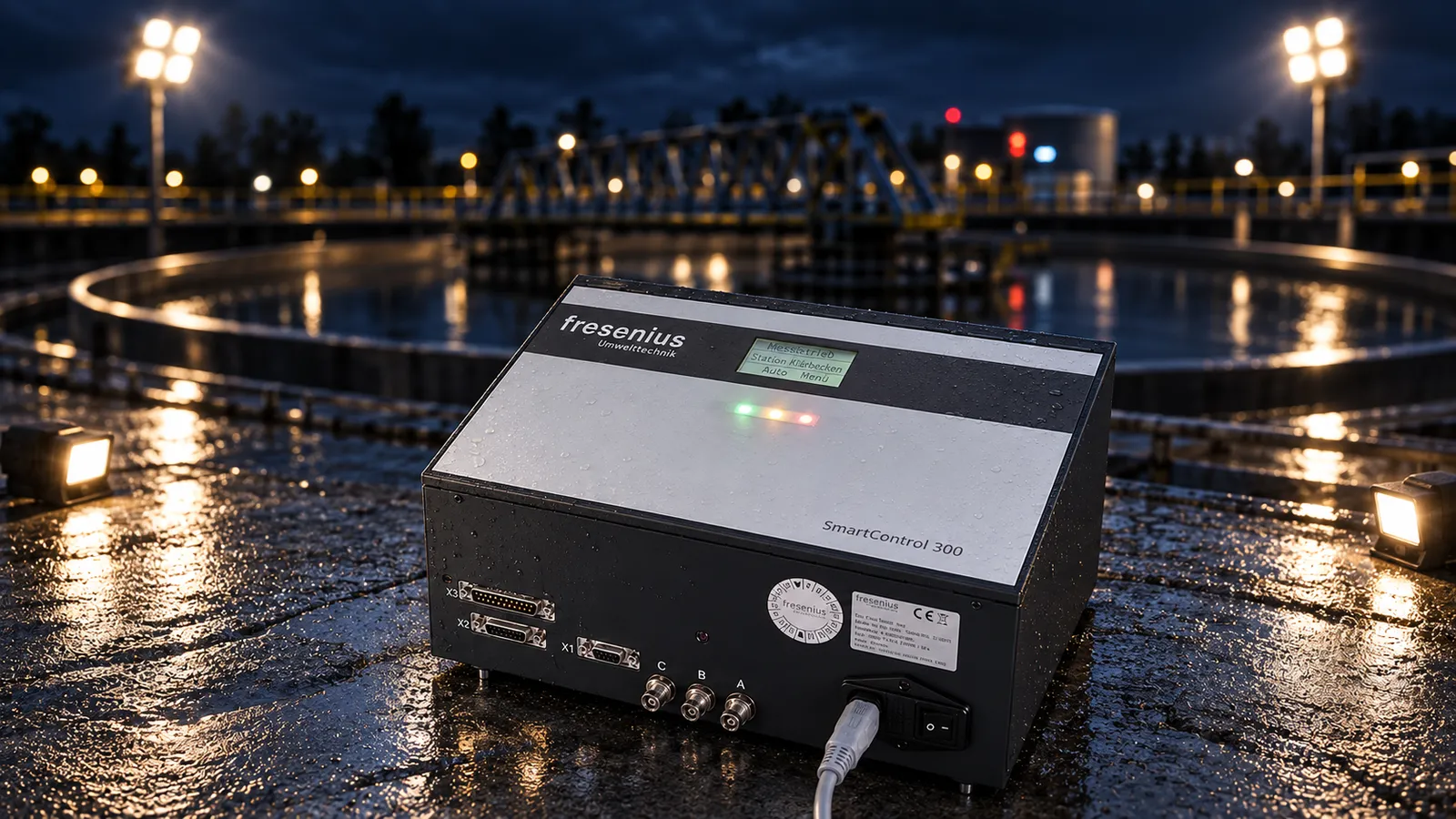
Gas Dome 300 + Smart Control 300
Off-Gas System Smart
10 ppmV
N₂O detection limit
Reliable monitoring. Smart investment.
The economical solution for reliable continuous emission monitoring: operational accounting under the Urban Wastewater Treatment Directive, proof of process optimisations, continuous monitoring. Values in the two-digit ppm range are sufficient.
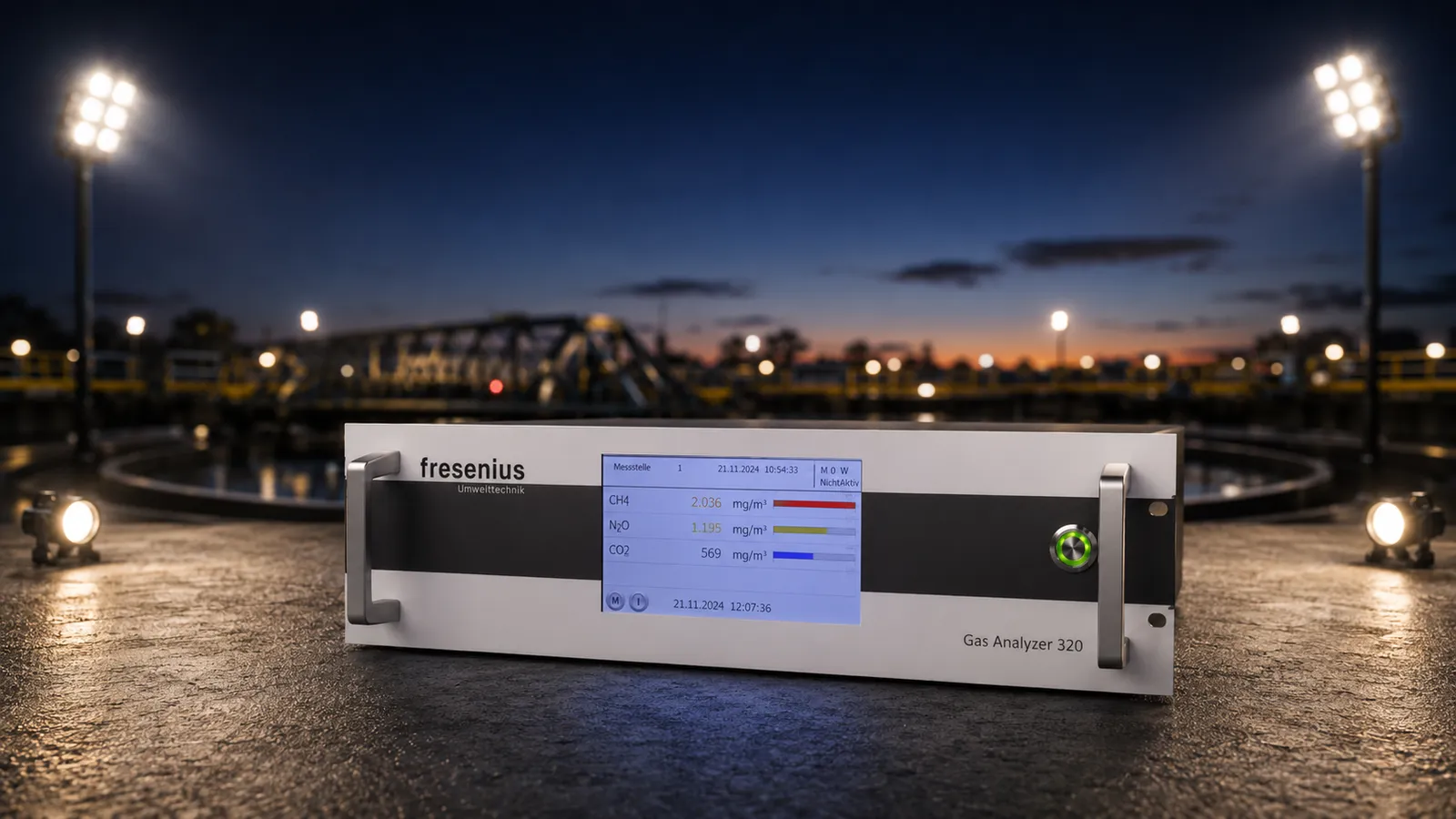
Gas Dome 300 + GA 320
Off-Gas System Expert
0.5 ppmV
N₂O detection limit
Maximum measurement performance. Minimum detection limits.
For the highest demands on detection limit, accuracy and stability: low emission values, research-grade measurement campaigns, plants with optimised nitrogen removal. With compensation of humidity and cross-sensitivities.
04Technical data (extract)
Every figure for Smart and Expert
| Same hood, gas path and cabinet – the analyzer differs. | 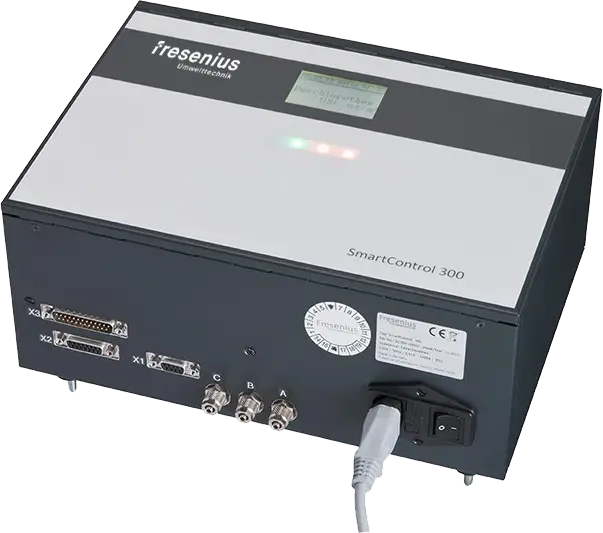 Smart Smart Control 300 Smart Smart Control 300 | 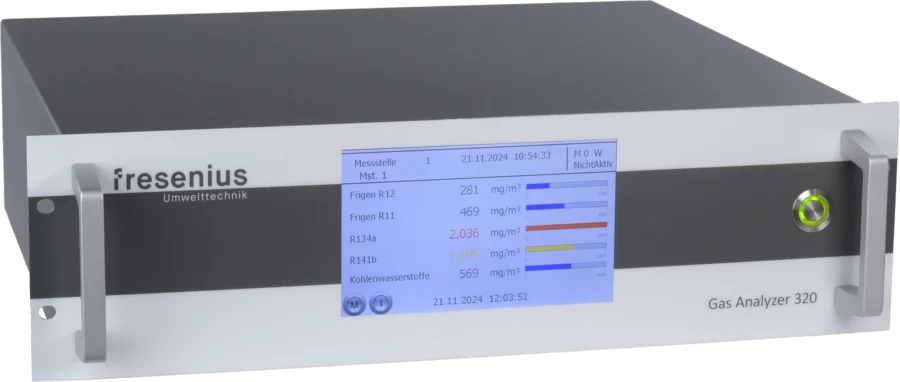 Expert GA 320 Expert GA 320 |
|---|---|---|
| Measuring performance | ||
| Detection limit N₂O | 10 ppmV | 0.5 ppmV |
| Detection limit CH₄ / CO₂ | 100 ppmV / 0.04 vol.% | 2 ppmV / 1 ppmV |
| Resolution | N₂O 1 ppmV · CH₄ 1 ppmV · CO₂ 0.01 vol.% | 0.1 ppmV per component |
| Expanded uncertainty | ≤ 10 % up to 30 ppmV N₂O or 300 ppmV CH₄, above ≤ 5 % | ≤ 2 % |
| Humidity and cross-sensitivity compensation | – | yes |
| Measuring ranges | ||
| N₂O | 0–2,000 ppmV | 0–2,000 ppmV |
| CH₄ | 0–1,000 ppmV | 0–10,000 ppmV |
| CO₂ | 0–5 vol.% | 0–10,000 ppmV |
| Analyzer | ||
| Sample gas inlets | 2, 21 s each | up to 6 (2 used), 20 s each |
| Operation | 2.5″ display | 7″ touch display |
| Design | Wall unit 310 × 133 × 221 mm, approx. 13 kg | 19″ rack unit 3 U, approx. 18 kg |
| Complete system | ||
| Outdoor cabinet (H × W × D) | 1200 × 600 × 400 mm | 1200 × 600 × 600 mm, swing frame |
| Weight ready for operation | 55–70 kg | 75–90 kg |
| Uncertainty of the emission rate at 20 / 10 / 5 m³/h | ±11.1 / 11.9 / 14.2 % | ±5.2 / 6.8 / 10.3 % |
| Application | Operational monitoring, accounting, continuous monitoring | Low emissions, measurement campaigns, optimised nitrogen removal |
In both systems
- Floating hood Gas Dome 300, 1.00 m² collection area
- Gas path: condensate trap with level switch, sample gas filter, thermal flow measurement DN 50
- Outdoor cabinet IP 55 · IK 10, 100 W heater, EC filter fan
- NDIR dual-pressure reference, zero correction with every measurement, no zero or span gas
- Optional O₂ via electrochemical sensor, 0–30 vol.%
- Analogue and relay outputs, RS-232; optional Profibus DP, Modbus TCP, EtherNet/IP, Profinet
- One or two measuring points

Extract, as of 06.10.2026. The comparison sheet and datasheets are binding.
The complete comparison sheet as PDF
Get the comparison sheet05In operation
No span gas. No blower. No cloud.
- 01
Measured, not estimated
Real values from your basin instead of default emission factors.
- 02
Defined reference area
Every value refers to 1.00 m² – comparable across basins, days and operating modes.
- 03
A figure that holds up
The analyzer calculates the emission rate in mg/(m²·h) itself.
- 04
No consumables
No zero gas, no span gas, no blower – the zero point is corrected with every measurement.
- 05
Your data stays with you
No cloud, no subscription, no ongoing licence fees.
- 06
Second measuring point for a fraction
Cabinet and analyzer are already in place. The second point only needs a hood and a hose.
06Frequently asked
N₂O monitoring at wastewater plants: nine questions from practice
01How do you measure nitrous oxide at a wastewater treatment plant?
Most accurately right where it is produced: above the aeration tank. In the Off-Gas System the Gas Dome 300 hood floats on the basin and captures the off-gas from an area of 1.00 m². An analyzer in the outdoor cabinet at the basin edge measures N₂O, CH₄ and CO₂ and uses the measured flow to calculate the emission rate in mg/(m²·h).
02Smart or Expert – which system do I need?
Hood, gas path and cabinet are the same; the difference is the analyzer. Smart (Smart Control 300, N₂O detection limit 10 ppmV) is sufficient for operational monitoring and accounting when values are in the two-digit ppm range. Expert (GA 320, 0.5 ppmV, uncertainty ≤ 2 %) is designed for low emissions, measurement campaigns and plants with optimised nitrogen removal. Expert resolves concentrations twenty times smaller.
03What does the emission rate in mg/(m²·h) tell me?
It combines concentration (c), flow (Q) and collection area (A) as E = c × Q / A. A concentration value only shows what is inside the gas; the emission rate shows what actually leaves the basin. Because the hood area is known, values can be compared across basins, days and operating modes.
04What does the Urban Wastewater Treatment Directive require for N₂O and methane?
The revised EU Urban Wastewater Treatment Directive requires methane and nitrous oxide from treatment plants to be accounted for; transposition into national law runs until July 2027. The specific requirements are set by national rules. The Off-Gas System provides measured instead of estimated values for this.
05Does the system need span gas, a blower or consumables?
No. Both analyzers use the NDIR dual-pressure reference method and correct the zero point with every measurement, without zero or span gas. The off-gas flows by its own pressure under the hood, so no blower is needed.
06How many measuring points are possible?
One or two. Each point has its own hood and 25 m of hose; cabinet and analyzer are shared. That is why the second point costs only a fraction of the first.
07How accurate is the emission rate of the complete system?
According to the comparison sheet, the uncertainty of the emission rate is ±5.2 / 6.8 / 10.3 % for the Expert system (20 / 10 / 5 m³/h flow) and ±11.1 / 11.9 / 14.2 % for the Smart system. Below roughly 1 m³/h the reading is flagged as invalid.
08Does the Off-Gas System replace an official emission measurement?
No. The system delivers the emission rate of a defined area – not an official emission inventory and not a CEMS. It is built for operations: accounting, proving optimisations, continuous monitoring and measurement campaigns.
09How do the readings get into our control system?
Via analogue and relay outputs and RS-232, optionally via Profibus DP, Modbus TCP, EtherNet/IP or Profinet. Your data stays with you – no cloud, no subscription, no ongoing licence fees.
Advice
Tory – your Off‑Gas System advisor
Smart or Expert, one or two measuring points, where hood and cabinet go: Tory guides you to the right sizing in a few steps – or straight to a meeting with our team.
- Suitable measuring point on your plant
- Smart (SC 300) or Expert (GA 320)
- Direct path to a quote request

Sizing
One measuring point or two? Smart or Expert? We size it with you.
Send us your basin type, expected concentrations and the purpose of the measurement – accounting, optimisation or campaign. You get a concrete proposal. Faster: ask Tory in the chat at the bottom right.