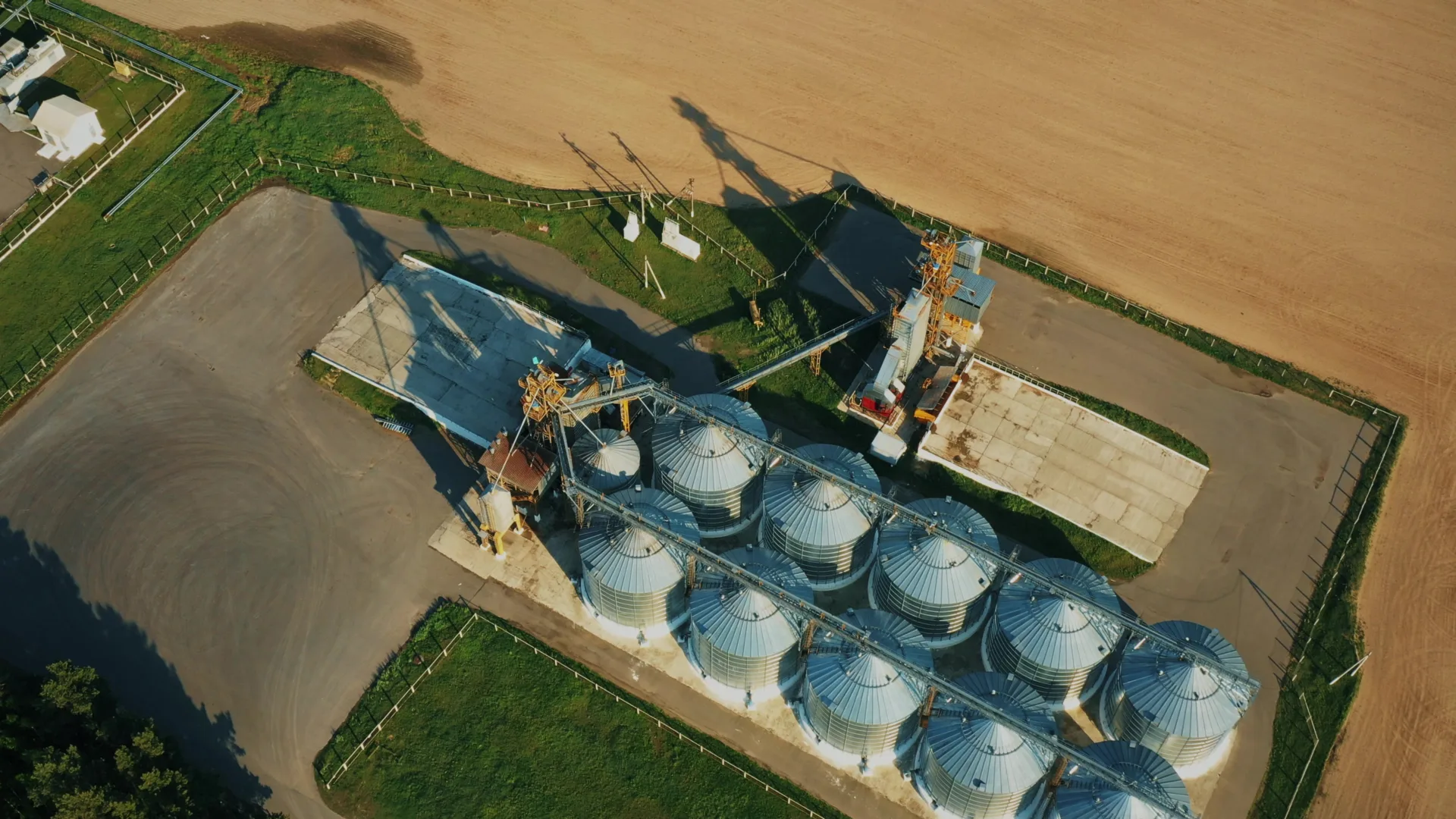
Precise H₂S measurement in biogas plants: NDUV technology for demanding measurement tasks Hydrogen sulfide (H₂S) is omnipresent in biogas plants – from several thousand ppm in raw gas to the sub-ppm range after fine desulfurization. Reliable, continuous monitoring of H₂S concentration across all purification stages is crucial for protecting downstream system components, optimizing desulfurization performance, and ensuring the quality of the produced biomethane. Fresenius Umwelttechnik uses a practical example to demonstrate the advantages of NDUV technology. H₂S in the biogas process chain: Why step-by-step monitoring is necessary
Depending on the substrate, biogas typically contains between 500 and 5,000 ppm hydrogen sulfide in the raw gas—more in slurry-rich plants. H₂S is highly corrosive, damages gas upgrading systems, compressors, and membranes, and must be reduced to a minimum even before biogas upgrading. Desulfurization is typically carried out in several stages:Stage 1 – In-situ precipitation: Addition of iron salts (e.g., FeCl₃) directly into the digester. The resulting iron sulfide (FeS) is bound in the substrate and significantly reduces H₂S formation in the raw gas.
Stage 2 – Biological desulfurization: Specialized sulfur bacteria oxidize hydrogen sulfide to elemental sulfur under controlled air supply. Typical H₂S concentrations after this stage: 50–500 ppm.
Stage 3 – Activated carbon polishing: Adsorption of residual sulfur compounds and VOCs. After this fine desulfurization, H₂S concentrations are in the trace range (< 5 ppm).
CO₂ separation to biomethane: The conditioned gas is upgraded to natural gas quality using pressure swing adsorption (PSA) or amine scrubbing.The NDUV measurement principle: physical, non-contact, wear-free Non-dispersive ultraviolet absorption measurement (NDUV) uses the characteristic absorption property of hydrogen sulfide in the UV wavelength range of approx. 190–260 nm.
Operating principle of the NDUV sensor UV light source: A high-performance UV light source emits continuous or pulsed UV light through a gas-flow measurement cuvette. Depending on the application, gas discharge lamps (EDL) are used for continuous measurement or UV LEDs for interval operation.
Optical selection: A narrowband optical filter selects the absorption wavelength characteristic of H₂S. CH₄, CO₂, and H₂O do not absorb in this UV range—ensuring high selectivity even in the complex gas matrix of biogas.
Dual-beam method – the core of long-term stability: The light from the UV source is split into a measurement beam and a reference beam. The measurement beam passes through the cuvette with the process gases and is attenuated by H₂S molecules. The reference beam passes unchanged through a gas-tight reference cuvette. Both beams hit the same detector; the H₂S concentration is derived from the ratio of the two signals. Fluctuations in lamp intensity due to aging or temperature changes affect both beams equally and are therefore automatically compensated—resulting in excellent long-term stability of the zero line without manual correction.
Detection according to Lambert-Beer: A photodetector measures the attenuation of the measurement beam. According to the Lambert-Beer law, absorption is directly proportional to the H₂S concentration—physically defined and low-drift.Technical specifications of our NDUV modules at a glance Parameter EDL technology (continuous) UV LED technology (interval operation)H₂S measuring ranges0–100 ppm to 0–5,000 ppm0–1,000 ppm to approx. 10,000 ppmDetection limit (DL)< 1 ppm; 0.25 ppm @ 100 ppm module (3σ)≤ 1 ppmResponse time (tₐ₀)1.5–15 s (configurable)1–120 min (adjustable)UV source lifetime> 8,000 h (50% intensity drop as a guideline)> 1,500–180,000 h (depending on measurement interval)Linearity error≤ ±1% F.S.≤ ±2% F.S.Typical applicationContinuous process monitoringLong-term monitoring with interval measurementOur solution: NDUV H₂S modules in proven Fresenius measurement systems Fresenius Umwelttechnik integrates high-precision NDUV H₂S modules into two proven measurement system concepts, each optimized for specific tasks in the biogas process chain:
GA210 – Dedicated H₂S analyzer with NDUV
The GA210 is designed as a specialized H₂S analysis system. The compact measurement system combines the NDUV H₂S module with our in-house developed system electronics and is designed for stationary continuous operation in process monitoring. Configurable measuring ranges from 0–100 ppm to 0–5,000 ppm (EDL) or up to approx. 10,000 ppm (UV LED) cover all process stages.
Biogas multi-component system – CH₄, CO₂, O₂ and H₂S
Our proven biogas multi-component system measures CH₄ and CO₂ as standard using NDIR, and O₂ electrochemically. In the H₂S-configured version, an NDUV H₂S module can be integrated instead of the conventional EC sensor—with all the advantages in terms of detection limit, response time, and long-term stability. This creates a true all-round analysis system for all process parameters in the biogas plant.
A special version of this multi-component system is specifically optimized for biomethane analytics: The measuring ranges for CH₄ and CO₂ are aligned with the tight tolerances of the product gas, and the integrated NDUV module with a detection limit of 0.25 ppm H₂S reliably detects even the smallest residual concentrations after fine desulfurization.
Configurable measuring ranges 0–100 ppm to 0–5,000 ppm H₂S with EDL technology, continuous measurement (tₐ₀: 1.5–15 s)
Up to approx. 10,000 ppm H₂S with UV LED technology for interval measurement
Detection limit 0.25 ppm (@ 100 ppm module, 3σ) for reliable trace-gas measurementThe NDUV module enables cost-effective monitoring of multiple process stages through automatic switching with minimal hardware. Integrated flame arresters and application-specific sample gas conditioning ensure maximum operational and process safety by preventing condensation in the raw gas area, while biomethane can be analyzed directly due to its low dew point.Intelligent automatic calibration concept
A key feature of our solution is the fully automatic calibration concept: zero point and span calibration are performed automatically at adjustable time intervals, without manual intervention. This means no additional maintenance effort, but consistently high measurement quality in continuous operation.
This form of automatic calibration is not extra effort, but intelligent, self-monitoring quality assurance—a key advantage over systems that depend on manual calibration.
Practical example: Multi-stage H₂S monitoring in a biomethane plant
A typical biomethane plant with approx. 600–750 Nm³/h biomethane capacity has the following characteristic requirements for H₂S analytics: Measurement point Typical H₂S conc. Measurement interval (practice) Recommended technologyRaw gas / before biol. Desulphurization500–3,000 ppmSeveral hoursEC or NDUV (LED)After biological desulfurization50–500 ppm (fault condition: up to 1,000 ppm)5–10 minNDUV (EDL) preferredAfter activated carbon polishing< 5 ppm5–10 minNDUV (EDL) mandatoryProduct gas / process monitoring< 1 ppmContinuousNDUV (EDL), DL 0.25 ppmDepending on the configuration, our biogas multi-component system with NDUV H₂S module covers several of these measurement points via automatic switching. In the raw gas area, an additional EC sensor can be economically sensible if measurement intervals of several hours are sufficient. From the second cleaning stage onward, we generally recommend NDUV.
Are you planning continuous H₂S measurement in your biogas plant, or are you looking for a solution for demanding hydrogen sulfide trace measurements? Contact us—we will work with you to develop the optimal measurement concept for your plant.
Frequently asked questions (FAQ) about H₂S measurement in biogas plants What is NDUV and how does H₂S measurement work with it?
NDUV stands for non-dispersive ultraviolet absorption measurement. H₂S characteristically absorbs UV light in the wavelength range of approx. 190–260 nm. A UV sensor measures the attenuation of the light—the higher the H₂S concentration, the stronger the absorption. Since CH₄, CO₂, and H₂O do not absorb in this range, the method is highly selective.
When is an EC sensor sufficient for H₂S?
For raw gas monitoring with measurement intervals of several hours and concentrations < 5,000 ppm, an EC sensor can be the economical choice. Annual sensor replacement and a tₐ₀ time ≥ 90 s must be taken into account. As soon as sub-ppm detection limits, fast response times, or long-term stability without sensor wear are required, NDUV is the superior technology.
How low is the detection limit of the NDUV system?
With the 100 ppm NDUV module (EDL technology), we achieve a detection limit of 0.25 ppm H₂S (3σ)—sufficient for monitoring the smallest residual sulfur levels after fine desulfurization.
How does the automatic calibration work?
Zero point and span calibration are performed fully automatically at configurable intervals. Our system electronics monitor each calibration process with adjustable protection limits. If a calibration is outside these limits, a calibration fault is reported and the calibration is aborted—the measurement continues.
What is the difference between EDL and UV LED technology?
EDL modules offer response times of 1.5–15 s and are designed for continuous H₂S measurement. UV LED modules drastically extend source lifetime through interval operation, are suitable for measuring ranges up to approx. 10,000 ppm, and are also mercury-free. When the end of life is reached, only the LED unit is replaced, not the entire module.
Does DVGW G 260 apply to internal H₂S measurement in the biogas plant?
No. DVGW G 260 applies at the transfer point to the grid operator. There, the grid operator measures with its own process GC in accordance with its TMA. The plant operator’s internal process measurement technology serves plant protection and process optimization—there are no normative requirements for the measurement method here.
Request service
Services
- Maintenance Preventive inspection · filter service · performance test
- Repair On site & workshop · certified refrigeration · lab diagnostics
- Commissioning & calibration On-site installation · factory calibration · maintenance & operator training
- Spare parts Original parts · third-party devices too
Our promise
- On-site service Maintenance, repair and commissioning – internationally with service partners
- Mail-in repair service Loan devices available — no production downtime during maintenance or repair
- Cloud Connect ready Cellular telemetry from the factory
- ISO 9001:2015 certified Audited service processes
 Blog · Process Biomethane Feed-in into the Natural Gas Grid: How Precise Gas Analysis Supports Quality Assurance and Grid Injection Secure Biomethane Feed-in Thanks to Precise Gas Analysis: Fresenius Umwelttechnik's fast online process analytics continuously monitors relevant accompanying… 07. Oct 2026
  Blog Gas Analysis in Recycling: Efficient Process Control and Emission Monitoring in Waste Recovery From Waste to Raw Material: Precise Gas Analytics for the Recycling Revolution. Waste becomes energy – but highly… 10. Sep 2026
 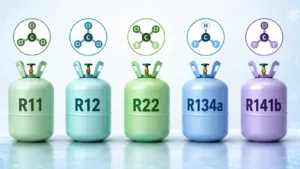 Tipps Refrigerant Calibration Gases Are Becoming More Expensive and Scarcer: What You Need to Know Now In brief: Calibration gases based on refrigerants R11, R12, R22, R134a, and R141b will become significantly more expensive… 03. Sep 2026
  Tipps New EU Requirements for Industrial Emissions: What Operators Need to Know Now With the revised Industrial Emissions Directive (IED 2.0, Directive (EU) 2024/1785), the European Union has significantly tightened the… 13. Aug 2026
 Company
Career & Events

Get in touch
Jedes Vol.-% CH₄ ist Geld wert. BioBasic — präzise Biogas-Analyse, Made in Germany.

Measuring What Matters
GAS ANALYZERS · MADE IN GERMANY · SINCE 1848