
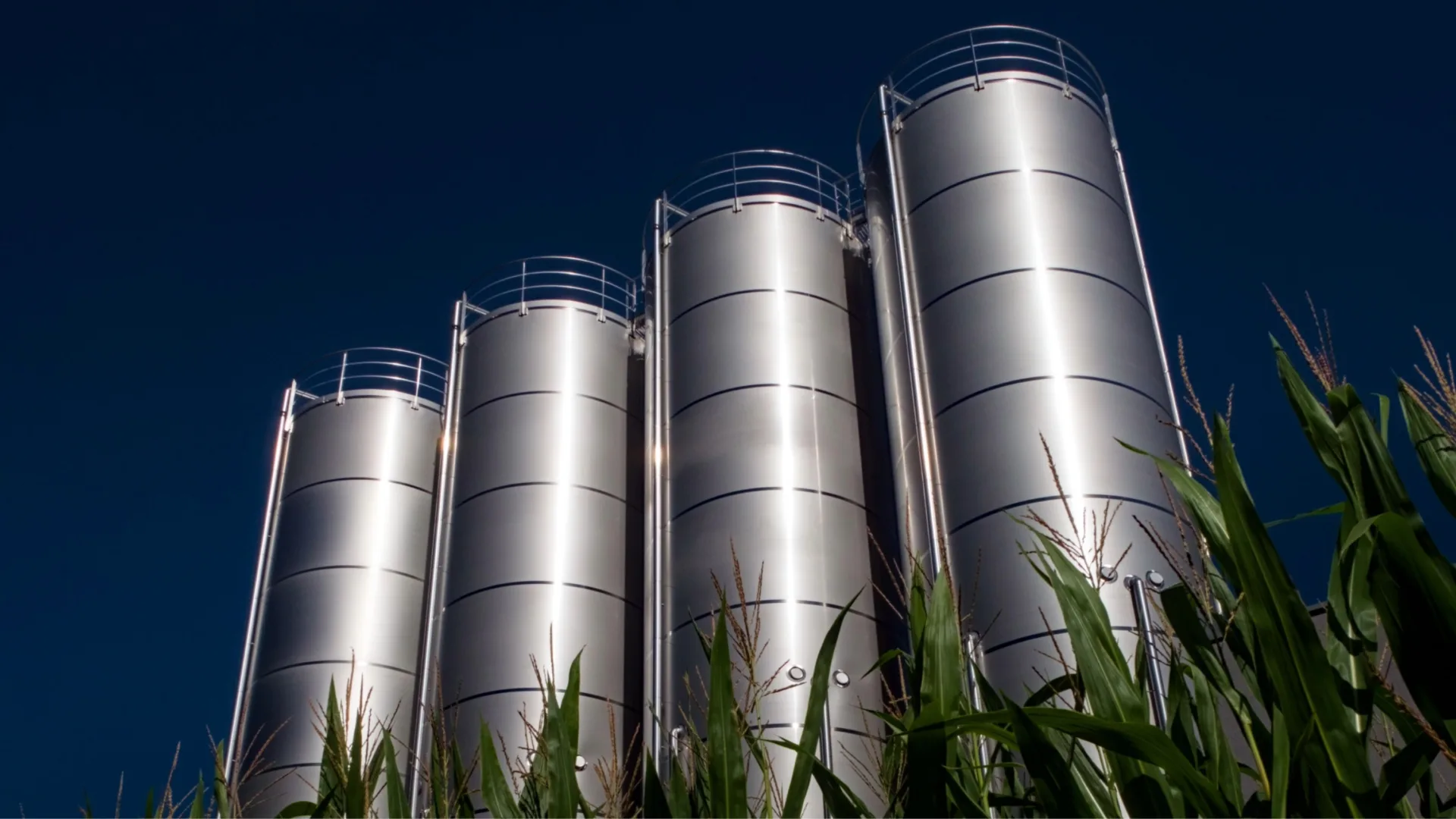
Renewable Gases in the Focus of the Energy Transition
The Green Future of Gas Infrastructure
The upgrading of biogas to green biomethane and its subsequent feed-in into the existing natural gas grid is a central pillar for a climate-neutral energy supply. For the processed gas to be transported smoothly through existing networks, its chemical and physical properties must comply with the requirements of the DVGW regulations – for accompanying substances as well as for calorific value and Wobbe index, which must match the gas in the network.
Even minor deviations in gas composition can damage the gas infrastructure and impair network operation. At Fresenius Umwelttechnik, we provide the measurement technology that enables network and plant operators to continuously monitor the quality of biomethane on its way into the grid.
Strict Limit Values and Technical Challenges
Accompanying Gases as Critical Influencing Factors
Network operators specify upper limits for accompanying gases such as hydrogen sulfide (H₂S), oxygen (O₂), carbon dioxide (CO₂), and residual moisture in their technical minimum requirements – based on DVGW regulations and varying by network. Sulfur compounds, in particular, form corrosive acids in combination with moisture, which attack valves, compressors, and pipelines.
If the separation in the scrubber or at the membranes no longer functions cleanly, the quality of the product gas quickly falls below what is required for feed-in. The feed-in operator is responsible for maintaining gas quality according to DVGW G 260 – continuous quality control is therefore regulatorily required and economically indispensable. Our measurement technology supports this control at two points: at the transfer point to the network and directly after biomethane production.
Continuous Online Gas Analysis in Practice
Security Through Measurement Technology from Fresenius Umwelttechnik
At the transfer point, the legally approved process gas chromatograph is the standard. It determines the complete gas composition and calorific value, but only provides a measured value approximately every three to four minutes.
This is where Fresenius Umwelttechnik’s long-proven process analytics comes in – as a fast measurement of the same gas, parallel to the chromatograph. Our measurement system continuously records methane, carbon dioxide, oxygen, and hydrogen sulfide in real-time. This supports the legally required measurement and simultaneously provides an independent second measured value: a redundancy that makes a deviation visible even between two analysis cycles.
At the transfer point, biomethane from several production plants can converge, for example, via a common manifold. Therefore, anyone who wants to manage the quality of an individual treatment process uses our measurement directly after biomethane production – there, it shows the operator how their plant is performing.
The device automatically switches to zero and test gas at adjustable intervals; calibration runs automatically and is self-monitoring. The dry biomethane does not require gas conditioning, and the temperature-stabilized measuring cells ensure high long-term stability.
Automatic Shutdown and Economic Efficiency
Protection Against Costly Mal-injections and Failures
If a measured value exceeds a set tolerance limit, our measurement system reports this via freely programmable switching outputs to the higher-level control system. At the transfer point, the network operators’ minimum requirements stipulate that a feed-in plant must be automatically disconnected from the network if there are deviations from the agreed values – the earlier the deviation is detected, the less off-specification gas enters the pipeline.
Used directly after biomethane production, the measurement gives the plant control system the opportunity to divert or flare off-specification gas before it reaches the feed-in plant. This can reduce interruptions to feed-in and avoidable loss of revenue. The billing of the fed-in energy quantity remains the responsibility of the legally required measurement – our long-term stable measurement supplements it as a fast secondary measurement.
Digitalization and Future-Proofing
Smart Monitoring for the Feed-in Plant
Modern feed-in plants require flexible integration of measurement technology into higher-level process control systems and control layers. Our measuring devices offer industrial interfaces such as Modbus TCP, Profinet, Profibus DP, or EtherNet/IP in addition to the 4–20 mA analog output, and optionally remote access via a cloud connection.
This allows plant managers to monitor current gas quality values and device fault messages remotely – enabling targeted preparation for service deployment instead of merely reacting to a failure.
Quality Builds Trust with Network Operators
With Fresenius Umwelttechnik on the Safe Side
Economical and secure biomethane feed-in stands and falls with the reliability of the measurement technology used. Rely on the decades of experience and robust system solutions from Fresenius Umwelttechnik – developed and manufactured in Germany.
Are you planning the construction or modernization of a feed-in plant? Contact our experts at Fresenius Umwelttechnik for a non-binding and individual initial consultation!